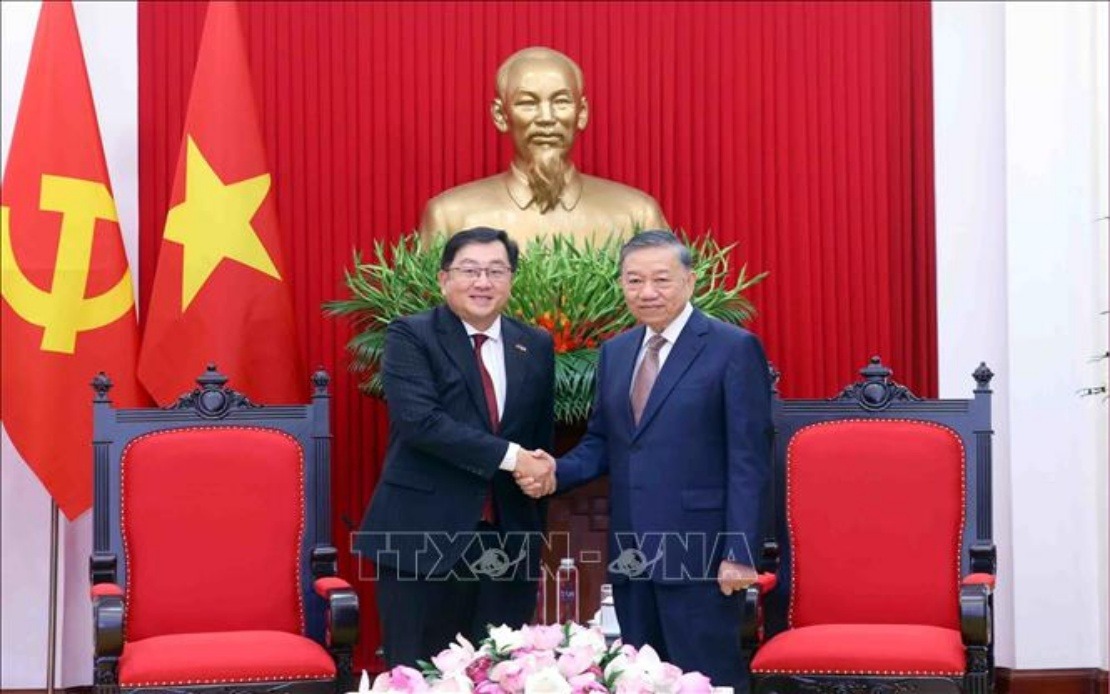
The bilateral relationship between Vietnam and Malaysia has entered a notably expansive phase, according to Vietnamese President To Lam, who met with outgoing Malaysian Ambassador to Vietnam Datuk Tan Yang Thai on Wednesday in Hanoi. The Vietnamese leader underscored the partnership's evolution beyond traditional diplomatic formalities, pointing to concrete advances across multiple sectors that reflect deepening institutional ties and mutual strategic interests in Southeast Asia's evolving geopolitical landscape.
President Lam extended warm greetings to His Majesty Sultan Ibrahim, King of Malaysia, and Prime Minister Datuk Seri Anwar Ibrahim, while simultaneously extending a formal invitation for both leaders to visit Vietnam. Such high-level overtures signal Hanoi's commitment to elevating the relationship and creating opportunities for direct engagement between the nations' top decision-makers. The timing of these invitations—extended during the farewell reception of a long-serving ambassador—demonstrates continuity in Vietnam's diplomatic approach and signals that the relationship transcends individual personalities or postings.
Recognizing Ambassador Tan's contributions during his tenure, President Lam commended his successful stewardship of Malaysia's diplomatic mission and expressed confidence in his future endeavours. The Vietnamese leader acknowledged that ambassadors serve as vital bridges between nations, and Tan's departure presents an inflection point for evaluating the relationship's trajectory under his leadership. By publicly praising the ambassador's work, Lam ensured a smooth transition while reinforcing Vietnam's appreciation for Malaysia's diplomatic engagement.
At the institutional level, Vietnam and Malaysia have cultivated robust channels for regular dialogue and coordination. Political engagement has intensified through frequent high-level and official visits spanning party structures, state apparatus, government ministries, and parliamentary bodies. These multifaceted communication pathways have created redundancies in the relationship, meaning that disruptions at any single level do not undermine the overall bilateral dynamic. The effectiveness of these mechanisms reflects both nations' commitment to managing differences constructively and amplifying areas of agreement.
Trade performance has emerged as a striking indicator of the relationship's vitality. During the first half of 2026, bilateral trade reached US$10.8 billion, representing a robust 40 per cent year-on-year increase. For Malaysian and Vietnamese businesses, these figures underscore expanding market opportunities and demonstrate that economic integration between the two countries is accelerating rather than stagnating. This growth outpaces the broader ASEAN average, suggesting that Vietnam-Malaysia commercial ties possess particular dynamism and resilience.
Malaysia's investment footprint in Vietnam reinforces the strength of their economic partnership. As the third-largest ASEAN investor and the tenth-largest source of foreign direct investment among 154 countries and territories, Malaysia has positioned itself as a significant contributor to Vietnam's capital formation and technological transfer. Malaysian enterprises spanning manufacturing, services, finance, and technology sectors have established substantial operations in Vietnam, creating employment and facilitating knowledge exchange. Conversely, Vietnamese investment in Malaysia, though less voluminous, has grown and represents an emerging dimension of the relationship.
Both nations have identified strategic priority areas that will shape their cooperation agenda. The digital economy represents a crucial frontier, as Vietnam and Malaysia each pursue digital transformation within their respective economies and recognize the advantages of coordinated regional approaches. Green economy development and renewable energy represent another shared focus area, driven partly by climate commitments and partly by energy security considerations. These priorities align with ASEAN's broader sustainability objectives and reflect both countries' positioning within global environmental frameworks.
Maritime cooperation carries particular salience given the geographic and economic importance of Southeast Asian waters. Vietnam and Malaysia, separated by the South China Sea, have mutual interests in ensuring stable maritime conditions, combating transnational crime at sea, and managing shared fisheries. President Lam's emphasis on maritime affairs and security cooperation suggests recognition that regional stability depends partly on bilateral coordination between major Southeast Asian players. Enhanced defence and security cooperation could encompass joint exercises, intelligence sharing, and coordinated responses to transnational challenges including piracy and smuggling.
Ambassador Tan's remarks reflected Malaysia's reciprocal commitment to the relationship. The departing envoy expressed admiration for Vietnam's developmental trajectory in recent years—a recognition that carries weight given his lengthy posting and extensive exposure to Vietnamese society. By specifically highlighting Vietnam's progress, Tan acknowledged the concrete improvements in living standards, infrastructure, and governance that have characterised Vietnam's recent decade. His pledge to continue promoting bilateral ties drew on both professional expertise and personal attachment to Vietnam, suggesting that successful diplomacy requires emotional investment beyond formal duties.
The ambassador emphasized Malaysia's interest in collaborating with Vietnam on digital economy initiatives, green economic development, and renewable energy projects. These areas represent not merely bilateral cooperation but potential catalysts for broader ASEAN integration. Malaysian expertise in certain digital and financial sectors, combined with Vietnamese manufacturing capabilities and growing technological sophistication, could yield synergistic outcomes. Renewable energy cooperation offers practical benefits including technology transfer and cost reductions through coordinated procurement and development.
Ambassador Tan also conveyed His Majesty Sultan Ibrahim's invitation for President Lam to visit Malaysia, reciprocating the Vietnamese leader's invitation. Such mutual invitations reflect genuine bilateral interest and suggest that substantive state visits may materialize in the near term. Presidential visits typically yield tangible outcomes in the form of bilateral agreements, memoranda of understanding, and renewed political commitment, making them significant events in the diplomatic calendar.
President Lam's call for strengthening political trust through increased exchanges and comprehensive implementation of existing high-level agreements underscores that strong relationships require sustained attention and active management. Rather than assuming stable ties, Vietnamese leadership has articulated a deliberate strategy for deepening cooperation across multiple dimensions. The emphasis on balanced trade and investment addresses potential asymmetries and ensures that both nations perceive the relationship as mutually beneficial—a critical factor in maintaining political support for the partnership within each country's domestic context.
Looking forward, the Vietnam-Malaysia relationship exemplifies how Southeast Asian nations can navigate contemporary challenges through pragmatic cooperation grounded in shared interests. As both countries address digital disruption, climate change, and regional security challenges, their strengthened partnership positions them to contribute meaningfully to ASEAN solidarity while advancing their respective national development objectives. The successful conclusion of Ambassador Tan's mission and the evident commitment from both Vietnamese and Malaysian leadership suggests that this bilateral relationship will continue expanding in scope and depth.

