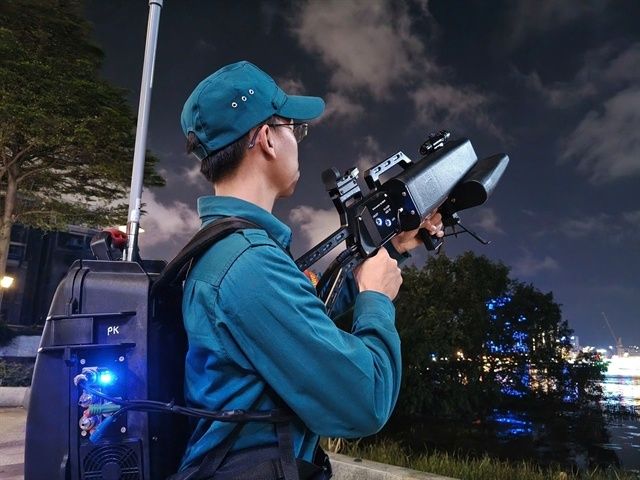
Vietnam's aviation authorities are stepping up enforcement against unauthorised drone operations near airports, responding to a troubling surge in airspace incursions that have disrupted flights, inflicted substantial financial damage on the aviation sector, and created genuine risks of catastrophic accidents. The Immigration Department under the Ministry of Public Security has issued a sharp warning to the public, emphasising that illegal drone flights represent an escalating threat to aviation safety across the country.
The scale of the problem has grown rapidly in recent years. Vietnamese authorities documented 34 separate incidents in 2025 involving drones or other aircraft unlawfully entering restricted airspace around airports. The situation has worsened markedly since then, with 17 additional incursions recorded in just the first half of 2026, suggesting the problem is accelerating rather than stabilizing. Each of these breaches forces air traffic controllers into emergency protocols, creating cascading disruptions across the aviation network.
When drones penetrate airport restricted zones, traffic controllers must take immediate action to prevent collisions. Standard responses include ordering aircraft to abort takeoff, halting landing clearances for incoming planes, or diverting flights to alternative airports. These emergency procedures protect lives but exact a heavy price on the aviation system's efficiency and reliability. The unpredictability of drone intrusions makes it impossible for airlines and airports to plan operations effectively, compounding the operational chaos.
The financial impact on Vietnam's aviation sector has been severe and measurable. Vietnam Airlines disclosed that drone-related disruptions during just eight days in late February 2026 cost the carrier approximately VNĐ5.6 billion, equivalent to US$215,000, while affecting nearly 9,200 passengers through cancellations, delays, and schedule modifications. Danang International Airport, one of the country's major hubs, separately calculated direct losses exceeding VNĐ10 billion ($384,000) from these incidents, with this figure understating the true economic damage when indirect costs to freight operators, connected businesses, and affected travellers are factored in.
Beyond economics, officials have highlighted the genuinely catastrophic safety risk. A drone collision with an aircraft during the vulnerable phases of takeoff or landing could prove fatal, jeopardising every person aboard. The physics of such an encounter at altitude and speed could cause structural damage sufficient to bring down an aircraft. This possibility transforms drone misuse from a regulatory nuisance into a potential mass casualty event, raising the stakes for enforcement considerably.
Vietnam's legal framework governing drones is comprehensive and stringent. Drone operators must both register their equipment with authorities and separately obtain an explicit flight permit before operating. Importantly, registration alone provides no permission to fly—permits are mandatory and specify precise conditions including the geographic area, altitude ceiling, time windows, and operational scope permitted for each flight. This requirement system is designed to ensure that every drone flight near sensitive areas is individually authorised and monitored.
Violators face graduated penalties depending on the severity of their breach. A 2025 government decree empowers authorities to levy administrative fines, confiscate drone equipment, and revoke an operator's flight privileges. More serious violations, where a drone obstructs air traffic or creates genuine danger to aviation safety, may be prosecuted as criminal offences. The legal system does not require that an accident actually occur for prosecution to proceed—simply creating a real risk of collision is sufficient for charges.
Criminal penalties for drone activity that threatens aviation are substantial. Operating a drone into an aircraft's approach corridor, takeoff zone, or landing path—thereby creating material collision risk—carries fines ranging from VNĐ10 million to VNĐ50 million ($384 to $1,920), non-custodial reform sentences of up to two years, or imprisonment of three months to two years. Convicted individuals additionally lose eligibility for certain employment categories and official positions for one to five years following conviction.
For the most egregious violations where a drone strike causes serious endangerment or obstruction of aviation operations, penalties escalate dramatically. Criminal prosecution in these cases can result in prison sentences of up to 15 years, alongside substantial fines. This severe sentencing framework reflects the gravity with which Vietnamese law treats aviation safety threats, positioning drone misuse near airports as a serious crime rather than a minor regulatory infraction.
Authorities are emphasising that compliance requires drone operators to strictly observe all conditions specified in their individual permits—the designated time windows, approved geographic areas, and operational parameters. The Immigration Department has simultaneously launched a public reporting mechanism, encouraging citizens to inform police, military authorities, or airport officials of any unauthorised drone activity they observe. This community-based surveillance component aims to create multiple detection channels beyond official monitoring.
The response reflects recognition that aviation security is a societal responsibility transcending any single agency. Officials have characterised irresponsible drone operation not merely as a commercial inconvenience but as a threat with potential consequences for human life, national transportation systems, and broader national security interests. The combination of tightened enforcement, clear communication of penalties, and public engagement represents a comprehensive approach to restoring safety in Vietnamese airspace and protecting the integrity of the aviation sector.

