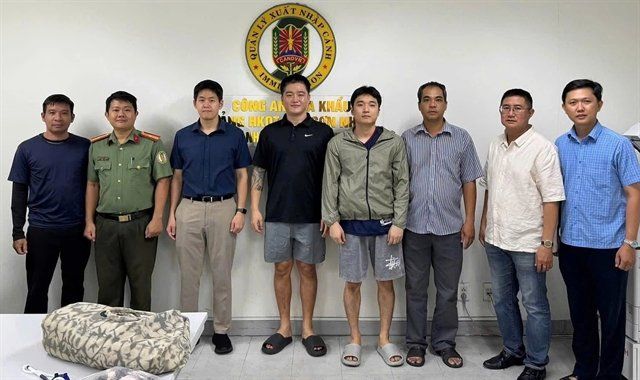
Ho Chi Minh City police have arrested three South Korean nationals accused of orchestrating sophisticated online fraud schemes that victimised thousands of people across the region. The operation, coordinated between the HCM City Police Investigation Agency, the Ministry of Public Security's Police Investigation Agency, and allied units, resulted in the apprehension of Wang Taesan (born 1990), Han Joonhee (born 1992), and Bang Giseong (born 1997) on Sunday, August 3. All three suspects carried Interpol red notices issued at the request of South Korean police authorities.
The criminal network employed a range of deceptive tactics designed to exploit psychological vulnerabilities and cultivate a false sense of legal jeopardy among their targets. In their primary scheme, the trio falsely threatened to release compromising videos of victims unless substantial sums were paid immediately. Despite their menacing communications, the perpetrators possessed no such material—the entire premise was a manipulation tactic designed to provoke panic and rushed financial decisions. This category of cybercrime, known as sextortion, has become increasingly prevalent across Southeast Asia as criminal networks refine their psychological manipulation strategies.
Beyond the sextortion operations, the group deployed impersonation tactics of particular sophistication. They assumed the identities of South Korean prosecutors, police officers, and other law enforcement representatives, contacting unsuspecting victims via telephone and electronic channels. The suspects sent counterfeit legal documents, including fabricated arrest warrants personalised with victims' names, to lend credibility to their false claims. By layering these deceptive elements, the criminals constructed an elaborate facade of official authority that pressured victims into compliance.
The fraud ring then exploited this manufactured legitimacy to demand financial transfers. They claimed victims' bank accounts were implicated in criminal investigations requiring immediate verification through monetary deposits to accounts controlled by the network. This dual-manipulation approach—combining emotional coercion with fraudulent legal authority—proved devastatingly effective at extracting money from frightened individuals who believed themselves caught in genuine legal complications. The scheme represents an evolution in cybercriminal tactics, merging traditional confidence tricks with modern digital capabilities.
Vietnamese law enforcement handed over the three suspects to South Korean authorities at Tan Son Nhat International Airport in Ho Chi Minh City, marking a concrete outcome of regional cooperation in combating transnational crime. This transfer demonstrates the operational efficiency that can be achieved through established international protocols and bilateral police coordination frameworks. The success of this arrest illustrates Vietnam's commitment to prosecuting foreign nationals engaged in online fraud operations targeting Southeast Asian residents.
The timing of this apprehension reflects a broader intensification of efforts targeting online fraud networks across the region. In a parallel operation conducted earlier in August, Hanoi police in collaboration with the city's Immigration Department apprehended a South Korean national at Noi Bai International Airport. Lee Sammin, born in 1996, was wanted on an Interpol Red Notice for telecommunications-related online fraud. Sammin operated within a sophisticated criminal network that specifically targeted investment fraud schemes, positioning themselves as putative investment advisors with privileged knowledge of imminent stock listings.
The Lee Sammin case illustrates an alternative but equally damaging fraud model prevalent in the region. Rather than employing sextortion and impersonation tactics, this network built false investment narratives, convincing victims that particular stocks would soon become publicly available at significantly higher valuations. Prospective investors were encouraged to transfer money to secure positions before these anticipated market debuts. Once funds arrived in accounts controlled by the criminal network, the promised investments never materialised—the stocks did not exist, and the money was simply diverted and laundered through the criminal proceeds systems.
The scale of financial loss in the Lee Sammin operation underscores the devastating impact of organised online fraud networks. The conspiracy group misappropriated approximately US$10,693,343 from victims defrauded through their coordinated social media and internet campaigns. This substantial sum reveals not a casual criminal enterprise but rather a highly organised operation with significant infrastructure, international reach, and sophisticated money movement capabilities. The arrest of Lee Sammin on December 31, 2025, represented a critical disruption to a network that had accumulated substantial criminal proceeds through repeated fraud cycles.
These coordinated apprehensions carry significant implications for Southeast Asian countries confronting escalating cybercriminal activity. The cases demonstrate that sophisticated fraud networks frequently operate across borders, targeting victims in one jurisdiction whilst maintaining operational bases and money laundering infrastructure in others. Vietnamese cooperation in apprehending and extraditing suspects wanted in South Korea establishes important precedent for regional law enforcement collaboration. Malaysian authorities and other Southeast Asian police forces monitoring similar networks should note the operational methods employed by these groups, particularly their targeting techniques and impersonation strategies.
The incidents also highlight structural vulnerabilities within digital financial systems that cybercriminals continue to exploit. Victims often struggle to distinguish legitimate law enforcement communications from sophisticated counterfeits, particularly when perpetrators deploy authentic-appearing documentation and official titles. Educational campaigns targeting consumer awareness of these tactics remain essential, particularly in societies with less developed digital literacy infrastructure. Banks and financial institutions across the region must simultaneously strengthen authentication protocols and transaction verification procedures to prevent rapid money movement through fraudster-controlled accounts.
The successful prosecutions underscore Vietnam's strengthening capacity to enforce international law enforcement cooperation mechanisms and process extradition requests efficiently. This operational competence should encourage other Southeast Asian nations to strengthen formal and informal information-sharing arrangements with Vietnamese authorities. The precedent established through these arrests suggests that regional law enforcement agencies can coordinate effectively to identify, apprehend, and transfer suspects across borders despite jurisdictional complexities.
Looking forward, these cases illuminate the persistent challenge posed by organised online fraud networks that deliberately select Southeast Asian operational bases to exploit weaker regulatory oversight and money-laundering enforcement capabilities compared to developed economies. As long as these structural gaps persist, criminal networks will continue recruiting members and establishing infrastructure in the region. Sustained bilateral and multilateral cooperation, coupled with investment in cybercrime investigation capabilities and digital forensics expertise, represents the most promising pathway toward degrading these networks' operational effectiveness and deterring future recruitment.

