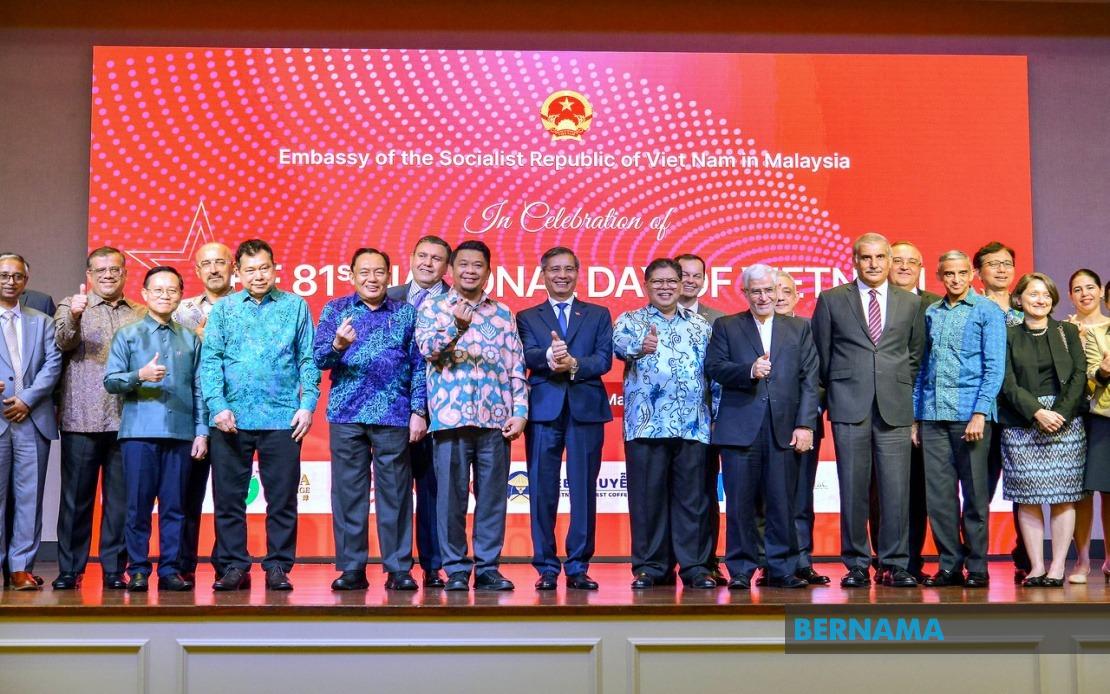
Vietnam and Malaysia are entering a new phase of diplomatic engagement under their recently elevated Comprehensive Strategic Partnership, a framework that Ambassador Dinh Ngoc Linh says reflects deepening political trust and expanding shared interests between the two Southeast Asian neighbours. Speaking at Vietnam's 81st National Day celebration in Kuala Lumpur on Thursday evening, the envoy underscored Malaysia's strategic importance to Hanoi in a global landscape characterised by complexity and rapid transformation. The elevation of bilateral relations to this partnership level, formalised in November 2024, represents a culmination of decades of diplomatic effort since the two nations established formal relations in 1973.
Over the past year, the bilateral relationship has demonstrated tangible momentum across multiple economic and cultural dimensions. Trade and investment flows have grown measurably, reflecting increased commercial confidence between Malaysian and Vietnamese businesses seeking opportunities in each other's markets. Agricultural cooperation has expanded, leveraging complementary strengths in production and supply chains, whilst educational partnerships have created pathways for student mobility and knowledge exchange. Tourism recovery in both directions has accelerated as travel restrictions have fully lifted, allowing millions of citizens to experience Vietnamese and Malaysian cultures firsthand. These developments collectively signal that the partnership framework extends beyond ceremonial pronouncements into practical, revenue-generating collaboration.
Defence and security cooperation occupies a central pillar in the partnership architecture, according to Ambassador Dinh. This dimension carries particular significance for both nations, as it reinforces mutual confidence at a time when regional stability faces various pressures. Enhanced defence ties contribute not only to bilateral security interests but also to the broader maintenance of peace and stability across Southeast Asia, an outcome beneficial to all ASEAN members and their trading partners globally. The ambassador's emphasis on this sector reflects Vietnam's assessment that military-to-military cooperation strengthens the relationship's resilience and demonstrates commitment beyond commercial or cultural considerations.
Parliamentary exchanges have emerged as an important mechanism for deepening mutual understanding between Vietnamese and Malaysian populations. These interactions among elected representatives facilitate dialogue on shared challenges, policy learning, and people-to-people connections that transcend government-to-government relations. By involving legislators and community leaders, such exchanges help embed the partnership within broader civil society frameworks, making the relationship less vulnerable to short-term political fluctuations. This layered approach to diplomacy—combining governmental, parliamentary, and public-level engagement—reflects sophisticated diplomatic practice increasingly adopted by Southeast Asian nations.
Within the broader ASEAN context, Vietnam has positioned itself as committed to strengthening the bloc's unity, resilience, and central role in regional affairs. Ambassador Dinh's remarks emphasised Vietnam's determination to work closely with Malaysia and other ASEAN members to construct a community that is peaceful, stable, prosperous, and centred on people's welfare. As the region undergoes significant geopolitical transitions—including great power competition, technological disruption, and climate pressures—ASEAN's capacity to act cohesively depends partly on strong bilateral relationships among member states. The Vietnam-Malaysia partnership serves as a microcosm of how regional solidarity can be operationalised through concrete cooperation.
The ambassador's impending conclusion of his three-year posting provided an occasion for personal reflection on the relationship's trajectory. Dinh expressed profound gratitude for the friendships and memories accumulated during his tenure, suggesting that his experience has shaped his perspective on Vietnam-Malaysia relations at a human level. His commitment to maintaining interest in the partnership's development beyond his ambassadorial role indicates the personal investment senior diplomats develop in bilateral relationships. Such continuity of interest, even after officials rotate to new postings, helps maintain institutional memory and sustained attention to partnership evolution.
Deputy Foreign Minister Datuk Lukanisman Awang Sauni's attendance as guest of honour signalled Malaysia's official affirmation of the partnership's importance. The presence of multiple heads of diplomatic missions underscored that Vietnam-Malaysia relations are viewed within a broader network of Southeast Asian diplomatic interactions. This multilateral diplomatic attendance reflects the reality that bilateral partnerships operate within an ecosystem of other regional relationships, all of which influence the shape and texture of regional dynamics.
For Malaysian readers and businesses, the strengthening Vietnam partnership carries practical implications. Vietnamese companies increasingly view Malaysia as a gateway to ASEAN markets, whilst Malaysian enterprises see Vietnam's large consumer base and manufacturing capabilities as opportunities for growth. The formalisation of the Comprehensive Strategic Partnership creates a more predictable and supportive environment for commercial activity, reducing transaction costs and regulatory uncertainty. Educational institutions in both countries benefit from expanded student recruitment and research collaboration, particularly in fields such as technology, agriculture, and environmental studies where both nations face common challenges.
The timing of this partnership elevation also reflects broader strategic calculations in Southeast Asia. With great powers competing for influence and regional groupings such as ASEAN required to navigate complex geopolitical currents, strong bilateral relationships among member states serve as ballast. Vietnam and Malaysia, despite different political systems and historical experiences, have found sufficient common ground to formalise their partnership. This achievement demonstrates that ASEAN diversity—often cited as a weakness—can be overcome through patient diplomacy and recognition of mutual interests. The partnership suggests that ASEAN members can maintain both strategic autonomy and meaningful regional cooperation simultaneously.
Looking forward, the Comprehensive Strategic Partnership framework provides a structured platform for addressing emerging challenges jointly. Climate change, maritime security, pandemic preparedness, and technological governance represent areas where Vietnam and Malaysia possess shared concerns and complementary capabilities. The partnership's emphasis on people-centredness suggests both governments recognise that sustainable bilateral relations must deliver tangible benefits to ordinary citizens, not merely strategic elites. This orientation toward inclusive outcomes may prove especially valuable as Southeast Asian societies navigate rapid transformation.
The ambassador's confident projection of deepening friendship across generations carries weight beyond diplomatic convention. The strategic foundation being constructed through the Comprehensive Strategic Partnership, combined with people-to-people connections and institutional mechanisms, creates conditions for the relationship to transcend individual leaders or momentary political tensions. For Malaysia, deepening ties with Vietnam offer opportunities to strengthen its position within ASEAN, diversify its partnerships, and engage with one of Southeast Asia's largest and most dynamic economies. The partnership thus represents mutual benefit rather than one-sided advantage.

