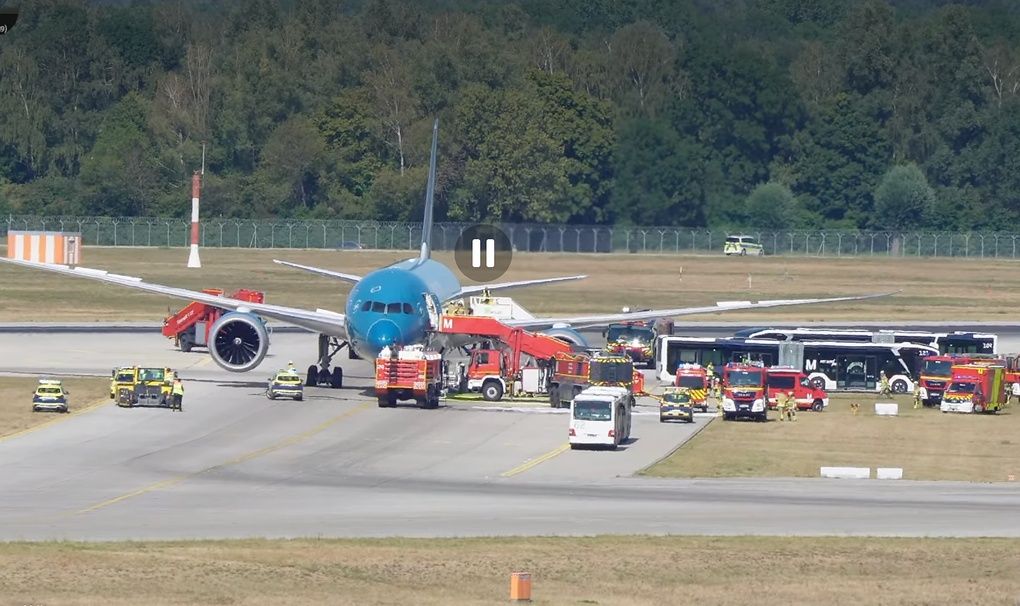
A Vietnam Airlines Boeing 787-9 jetliner operating the Munich-to-Hanoi service executed an emergency return to Munich Airport on August 15 following a technical malfunction that occurred during the initial climb phase. The aircraft, carrying passengers and crew, successfully touched down at the German airport without injury, though the incident underscores the critical importance of rigorous pre-flight procedures and crew training in managing in-flight complications.
According to Vietnam Airlines' statement, the flight crew detected an anomaly shortly after beginning their departure climb and immediately initiated the prescribed response protocols. Rather than continuing their trajectory across European airspace toward Asia, the decision was made to reverse course and return to the departure airport as a precautionary measure. The airline emphasised that all personnel aboard complied with safety procedures throughout the incident, and passengers and staff were subsequently guided through the terminal without incident.
Video footage captured near the Munich Airport runway reveals the extent to which the takeoff sequence had progressed when the issue emerged. The Boeing 787 can be seen accelerating along the tarmac and rotating—lifting its nose—extremely close to the runway's end. Visible dust clouds suggest the aircraft had indeed become airborne before the technical problem forced the crew's decision to abort the mission and return. This proximity to runway exhaustion underscores the compressed timeframe within which pilots had to make their critical assessment and execute their response.
Aviation specialists and monitoring services have since provided additional detail on what occurred during those crucial moments. The Aviation Herald, a respected independent source for aircraft incident data, characterises the event as involving a late rotation, a tailstrike—where the rear fuselage makes contact with the runway surface—and a runway overrun situation. The aircraft's tyres sustained damage during the sequence, introducing another layer of complexity to the emergency.
Following the initial incident during takeoff, the crew exercised sound judgment in establishing a holding pattern at approximately 9,000 feet above the Munich region. This procedural step served a dual purpose: it allowed the aircraft to remain airborne while fuel was burned down to safer landing weights, and it provided ground personnel at Munich Airport time to prepare for the return and assess the situation. Emergency services were placed on alert at the facility in anticipation of the aircraft's return.
After approximately two hours aloft, the Boeing 787 descended and returned to Munich Airport for what would become an unscheduled landing. Contact with the runway surface during this second touchdown reportedly produced smoke and further damaged the aircraft's tyres. Despite these dramatic visual indicators, the landing itself was controlled and safe, demonstrating the competence of the flight crew in managing a complex emergency situation.
Vietnam Airlines has indicated that investigations into the root cause of the technical problem are underway in collaboration with German aviation authorities and other relevant parties. Such multi-agency investigations are standard protocol for commercial aviation incidents and help ensure that any systematic issues are identified and rectified. The airline has committed to providing updates once the inspection process concludes and revised operational plans are established.
For passengers affected by the aborted flight, Vietnam Airlines is coordinating alternative travel arrangements and passenger support services. Given the significant distance between Munich and Hanoi—roughly 9,000 kilometres—rebooking passengers on alternative carriers or subsequent flights represents a substantial logistical undertaking. The airline's response in this regard will be closely observed as an indicator of its commitment to customer service during disruptions.
The incident carries particular relevance for Southeast Asian carriers and their European operations. Vietnam Airlines operates scheduled services from both Hanoi and Ho Chi Minh City to major European hubs including Munich and Frankfurt, deploying modern wide-body aircraft such as the Boeing 787 Dreamliner and Airbus A350. These long-haul routes represent significant strategic investments for Vietnamese aviation and are crucial to the country's connectivity with European markets and tourism sectors.
The Boeing 787 has maintained a strong safety record since its introduction, though occasional technical issues remind operators and passengers alike that no aircraft is entirely immune to anomalies. The fleet has become central to many Asian carriers' long-haul expansion strategies, and this incident will prompt reviews of maintenance protocols and training procedures across regional operators.
From a broader Southeast Asian perspective, the Munich incident highlights the intricate ecosystem of international aviation safety. German airport authorities, European aviation regulators, Vietnamese authorities, Boeing technical teams, and Vietnam Airlines must all coordinate to investigate and resolve what occurred. This collaborative framework, while occasionally tested, represents decades of international aviation cooperation and standardisation.
The safe resolution of this emergency—no injuries, no loss of life, no catastrophic damage—reflects the investment the industry has made in safety systems, crew training, and aircraft design. Nevertheless, the incident reminds travellers and industry observers that long-haul international aviation operates in a complex environment where technical vigilance remains paramount.

