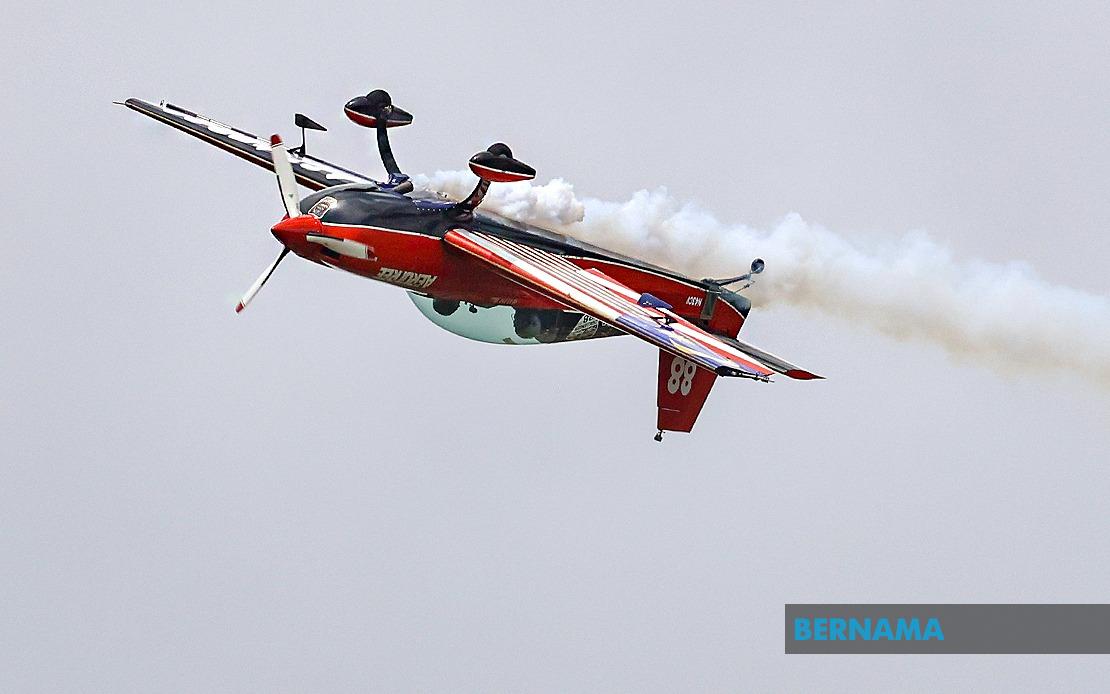
Major (Rtd) Datuk Halim Othman, a 60-year-old retired Royal Malaysian Air Force fighter pilot, took centre stage on August 30 to command the inaugural 'Merdeka Sunset Show: Melukis Senja' air display, a spectacle conceived to commemorate Malaysia's 69th National Day celebrations. His leadership of the event underscored the calibre of aviation talent cultivated within Malaysia's defence establishment, demonstrating how decades of rigorous military training translate into world-class aeronautical performance.
Halim's four decades immersed in aviation have forged a distinctive career spanning multiple disciplines. His qualifications extend beyond conventional military piloting; he became the first Malaysian to achieve qualification in the Red Bull Air Race World Championship, an accomplishment that placed him squarely amongst the planet's elite aerobatic competitors. This distinction carries particular significance for Malaysia, where aerospace capability remains concentrated within defence and commercial sectors, with fewer pathways for international aeronautical recognition.
The aerobatic disciplines Halim mastered demand far more than mechanical competency or physical courage. Executing high-performance manoeuvres in specially configured aircraft requires an intricate understanding of aerodynamic boundaries, split-second decision-making under extreme G-forces, and the discipline to push aircraft systems to their limits whilst maintaining complete control. These capabilities, honed through decades of military service and international competition, cannot be hastily acquired or improvised for ceremonial occasions.
His twilight performance, scheduled for 7 pm, integrated precision aerobatic sequences with smoke and pyrotechnic effects, creating visual spectacle against the setting sun. This particular format represented a continuation of the 'Melukis Senja' concept originally showcased at the Langkawi International Maritime and Aerospace Exhibition (LIMA) during the preceding year. By revisiting this successful format within the national celebration context, organisers recognised that aeronautical displays could serve dual purposes: entertainment and inspiration for aviation-focused audiences.
During an exclusive interview, Halim articulated his philosophy regarding aerobatic performance, emphasising that crowd-pleasing manoeuvres mask deeper technical requirements. Aerobatics demands continuous training, unwavering discipline, and exhaustive comprehension of each aircraft's performance envelope. When Halim competed in the Red Bull circuit, he encountered predominantly non-Malaysian competitors and few Asian participants, creating competitive pressures that shaped his determination to demonstrate Malaysian capability at international standards. Rather than viewing this solely as personal achievement, he positioned his performances as ambassadorial exercises, demonstrating to younger generations that Malaysian aviators can match or exceed international benchmarks.
Halim's operational background encompasses an impressive spectrum of military and civilian aircraft. His service as an RMAF fighter pilot commenced in 1985, yielding a 'Top Gun' designation before his specialisation expanded into military operations, aerobatic disciplines, and international racing. Throughout his tenure, he operated sophisticated combat platforms including the MiG-29N, F/A-18D Hornet, A-4 Skyhawk, and F-5E Tiger, alongside civilian business jets such as the Learjet 35A and King Air 350i. This breadth of experience, accumulated across platforms spanning different operational philosophies and design generations, reflects comprehensive aeronautical proficiency.
Beyond individual achievements, Halim contributed significantly to institutional aerospace development. He established Krisakti, Malaysia's inaugural official aerobatic display team, which premiered at LIMA 2011. This initiative represented an important step toward formalising aerobatic excellence within Malaysian aviation circles, creating structures through which aeronautical innovation could be showcased and sustained beyond individual performers.
Halim now directs Aerotree Defence and Services Sdn Bhd, positioning this enterprise as a nexus for aerospace advancement and corporate responsibility. The company has announced intentions to form an expanded aerobatic team comprising six aircraft equipped with coloured smoke systems for subsequent National Day observances and LIMA exhibitions. This scaling reflects confidence in audience appeal and recognition that aeronautical displays serve pedagogical purposes beyond mere entertainment.
The establishment of this expanded aerobatic unit carries implications for Malaysian aerospace industry perception. By demonstrating consistent, sophisticated aerial capabilities during high-profile national occasions, Malaysia reinforces its positioning as an aerospace-capable nation. The performances communicate tacit messages regarding defence capability, technological competence, and cultural sophistication to both domestic and international audiences observing national celebrations.
Halim's stated motivation transcends personal recognition or commercial viability. He explicitly framed these performances as corporate social responsibility initiatives designed to cultivate youth interest in aerospace careers. Malaysia's aviation sector, whilst robust in commercial aviation and defence acquisition, faces persistent challenges in developing domestic expertise across design, manufacturing, and advanced operations. Visible demonstrations of Malaysian aeronautical excellence at prestigious occasions can influence educational and career choices amongst younger demographics, potentially enlarging the pipeline of talent pursuing aerospace disciplines.
The inauguration of the Merdeka Sunset Show represents broader trends within national celebration design. Rather than emphasising purely ceremonial pageantry, Malaysian National Day commemorations increasingly incorporate elements showcasing technological achievement and national capability. Aerobatic displays, demanding sophisticated infrastructure and exceptional skill, communicate these attributes more effectively than static parades or conventional military demonstrations.
Halim's trajectory from RMAF fighter pilot through international aerobatic competition to his current role as aerospace entrepreneur and display commander exemplifies how sustained commitment to excellence creates opportunities for meaningful contribution to national goals. His insistence that Malaysians can compete globally in aeronautical disciplines, backed by demonstrated achievement, provides authentic inspiration rather than merely aspirational rhetoric. As Malaysia continues developing its aerospace sector and cultivating international recognition, individuals like Halim embody the standards toward which emerging professionals should aspire.

