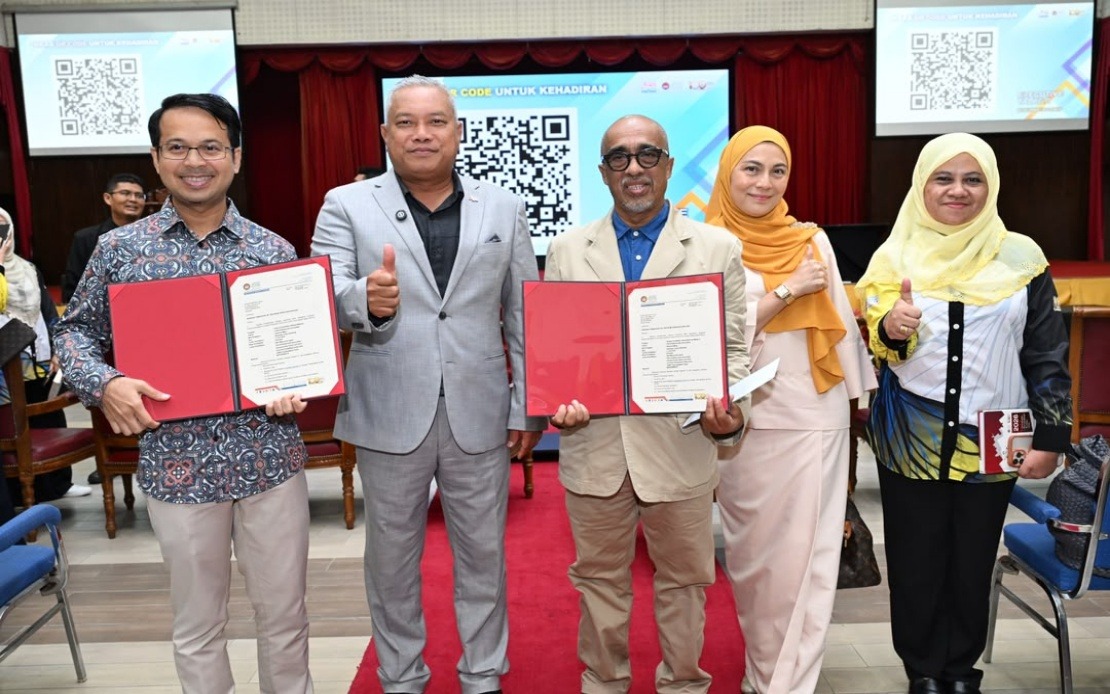
Two figures well-known in Malaysia's entertainment and cultural spheres have realised longstanding academic ambitions by gaining admission to postgraduate programmes at Universiti Pendidikan Sultan Idris (UPSI) in Perak. Mohd Sabri Yunus, the 65-year-old actor and director whose career has spanned decades, and Ahmad Fedtri Yahya, a 45-year-old television personality and presenter, have both been accepted as pioneer cohorts for Master's programmes developed by UPSI's Faculty of Languages and Communication, both enrolling through the Accreditation of Prior Experiential Learning for Award of Qualifications (APEL.Q) pathway.
Mohd Sabri's pursuit of a Master of Education in Malay Literature represents a fulfilment of an educational dream deferred for over forty years. His journey towards higher learning encountered obstacles earlier in his career when he attempted university enrolment twice during the 1980s and 1990s while employed at Dewan Bahasa dan Pustaka (DBP) as an illustrator. Both occasions proved unsuccessful because his professional commitments prevented him from leaving his position, a constraint that many working professionals in Malaysia continue to face when contemplating further education.
The APEL.Q mechanism represents a significant innovation in Malaysia's higher education landscape, particularly for professionals whose substantial experience and demonstrated expertise may not align with traditional academic pathways. Rather than requiring candidates to complete conventional prerequisites, this accreditation system recognises cumulative knowledge, professional accomplishment, and experiential learning accumulated over lengthy careers. For someone like Mohd Sabri, whose work in theatre, film, and cultural production constitutes a form of applied education in itself, this pathway acknowledges the legitimacy and value of non-formal learning.
During remarks at an Executive Talk programme on the UPSI campus in Tanjong Malim, Mohd Sabri reflected on the philosophical approach that guided his professional life despite lacking formal university credentials. He described regarding every individual he encountered as a potential educator, viewing each interaction as an opportunity to acquire knowledge and develop understanding. This perspective has apparently shaped his approach to his craft and his engagement with Malaysia's cultural industries. Through his forthcoming research within the Master's programme, Sabri intends to examine specific dimensions of pantun—the traditional Malay verse form—indicating his focus on understanding and documenting cultural heritage.
Ahmad Fedtri Yahya's enrolment in the Master of Education (Malay Language) programme reflects distinct motivations centred on language preservation and societal development. At 45 years old, having built a career in television presenting and media communication, Fedtri brings professional experience in broadcast language use to his academic pursuits. His stated rationale emphasises the interconnection between linguistic patterns and civilisational advancement, suggesting that the quality and sophistication of language use within a society reflects broader dimensions of cultural and intellectual development.
Fedtri's particular concern addresses a challenge increasingly evident throughout Southeast Asia: the transformation of language practices among younger generations consequent to digital communication platforms and social media proliferation. As communication styles shift dramatically among students and young professionals engaging primarily through abbreviated text, emojis, and code-switching across multiple languages and registers, concerns arise regarding the depth and precision of formal Malay language use. Fedtri's advocacy for strengthened efforts to maintain and elevate Malay language standards among younger Malaysians positions his Master's research within broader conversations about cultural preservation in the digital age.
The significance of both appointments extends considerably beyond individual career progression. UPSI Vice-Chancellor Prof Datuk Dr Md Amin Md Taff articulated an institutional perspective emphasising the value these two accomplished figures bring to the university community. Their presence within UPSI's student body and research environment creates opportunities for knowledge exchange between celebrities whose professional achievements are nationally recognised and the institution's approximately 25,000 student population, many of whom are training to become educators themselves.
This intersection carries particular importance because UPSI graduates will disproportionately influence the cultural and linguistic formation of Malaysia's school-age population. Teachers educated at UPSI will shape how younger Malaysians engage with Malay language, literature, and cultural traditions. The presence of Sabri and Fedtri within this educational ecosystem potentially enriches students' understanding of how cultural knowledge translates into professional practice and public influence. Their willingness to return to formal academic study despite already achieving considerable public prominence sends a symbolic message about the value of continuous learning throughout professional life.
The APEL.Q pathway mechanism itself deserves attention as an educational innovation particularly suited to Malaysia's demographics and career patterns. Many accomplished professionals—artists, performers, journalists, entrepreneurs—possess extensive experiential knowledge but may lack formal tertiary qualifications in their field. Traditional rigid entry requirements often exclude such individuals from postgraduate study, creating a knowledge gap between professional expertise and academic credentialisation. By recognising prior learning, APEL.Q creates bridges between practical achievement and formal qualification, potentially encouraging more mature professionals to pursue higher education.
Mohd Sabri's academic interests in pantun research connect to broader efforts to document and theorise Malaysia's literary heritage. Pantun represents a sophisticated poetic tradition embedded within Malay culture for centuries, yet contemporary scholarship remains limited relative to the form's historical significance. A Master's thesis examining specific dimensions of pantun structure, thematic development, or cultural function could contribute meaningfully to literary studies while simultaneously preserving knowledge of traditional artistic forms facing reduced engagement among younger generations.
The timing of both appointments within Malaysia's evolving education policy landscape also merits consideration. The government has increasingly emphasised the importance of recognising diverse pathways to qualification and the need to strengthen cultural industries and heritage preservation. These two enrolments exemplify how policy innovations can create opportunities for experienced professionals to formalise their knowledge through research while simultaneously strengthening academic institutions' capacity to engage with cultural practitioners.
Looking forward, the experiences of Sabri and Fedtri as APEL.Q pioneer students will likely inform how UPSI and other Malaysian institutions refine and expand these programmes. Feedback from accomplished professionals navigating postgraduate study later in their careers could reveal both the strengths of experiential learning pathways and practical challenges requiring institutional adjustment. Their success or challenges may shape how universities across Malaysia subsequently structure similar programmes.
The enrolment of these two cultural figures represents more than a personal achievement narrative; it signals institutional recognition that Malaysia's cultural vitality and linguistic continuity require engagement from multiple stakeholders, including seasoned practitioners willing to contribute formal research and academic rigour to their fields. As UPSI welcomes Mohd Sabri Yunus and Ahmad Fedtri Yahya into its graduate programmes, the institution simultaneously positions itself at the intersection of professional practice and academic inquiry, demonstrating commitment to preserving and advancing Malaysian cultural knowledge systems.

