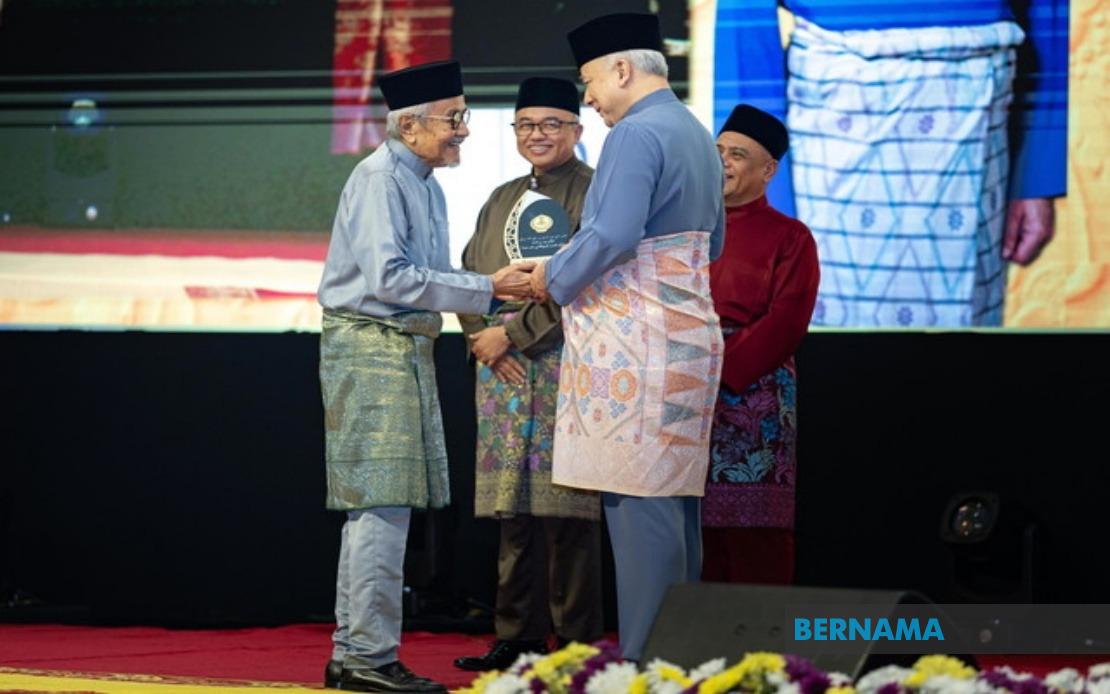
The Sultan of Perak, Sultan Nazrin Shah, presented a slate of community recognition awards during Ipoh's Maulidur Rasul festivities on August 25, honouring individuals and organisations whose work reflects Islamic values and community service. Among the recipients was Datuk Rahim Razali, an 87-year-old filmmaker, broadcaster, and actor whose career spans over six decades in Malaysia's entertainment and media landscape. Razali received the Tokoh Zaid Bin Thabit award, which celebrates outstanding media and communications practitioners, along with RM5,000 and a commemorative plaque.
Razali, whose full name is Abdul Rahim Mohd Razali, hails from Batu Gajah in Perak, making this recognition particularly significant as an acknowledgement of a native son's contributions to the nation's cultural output. His journey through Malaysia's broadcasting ecosystem began modestly—he worked as a broadcasting assistant at RTM, the national broadcaster, before taking the entrepreneurial step to establish his own production company, Angkatan Seniman Abad XX Sdn Bhd, in 1981. This venture would become pivotal to his legacy, allowing him creative autonomy in an industry that was then heavily concentrated within state-run institutions.
Throughout his prolific career, Razali has produced 50 dramas for RTM and directed 15 feature films, demonstrating a versatility that bridges television and cinema. His filmography includes notable works such as Abang and Abang 92, which gained both critical and popular recognition within Malaysia. More tellingly, eight of his feature films were selected for the prestigious Tokyo Film Festival, indicating that his work achieved recognition beyond Malaysia's borders and was deemed worthy of international film discourse during an era when Southeast Asian cinema had limited global visibility.
Beyond directing and acting, Razali established himself as a respected sports commentator, adding yet another dimension to his media career. This breadth of experience—spanning drama production, feature filmmaking, performance, and sports analysis—reflects the multifaceted demands of a career in Malaysian media during the pre-digital era, when practitioners often needed to master multiple formats and genres. His willingness to work across different mediums speaks to both his adaptability and the limited opportunities for specialisation in Malaysia's smaller media market at that time.
The award ceremony also recognised other community pillars whose work reflects religious and social values central to Malaysian society. Yang Walat, an 82-year-old single mother of 15 children from Kuala Kurau, received the Exemplary Family Icon Award (Anugerah Keluarga Amar Yassir), along with RM10,000, an Umrah package, and a plaque. Her recognition underscores how official honours extend beyond entertainment and media figures to celebrate individuals whose personal circumstances and family dedication embody resilience and Islamic principles of responsibility.
The Perak state government also conferred religious leadership awards during the ceremony. Radhi Kamarul Hailan, 56, was named as the Ibnu Abbas or Preacher Icon Award recipient, recognising contributions to Islamic education and religious discourse. The Mosque Official Award (Tokoh Siak) was split between Saharuddin Hassim, 74, and Yahya Man, 83, acknowledging decades of administrative and custodial work within Perak's religious institutions. Mohd Hanafiah Idris, 56, received the Imam Award, reflecting his spiritual leadership and community guidance.
Additionally, Pertubuhan Wanita Prihatin Perak, a women's welfare organisation, was recognised with the Non-Governmental Organisation Award. This inclusion demonstrates the state's commitment to honouring collective efforts aimed at social welfare and community development, particularly initiatives led by women's groups. Such awards serve a dual purpose: they publicly validate the often underappreciated work of civil society organisations while signalling government support for grassroots community engagement.
The Maulidur Rasul celebration, which marks the birth of Prophet Muhammad, provides an annual occasion for state governments across Malaysia to reflect on and honour individuals and groups whose lives embody Islamic principles. In Perak's case, the awards span creative industries, family values, religious leadership, and community service—suggesting a holistic vision of what constitutes a well-functioning Islamic society. The diversity of recipients indicates that state recognition programmes attempt to celebrate contributions across multiple sectors rather than concentrate honours within a single domain.
Razali's award carries particular significance for Malaysia's creative industries. During his formative decades, the local film and television industry faced significant structural limitations, including limited budgets, restricted international distribution networks, and competition from imported content. That his films achieved international festival recognition despite these constraints speaks to both his creative merit and the broader capacity of Malaysian filmmakers to produce work of global standard. His career trajectory offers a model for contemporary Malaysian creatives navigating a digital landscape that paradoxically offers greater reach but increased competition from global platforms.
As the entertainment industry continues evolving in Southeast Asia, with streaming services reshaping production and distribution paradigms, figures like Razali represent an earlier era when filmmakers and broadcasters operated primarily within national frameworks and state institutions. His recognition by Sultan Nazrin Shah provides an opportunity to reflect on how Malaysia's creative contributions have been documented and preserved, and whether contemporary creators receive comparable institutional support and public acknowledgement. The award also raises questions about succession and mentorship—whether veteran practitioners like Razali have systematically transferred knowledge to younger generations, or whether much institutional memory risks being lost as the industry transforms.

