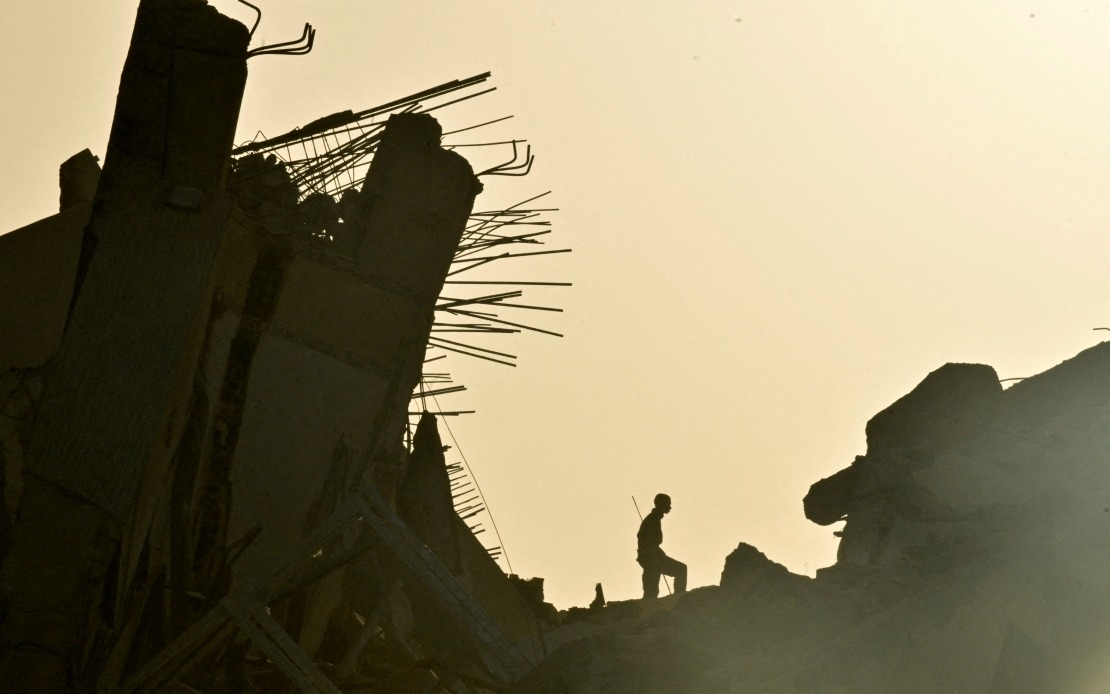
A humanitarian crisis is unfolding in Venezuela following a devastating pair of earthquakes that struck the South American nation, leaving authorities grappling with mounting casualties and widespread structural devastation. As of Sunday, the confirmed death toll had reached at least 1,450 people, with medical teams reporting more than 3,200 individuals sustaining injuries from the back-to-back seismic events. National Assembly President Jorge Rodríguez cautioned that thousands of additional victims are believed to remain trapped beneath collapsed buildings, though the exact figure remains uncertain given the scale of destruction across multiple urban centres.
The twin tremors, measuring 7.2 and 7.5 on the magnitude scale, struck Venezuela on Wednesday with devastating force. Seismologists recorded 430 aftershocks in the immediate aftermath, complicating rescue operations and heightening fears of further structural collapses. The coastal state of La Guaira and the capital city of Caracas suffered the most severe damage, with entire city blocks transformed into rubble as high-rise residential and commercial buildings collapsed like cardboard structures. The concentrated impact in these densely populated urban areas explains the particularly high casualty figures and explains why search-and-rescue teams continue to focus their intensive efforts in these regions.
The international response to the disaster has been substantial, reflecting the scale of the emergency unfolding in Venezuela. Approximately 30,000 Venezuelan emergency personnel have been mobilized alongside 2,700 rescue specialists who have travelled from 24 different countries to assist in the recovery effort. This multinational deployment represents a significant coordinated humanitarian response, with teams working around the clock to locate survivors amidst the extensive debris fields. Despite these considerable resources, rescue workers face formidable challenges as they navigate unstable rubble, navigate hazardous aftershock conditions, and manage the logistical complexities of operating across multiple disaster zones simultaneously.
The temporal dimension of the disaster presents an increasingly urgent challenge for rescue operations. Seismological and medical experts emphasize that the critical window for discovering survivors alive narrows dramatically after 72 hours have elapsed from the initial disaster. This biological reality means that rescue teams are operating under severe time constraints, knowing that each passing hour reduces the statistical likelihood of extracting viable survivors from beneath the rubble. While hopes of finding people alive diminished significantly by Sunday—three days after the earthquakes—teams continued their exhausting search, driven by the possibility that pockets of survivable space might still exist within collapsed structures.
The structural damage assessment reveals the comprehensive nature of the devastation affecting Venezuela's built environment. Official damage surveys documented that more than 2,500 residential buildings and associated facilities have either completely collapsed or sustained severe structural damage rendering them uninhabitable. The inventory of destruction includes approximately 780 homes and 38 hospitals, representing a catastrophic loss of both shelter and medical infrastructure at precisely the moment when healthcare capacity is most desperately needed. The destruction of hospitals is particularly concerning, as it compromises the nation's ability to treat the thousands of injured survivors and manage the cascade of medical emergencies that invariably follow major seismic events.
For Malaysian and Southeast Asian observers, Venezuela's earthquake disaster offers sobering reminders about the vulnerability of densely populated urban centres in seismically active regions. While Southeast Asia's primary seismic risks emanate from different fault lines than those affecting Venezuela, the structural vulnerabilities exposed by these earthquakes—ageing building codes, inadequate enforcement of construction standards, and insufficient emergency preparedness infrastructure—reflect challenges that resonate across the developing world. Several Southeast Asian nations, including Indonesia and the Philippines, maintain comparable exposure to seismic hazards and have implemented various building safety reforms following previous catastrophes, yet Venezuela's experience underscores how quickly disaster can overwhelm even coordinated emergency responses.
The cascading humanitarian consequences extend far beyond immediate mortality figures. The displacement of tens of thousands of people from destroyed homes creates urgent needs for emergency shelter, clean water, sanitation facilities, and food security. The destruction of 38 hospitals simultaneously undermines the capacity to manage not only earthquake-related injuries but also routine medical emergencies that continue occurring during disaster periods. Disease outbreaks pose a significant secondary risk in the post-disaster environment, particularly given the likelihood of compromised water supplies and sanitation infrastructure in affected areas. Venezuela's pre-existing economic and political challenges compound these humanitarian dimensions, potentially limiting the government's capacity to mount sustained recovery and reconstruction efforts without substantial international assistance.
The aftershock sequence of 430 recorded tremors creates a psychologically destabilizing situation for survivors and complicates rescue work substantially. Rescue teams must continuously assess structural stability before entering partially collapsed buildings, and each aftershock threatens to destabilize already precarious rubble piles. Survivors sheltering in damaged buildings face renewed trauma with each tremor, creating acute mental health challenges alongside physical injuries. The extended aftershock sequence also means that the danger to rescue workers persists well beyond the initial earthquake, requiring sustained operational protocols and careful risk management throughout the extended rescue phase.
International disaster management specialists will undoubtedly scrutinize Venezuela's response mechanisms and outcomes as the crisis evolves, examining what worked effectively and identifying systemic gaps. The coordination between domestic Venezuelan emergency services and the international contingent of 2,700 rescue specialists offers insights into cross-border disaster cooperation during complex emergencies. Questions will inevitably arise regarding building code enforcement, early warning systems, and emergency preparedness protocols—lessons that extend relevance throughout the developing world, including Southeast Asian nations that face comparable infrastructure and institutional challenges. The broader narrative of this disaster encompasses not only immediate humanitarian suffering but also complex questions about infrastructure resilience, disaster preparedness, and international cooperation in crisis response.

