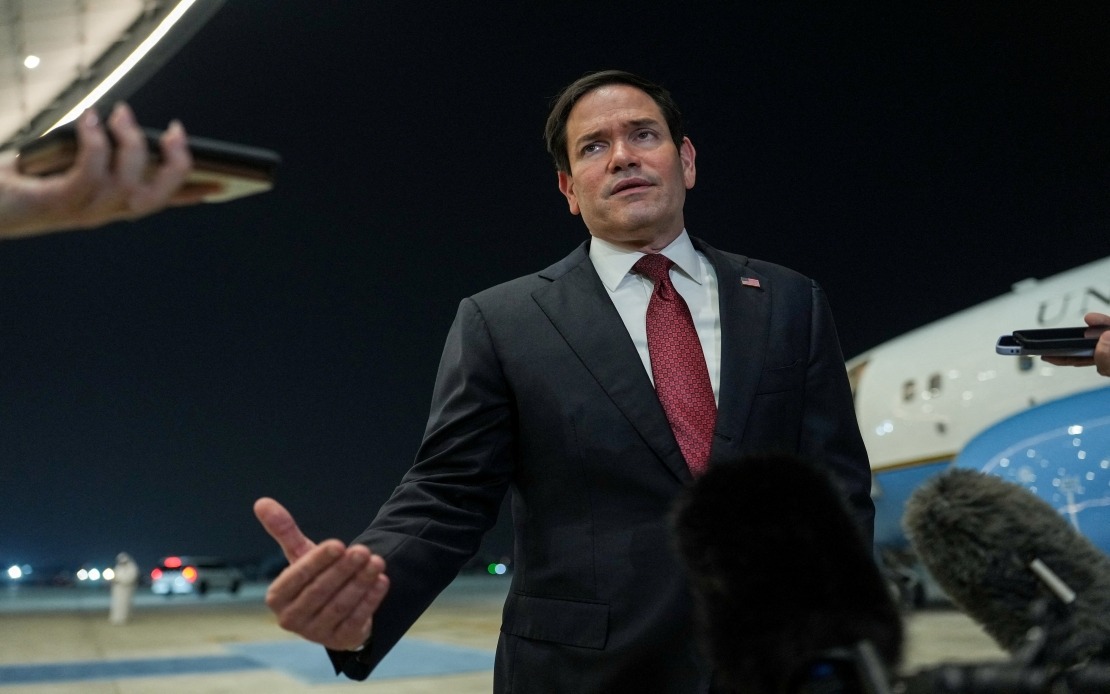
The United States will not be bankrolling any Iranian reconstruction effort, according to Secretary of State Marco Rubio, who moved to quash speculation that Washington might participate in financing schemes emerging from recent peace negotiations with Tehran. Speaking to reporters on Tuesday, Rubio made clear that while various reconstruction proposals may form part of broader discussions between the two countries, direct American government investment in such initiatives remains off the table.
The clarification comes amid a flurry of diplomatic activity following talks held in Burgenstock, Switzerland, on Sunday. The high-level negotiations, mediated by Qatar and Pakistan, saw the Iranian parliamentary speaker Mohammad Bagher Ghalibaf lead Tehran's delegation while the US side was represented by Vance. Both sides subsequently announced measurable progress on several fronts, fuelling speculation about the scope of potential economic arrangements that might accompany political settlements.
Rubio's statement suggests that while private investment from Gulf states may eventually flow toward Iranian reconstruction projects, any such financing arrangements would need to operate independently of official US government channels. The distinction matters considerably for regional investors in the Middle East and Gulf Cooperation Council member states, who might otherwise view American backing as implicit endorsement or guarantee of such ventures. By publicly divorcing the US government from participation, Washington signals that any investment decisions rest entirely with individual nations and private actors.
The timing of these clarifications reflects ongoing uncertainty about the full scope of potential agreements between Washington and Tehran. Last week, President Donald Trump dismissed reports that a $300 billion reconstruction fund had been negotiated as part of US-Iran arrangements, suggesting earlier media coverage may have extrapolated beyond what was actually discussed. Rubio's more measured response indicates the administration is attempting to manage expectations while negotiations continue on multiple tracks simultaneously.
A memorandum remotely signed by both parties last week represents a significant if preliminary step toward de-escalation. The agreement addresses the military conflict that erupted on February 28, establishing concrete timelines for crucial steps: the removal of the American naval blockade affecting Iran and Tehran's commitment to restore shipping operations through the Strait of Hormuz. These provisions directly impact global energy markets and maritime commerce, given that the waterway remains one of the world's most strategically important chokepoints for oil and gas transportation.
Perhaps more consequentially, the memorandum includes Iran's commitment to forgo nuclear weapons development, though the specifics of how this pledge will be verified and enforced remain subject to further negotiation. The framework contemplates a separate, dedicated agreement addressing Iran's broader nuclear programme, with formal talks scheduled to commence within 60 days. This phased approach allows negotiators to tackle immediate security concerns while deferring the more technically complex and politically fraught nuclear architecture discussions.
Rubio's reference to economic opportunities contingent on progress on "security issues that have to be confronted in the days to come" underscores that any reconstruction financing remains hostage to continued diplomatic success. For Malaysian and Southeast Asian observers, this conditionality illustrates how interconnected Middle Eastern security dynamics remain with broader international commerce and investment flows. Any disruption in negotiations could rapidly reverse nascent confidence-building measures and freeze potential economic partnerships.
The involvement of Qatar and Pakistan as mediators reflects the regional power dynamics at play. Both countries maintain complex relationships with Iran and the United States, positioning them as trusted intermediaries. Pakistan's role particularly underscores how South Asian security concerns—including terrorism and weapons proliferation—intersect with Middle Eastern conflicts. For Southeast Asia, any stabilisation of the Iran-US relationship carries implications for regional shipping routes, counterterrorism cooperation, and the broader balance of great power competition in the Indian Ocean region.
Looking ahead, the distinction Rubio drew between potential private investment and official US government participation suggests a template for how post-conflict economic engagement might unfold. Saudi Arabia, the United Arab Emirates, and other Gulf states possess substantial financial capacity and incentives to invest in Iranian reconstruction, particularly if such involvement facilitates their own security arrangements with Tehran or Washington. The absence of American government money does not preclude significant capital flows; it simply means those flows operate without direct Washington endorsement or involvement.
For Malaysian readers and businesses, the emerging Iran settlement framework presents both opportunities and uncertainties. Malaysian companies operating in regional trade, shipping, and energy sectors may benefit from expanded Iranian market access and normalisation of commercial relationships. However, the conditional nature of these arrangements—their dependence on continued diplomatic progress—argues for caution before committing substantial resources to Iranian ventures. The next 60 days will prove critical in determining whether initial progress translates into durable agreements or whether the talks encounter the familiar obstacles that have repeatedly derailed Iran-US engagement in recent years.