The United States has escalated its confrontation with Iran by sanctioning a network of individuals and financial entities allegedly involved in facilitating transactions for Tehran's government. On Friday, the US Treasury Department's Office of Foreign Assets Control unveiled the designations in response to recent hostile activities in one of the world's most strategically vital shipping corridors, the Strait of Hormuz, through which roughly one-third of global maritime oil trade passes.
At the centre of the enforcement action is Ali Ansari, identified by American authorities as operating in close coordination with Mojtaba Khamenei, the son of Iran's Supreme Leader, and the Islamic Revolutionary Guard Corps, the country's most powerful military institution. OFAC added Ansari to its Specially Designated Nationals List, effectively freezing any assets he may hold within American jurisdiction and prohibiting US persons and entities from engaging in transactions with him. The designation signals Washington's view that Ansari serves as a financial conduit for Iran's government activities, though specific details of his alleged operations remain undisclosed by US officials.
The sanctions framework extends beyond individual operators to encompass what authorities characterise as a network of unlicensed financial intermediaries based in Iran's major urban centres. Three exchange houses have been designated: the Mohammad Darbani and Partners Exchange, the Mohsen Khandan and Partners Exchange, and the Lavasani and Partners Exchange, all structured as general partnerships and operating from Tehran and Shiraz. These entities appear to function as informal banking channels, enabling value transfer without conventional banking infrastructure—a practice common among nations facing international financial restrictions. By targeting these operations, the United States aims to disrupt alternative payment mechanisms that Tehran has developed to circumvent traditional sanctions.
Smart Global Limited, a holding company registered in Saint Kitts and Nevis, a Caribbean jurisdiction known for lenient corporate registration standards, has also been added to sanctions lists. The company's connection to Ansari suggests an attempt by the alleged network to obscure its Iranian ownership through offshore incorporation. This structure reflects a familiar sanctions-evasion pattern whereby entities establish subsidiaries in jurisdictions with minimal regulatory oversight to distance themselves from direct governmental control and scrutiny.
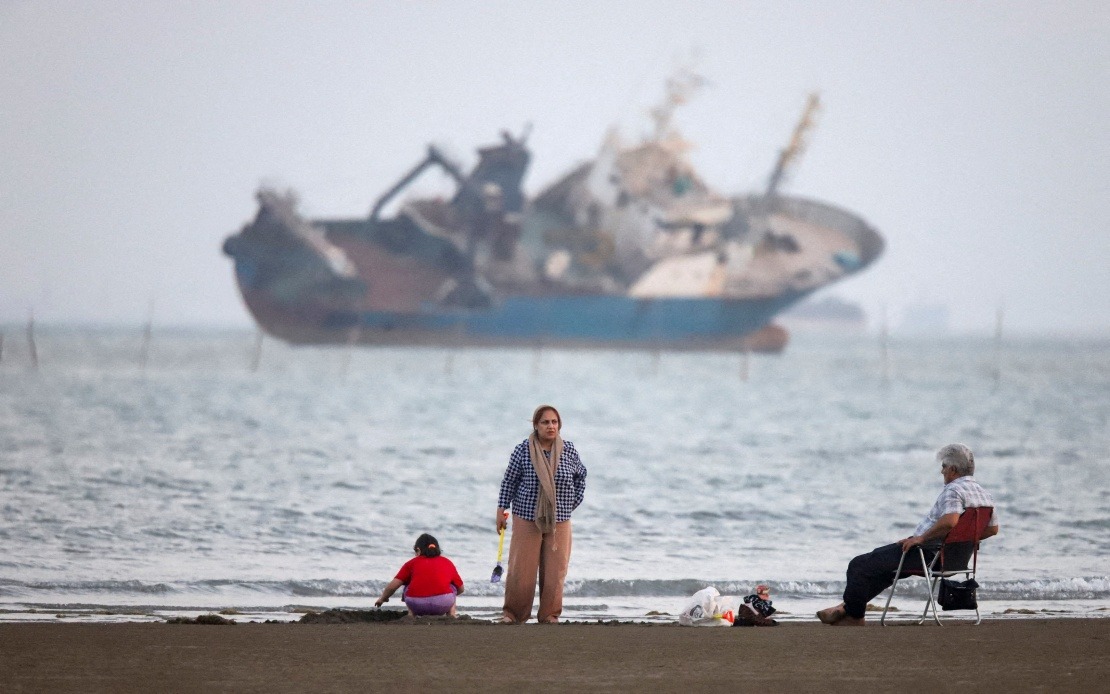
The timing of these sanctions coincides with heightened tensions in the Strait of Hormuz, where three commercial vessels were recently attacked in what Western and regional analysts attribute to Iranian forces. These maritime incidents represent an escalation in the broader proxy conflict between the United States and Iran that has intensified across the Middle East. The strait's vulnerability to disruption carries implications extending far beyond the region—any prolonged closure could send petroleum prices surging globally and trigger shipping insurance cost increases that would ultimately affect Malaysian importers and consumers.
Iran's Foreign Minister Seyed Abbas Araghchi responded to the sanctions announcement by accusing Washington of violating a memorandum of understanding, suggesting that the Trump administration had committed to suspending new sanctions measures. Araghchi's statement on X, the social media platform formerly known as Twitter, implies that American policymakers have reneged on previously negotiated agreements regarding sanctions architecture. He emphasised that mutual compliance between nations would be necessary for any future diplomatic resolution, a rhetorical position that underscores Tehran's view that Washington has initiated a fresh round of economic pressure.
The designation of these financial networks reflects broader American efforts to constrain Iran's access to international payment systems and hard currency earnings. By targeting entities facilitating transactions for Iranian entities and officials, OFAC aims to increase the friction costs of international commerce involving Iran, ultimately pressuring Tehran economically. For Malaysia and other Southeast Asian nations maintaining trading relationships with Iran, these sanctions carry implications for existing commercial arrangements and banking relationships that might be construed as facilitating transactions with designated entities.
The Strait of Hormuz remains a critical chokepoint for global energy markets, and ongoing military incidents there inject volatility into regional stability calculations. Malaysia, as a trading nation heavily dependent on stable maritime routes and uninterrupted energy supplies, has a vested interest in de-escalation between the primary antagonists. The latest sanctions episode demonstrates that Washington intends to maintain maximum pressure on Iran's financial system regardless of maritime incidents, suggesting a protracted period of US-Iran confrontation.
These sanctions represent a continuation of the maximum pressure strategy that has characterised American Iran policy since 2018, when the United States withdrew from the multilateral nuclear agreement. Rather than negotiating a return to the agreement framework or pursuing diplomatic channels, the latest designations indicate American officials are deepening financial restrictions targeting Iran's government and its associates. For Malaysian policymakers and business leaders engaged with Iranian counterparts, the evolving sanctions landscape demands careful attention to compliance obligations and reputational risks arising from any inadvertent facilitation of sanctioned transactions.

