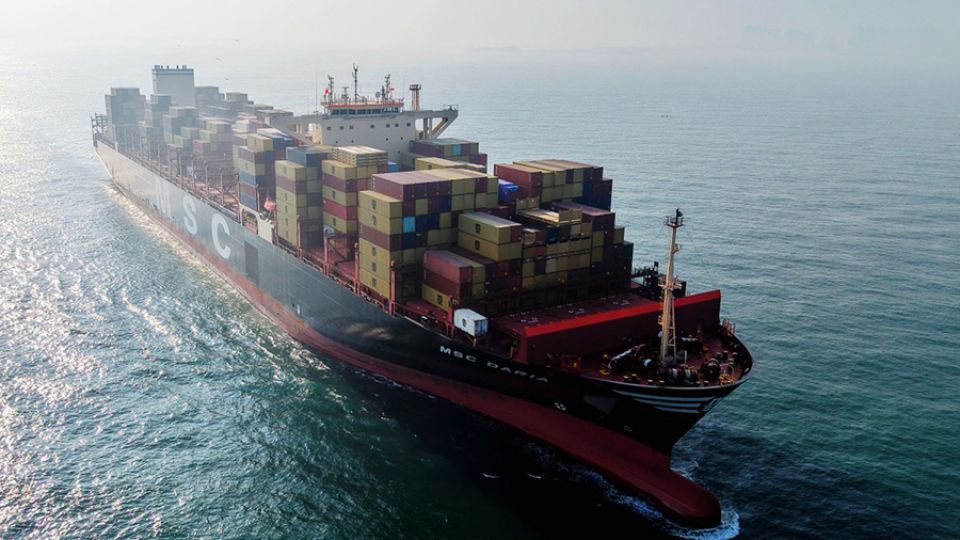
Washington has widened its enforcement of Iran sanctions by targeting 10 Chinese shipping companies based in Hong Kong and mainland China, along with eight associated tankers, over allegations that they facilitated Iranian oil shipments in violation of American trade restrictions. The State Department action effectively freezes any assets these firms hold in the United States and bars American companies and individuals from conducting business with them, a punitive measure that extends Washington's enforcement reach across the shipping industry in Asia.
The sanctions represent the latest volley in an intensifying trade war between the United States and China, layered atop existing tensions over technology, tariffs, and geopolitical influence. For Malaysian shipping operators and trading companies with connections to these sanctioned entities, the restrictions create immediate complications around compliance and business relationships. Port operators in the region must now scrutinise their customer rosters to ensure they avoid inadvertent dealings with blacklisted firms.
Beijing has consistently condemned what it views as extraterritorial application of American law, framing the sanctions as overreach lacking legitimacy under international governance frameworks. China's Foreign Ministry has repeatedly protested such measures, arguing they violate principles of national sovereignty and established international law. This latest action will likely provoke a formal diplomatic response from Beijing, further deepening the acrimony between the two powers.
The Washington administration has simultaneously sanctioned two Iranian maritime insurance providers—the Persian Gulf Marine Insurance Company and the Hormuz Safe Marine Services Authority—after accusing them of coercing commercial shipping operators into purchasing their insurance coverage as a condition for traversing the Strait of Hormuz without interference. This tactic underscores how sanctions enforcement extends beyond simple trade prohibitions into the ancillary services that underpin global commerce, complicating the operational landscape for international shipping.
The Strait of Hormuz remains one of the world's most strategically critical waterways, with profound implications for energy security across Asia and beyond. Prior to the recent escalation between Washington and Tehran, roughly one-fifth of global oil transit passed through this chokepoint. However, the intensification of American enforcement measures has dramatically disrupted these flows, reducing passage volumes to a fraction of historical levels. For Southeast Asian economies heavily dependent on stable energy supplies and competitive fuel pricing, this bottleneck translates into higher costs and supply vulnerabilities.
The Trump administration's broader campaign against Iranian oil exports has now ensnared more than 100 tankers through sanctions designations, each flagged for purportedly attempting to circumvent the American blockade on Iranian ports. This aggressive approach aims directly at Iran's economic lifeline, constraining Tehran's capacity to generate revenue from its most valuable export commodity. The strategy reflects Washington's determination to maximise economic pressure on Iran regardless of collateral effects on global shipping and trading networks.
Critics have begun questioning the effectiveness of this sanctions-heavy approach, with observers noting that the sheer repetition of punitive measures may diminish their diplomatic and strategic impact. Anthony Moretti, an associate professor at Robert Morris University, observed that Washington's relentless cycle of bans and blocks, while projecting toughness domestically, has failed to generate broader international alignment or tangible policy shifts from target nations. The perception among many global actors is that American unilateral enforcement, however consistent, lacks a coherent overarching strategy for resolving underlying geopolitical disputes.
For Malaysia and other Southeast Asian nations navigating these turbulent waters, the proliferation of American sanctions creates a complex compliance burden. Businesses must invest substantially in due diligence mechanisms to track ever-expanding sanctions lists, verify counterparty legitimacy, and ensure their supply chains remain free from sanctioned entities. Missteps carry steep financial penalties and reputational consequences, pushing companies toward more cautious, defensive postures that can slow economic activity and trade flows.
The sanctions regime also reflects broader patterns of fragmentation in global trade governance, where competing power blocs impose conflicting rules and restrictions that undermine predictability and efficiency in commerce. Regional players increasingly face pressure to choose alignment with either American or Chinese spheres of influence, a dynamic that threatens the post-World War II consensus on rules-based international order. For Malaysia, which has historically maintained pragmatic relationships across geopolitical divides, this bifurcation poses strategic challenges to its long-term economic interests and diplomatic positioning.
The targeting of Chinese shipping companies introduces an additional layer of complexity, as it directly challenges Beijing's economic and maritime interests while signalling Washington's willingness to weaponise secondary sanctions against third-party actors who facilitate Iranian trade. China's substantial shipping and logistics industries face mounting pressure to either comply with American restrictions or risk exclusion from the American market and dollar-denominated financial systems—a sobering calculus for firms seeking to maintain global operations.
As enforcement tightens, stakeholders across Southeast Asia, including port operators, logistics providers, insurance companies, and commodity traders, must reassess their risk exposure and strategic positioning. The stability and prosperity of regional economies increasingly depend on maintaining open, rules-based trading systems; yet the current trajectory of sanctions escalation threatens precisely this foundation. The challenge ahead will be balancing compliance with American restrictions while preserving economic relationships and supply-chain resilience in an increasingly fractured global system.

