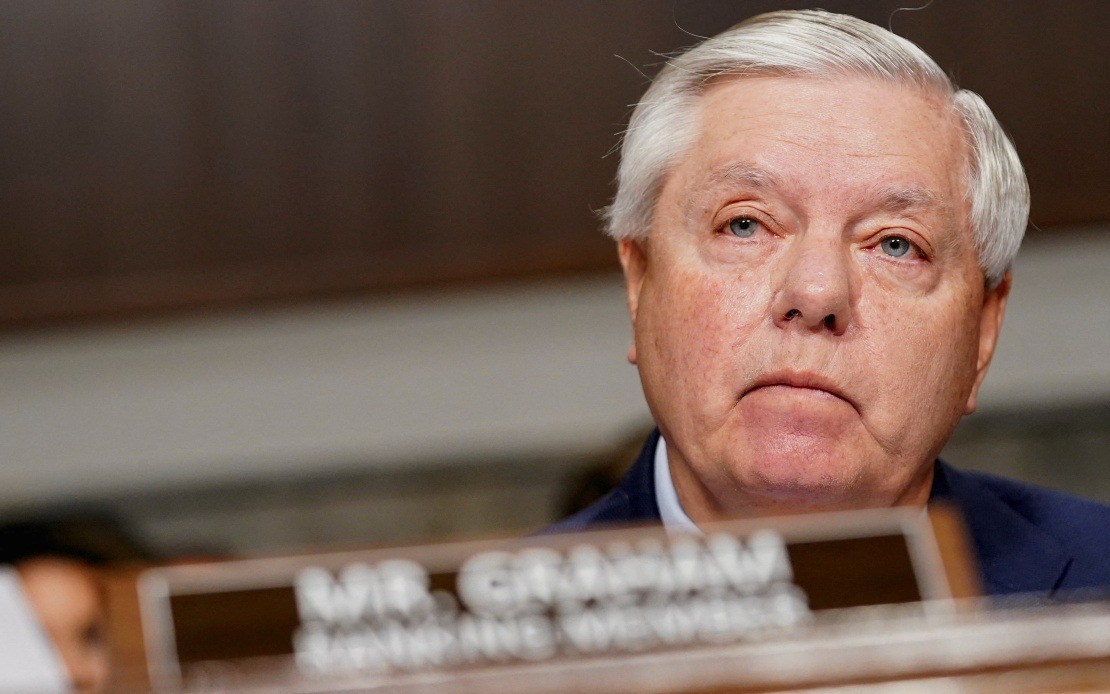
US Senator Lindsey Graham of South Carolina has died at the age of 71, his office confirmed Sunday in a statement disclosing that the prominent Republican lawmaker passed away on Saturday evening following what was described as a "brief and sudden illness." The death marks the loss of one of the upper chamber's most visible figures and a key political ally of President Donald Trump, leaving an unexpected vacancy in the Senate just months before a consequential election cycle.
Graham's family released a brief statement requesting privacy during what they characterised as an incredibly difficult period, while also expressing appreciation for prayers and condolences from the public and fellow lawmakers. The circumstances surrounding his sudden deterioration were not detailed in the official announcement, leaving questions about the specific medical situation unanswered at the time of disclosure.
A fixture in American politics for more than two decades, Graham had represented South Carolina in the Senate since 2002, winning reelection in 2008, 2014, and 2020. Throughout his tenure, he established himself as a significant voice within Republican circles, developing a reputation for both controversial statements and willingness to engage across party lines on certain foreign policy matters. His death removes from the Senate a seasoned operator who had navigated multiple congressional sessions and shifting party dynamics over his four previous terms.
At the time of his passing, Graham held the chairmanship of the Senate Budget Committee, a position affording considerable influence over federal fiscal policy and budgetary priorities. This committee assignment placed him at the centre of ongoing debates about government spending, deficit management, and competing priorities for federal resources—issues that remain contentious in American political discourse.
Graham's relationship with President Trump had been particularly significant in recent years, with the senator emerging as one of the former and current president's more dependable allies on Capitol Hill. Their partnership shaped legislative efforts and reflected broader alignments within the Republican Party, particularly on matters of defence, immigration, and judicial appointments. This alliance made Graham's position influential in Trump-era politics and beyond.
The senator's international profile had been growing as well. Just days before his death, Graham had travelled to Kyiv to meet with Ukrainian President Volodymyr Zelenskyy on Friday, continuing a pattern of high-profile diplomatic visits that demonstrated his engagement with global security issues. His interest in Ukrainian affairs and support for the country's position against Russian aggression had positioned him as a vocal advocate for international involvement in the conflict.
Graham had been actively campaigning for what would have been his fifth consecutive six-year term in the Senate, with the November election on the political calendar. His candidacy represented a continuation of his influence-building trajectory and suggested he had intended to remain a significant force in Senate deliberations and Republican strategy for years to come. His death injects uncertainty into South Carolina's electoral dynamics and raises questions about succession and party positioning in the coming months.
The timing of his death, occurring during an election year when political divisions run particularly deep, underscores broader vulnerabilities within institutional leadership and the unpredictable nature of political careers. Graham's passing removes from active political life a polarising yet experienced legislator whose career had encompassed moments of bipartisanship alongside periods of sharp partisan conflict.
For the Republican Party and the Senate more broadly, Graham's death necessitates rapid deliberation about filling the vacancy and the trajectory of various legislative priorities with which he was involved. His absence from the Budget Committee chairmanship and from the broader chamber will reshape internal dynamics and influence how legislation moves through the process.
Graham's influence on American foreign policy, particularly regarding the Middle East, Eastern Europe, and defence spending, had been considerable. His death removes a voice that advocated for robust international engagement and military commitments, potentially shifting internal party calculations on these matters. Whether his successor will maintain similar positions on these issues remains uncertain and may reflect broader shifts in Republican thinking about America's global role.

