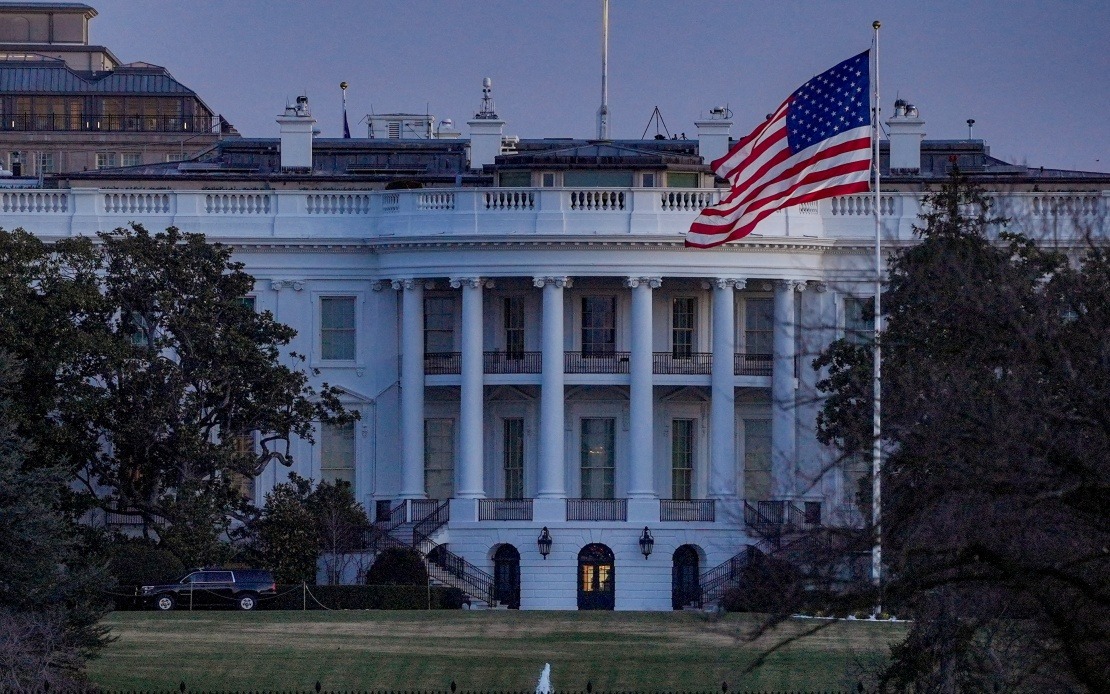
The protective mission facing the United States Secret Service has entered a critical phase, according to agency leadership. During remarks before the White House Correspondents' Association dinner on Wednesday, Secret Service Director Sean Curran directly acknowledged that his organisation is managing what amounts to an unprecedented security environment. The agency responsible for safeguarding the president, vice president, and other senior officials must now contend with what Curran described as a distinctly "heightened level of threat environment," a candid assessment that underscores the gravity of contemporary dangers to top American leadership.
This frank acknowledgement arrives amid a troubling pattern of violence that has tested both protective capabilities and national security infrastructure. Over the span of roughly two years, President Trump has survived three separate assassination attempts—a stark reminder that threats to American political leadership are no longer theoretical concerns but documented realities demanding immediate and sustained response. The first such incident unfolded during a campaign rally in Pennsylvania in July 2024, when an assailant opened fire, striking Trump in the ear. The incident shocked the nation and immediately catalysed a reassessment of security protocols at public political gatherings.
Separate from campaign events, the presidential residence and adjacent facilities have also proven vulnerable to threat actors. In September 2024, another assassination attempt occurred at Trump's golf club in Florida, demonstrating that threats extend beyond formal public appearances to leisure and semi-private settings. More recently, during April 2026, gunfire erupted at the White House Correspondents' Association dinner itself, an event traditionally attended by the president, senior government officials, journalists, and entertainment figures. The suspect involved in that shooting faced multiple criminal charges, including attempted assassination of the sitting president. The incident prompted the dinner's postponement, with organisers rescheduling proceedings to July 24.
Beyond these direct attacks, intelligence agencies have uncovered more elaborate conspiracies. In June 2026, the Federal Bureau of Investigation identified and disrupted a plot targeting a proposed Ultimate Fighting Championship event planned at the White House. The Department of Justice subsequently classified the discovered scheme as representing yet another assassination attempt against Trump. Each incident, whether attempted or thwarted, compounds the operational burden placed on the Secret Service, which must now simultaneously manage protective duties across multiple venues, threat vectors, and time horizons.
Trump himself has repeatedly characterised the menace posed to his personal security. Earlier in July, the president claimed he represents the top assassination target for Iran, reflecting both his assessment of geopolitical hostilities and perhaps the polarised nature of contemporary American politics. Trump advanced a statistical claim asserting that the likelihood of a sitting United States president failing to survive their tenure in office stands at 5.2 percent, though such calculations remain difficult to verify independently. When pressed on safety concerns amid reports of Iranian assassination plans, Trump indicated he saw limited cause for personal worry, projecting confidence even as his security apparatus operates at heightened readiness.
For Malaysian and Southeast Asian observers, these developments carry implications extending beyond American borders. The United States remains a central actor in regional security architecture, and internal instability threatening senior American leadership creates unpredictability in broader geopolitical relationships. The intensity and frequency of assassination attempts suggest that political violence in the United States has evolved beyond isolated incidents toward a more systematic pattern. This transformation reflects deeper fissures in American society that may influence how Washington engages with international partners and manages its foreign policy commitments.
The Secret Service's operational challenge encompasses not merely reactive response to identified threats but proactive prevention across an expanding threat landscape. Director Curran's candid admission that the agency confronts a sustained elevated threat environment reflects institutional realism about contemporary security demands. The organisation must balance transparency about threats with avoiding the creation of public alarm, a delicate equilibrium increasingly difficult to maintain as assassination attempts accumulate in frequency and proximity to senior officials.
The postponed White House Correspondents' Association dinner represents more than a rescheduling inconvenience. The event symbolises the intersection of American democracy's commitment to press freedom, ceremonial functions of the presidency, and the practical security requirements that increasingly constrain how public leadership can operate. The April shooting, which forced the dinner's interruption, fundamentally altered the calculus surrounding such gatherings, introducing physical risk into what had previously been understood as a relatively controlled environment. Trump's confirmation in June that he would attend the rescheduled July event signalled determination to maintain presidential engagement with traditional institutions despite elevated risks.
The pattern of threats targeting Trump specifically, whether originating from foreign adversaries like Iran or domestic actors, reflects the intensely personalised nature of contemporary security challenges. Unlike threats directed at the institution of the presidency generally, these incidents appear directed at the individual occupying the office. This distinction carries important implications for how protection is organised and resources are allocated. The Secret Service must prepare for scenarios where generic deterrence proves insufficient and must instead anticipate directed, motivated attackers willing to accept significant personal consequence to pursue their objectives.
Moving forward, the sustained acknowledgement of heightened threat conditions will likely influence both public perception of presidential security and the scope of protective measures deemed necessary. Director Curran's public statement serves partly as institutional notification that elevated vigilance will characterise operations indefinitely, rather than as a temporary adjustment to circumstances expected to normalise. For security professionals, policymakers, and analysts throughout Southeast Asia and beyond, the American Secret Service's struggle against this escalating threat landscape offers sobering evidence that protecting senior leadership in the modern era demands resources, adaptability, and continuous reassessment of assumptions underlying protective systems that have served democratic institutions for generations.

