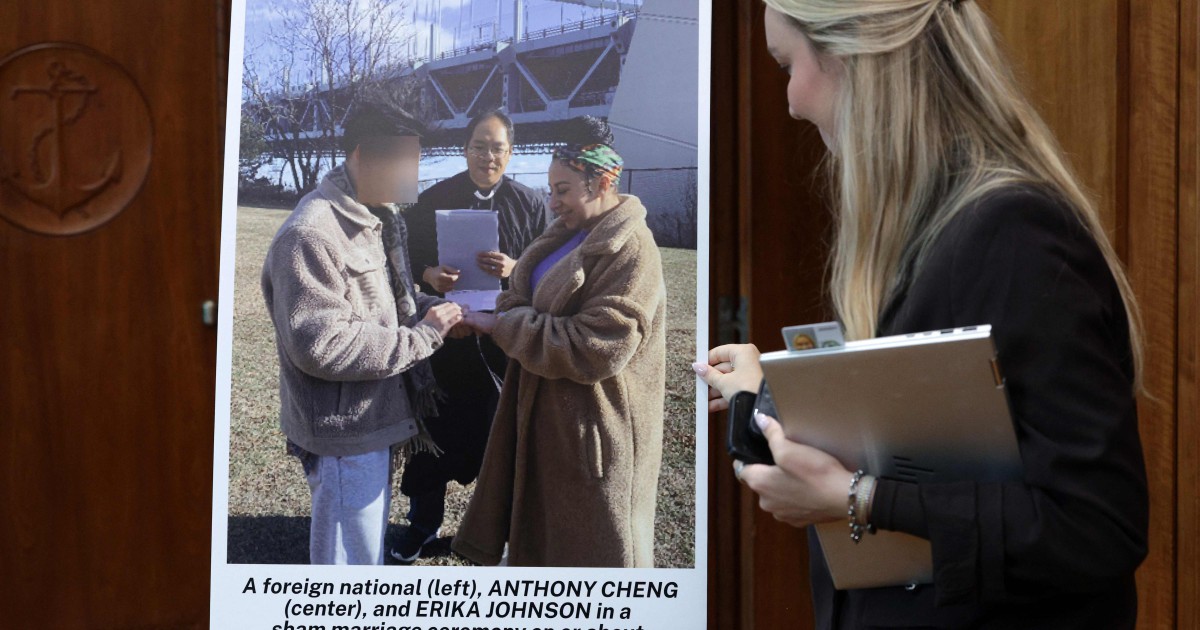
Federal prosecutors in the United States have announced charges against eleven people accused of orchestrating one of the nation's most extensive immigration fraud operations centred on fraudulent marriage arrangements. The Justice Department's action, detailed in court filings released Wednesday, represents a significant enforcement effort against a decade-spanning scheme that authorities say facilitated roughly 1,000 sham marriages designed to circumvent standard immigration procedures and provide Chinese nationals with a pathway to legal residency status in America.
The scope of the conspiracy underscores the persistent vulnerabilities within the US immigration system, where marriage-based petitions have long represented one of the most accessible routes to permanent residence for foreign nationals. Immigration experts note that the relative simplicity of establishing spousal relationships compared to employment-based or diversity-lottery pathways has historically made this avenue attractive to those seeking to exploit regulatory gaps. The scale of this particular operation—involving hundreds of couples across multiple jurisdictions and spanning a full decade—suggests a highly organised criminal enterprise rather than isolated incidents of immigration fraud.
The defendants allegedly operated a sophisticated network that matched Chinese nationals seeking immigration benefits with willing Americans, often compensating the US citizen participants for their participation in the scheme. Investigators found that the operation systematically created false documentation, coached participants on maintaining their cover stories, and guided couples through official immigration interviews designed to verify the legitimacy of spousal relationships. The elaborate nature of these preparations indicates the organisers possessed detailed knowledge of how immigration authorities evaluate marriage petitions, enabling them to craft narratives sufficiently credible to deceive experienced adjudication officers.
For Malaysian readers and Southeast Asian observers, this enforcement action carries particular relevance. Many regional citizens utilise similar legal immigration pathways to the United States, and confidence in the integrity of these systems remains crucial to their viability. Chinese nationals—particularly from mainland China—represent a substantial portion of applications through family-sponsored immigration channels across the Asian region. This case demonstrates how large-scale fraud can prompt heightened scrutiny affecting legitimate applicants from the same demographic groups, potentially complicating the visa processes for genuine spouses and family members of US citizens from China and neighbouring countries.
The timing of these charges reflects the Trump administration's stated priorities regarding immigration enforcement and border security. While the previous administration issued an executive order targeting so-called "birth tourism"—the practice of pregnant women entering the United States specifically to give birth and secure citizenship for their children—these fraud charges target a related but distinct category of immigration abuse. The combination of these initiatives signals a comprehensive approach to dismantling various schemes perceived as circumventing established immigration rules, even as debate continues over whether such tactics effectively target genuine security threats or primarily burden aspiring immigrants navigating legitimate pathways.
Money laundering and financial manipulation formed integral components of the alleged scheme. Prosecutors allege the organisers collected substantial fees from Chinese nationals—typically ranging into thousands of dollars per arrangement—while also compensating American participants, generating significant profits that were funnelled through various financial channels. This dimension transforms the case beyond simple immigration fraud into territory involving organised crime characterised by financial deception. US authorities increasingly recognize such operations not merely as immigration violations but as organised criminal enterprises warranting prosecution under broader statutes addressing conspiracy and money laundering.
The investigation reportedly began years ago as officials detected suspicious patterns in marriage petition filings from certain jurisdictions. Immigration adjudicators, trained to identify red flags indicating fraudulent relationships, apparently noticed clustering of marriages involving particular individuals or geographic regions, prompting referrals to law enforcement. This detection mechanism highlights ongoing efforts within the immigration bureaucracy to maintain system integrity, though critics argue that current resources allocated to fraud detection remain insufficient for the volume of applications processed annually across the United States.
For Chinese nationals and others contemplating immigration through marriage, this case carries cautionary implications. Immigration authorities worldwide have grown increasingly sophisticated in their methods for distinguishing genuine spousal relationships from fraudulent arrangements. Biometric data collection, advanced document analysis, and extensive interview protocols designed to test couples' knowledge of each other's personal details form standard components of modern vetting procedures. Participants in such schemes face criminal prosecution in both the United States and potentially their home countries, alongside permanent immigration consequences including deportation and bans on future legal entry.
The consequences ripple through immigration courts and processing centres throughout the United States and its consular posts worldwide. Heightened suspicion surrounding marriage-based petitions, particularly those involving applicants from China or other countries associated with previous fraud schemes, inevitably creates longer processing delays and more intensive questioning of legitimate couples. This collateral impact on genuine applicants represents one of the most pernicious effects of immigration fraud, as the system responds by imposing additional barriers on law-abiding citizens and residents attempting to reunify with spouses through lawful procedures.
Beyond immediate criminal accountability, this enforcement action generates important policy questions regarding the structural features of family-sponsored immigration that create opportunities for fraudulent exploitation. Policymakers continue debating whether enhanced verification requirements—including expanded background checks, financial investigations, or DNA testing—represent justified security measures or constitute excessive intrusions on privacy and spousal relationships. The Justice Department's prosecution record becomes relevant to these deliberations, providing evidence that fraud operates at meaningful scale and warrants serious countermeasures.
Looking forward, this case will likely inform how immigration authorities approach marriage petitions involving applicants from regions where similar schemes have operated. Regional diplomatic relationships may also be affected, particularly if the investigation reveals involvement by organised criminal groups with transnational networks spanning Southeast Asia and the Pacific. Enhanced cooperation between US law enforcement and international partners remains crucial for disrupting such operations at their source, potentially preventing thousands of prospective immigrants from becoming entangled in fraudulent arrangements that ultimately jeopardise their legal status and personal futures.

