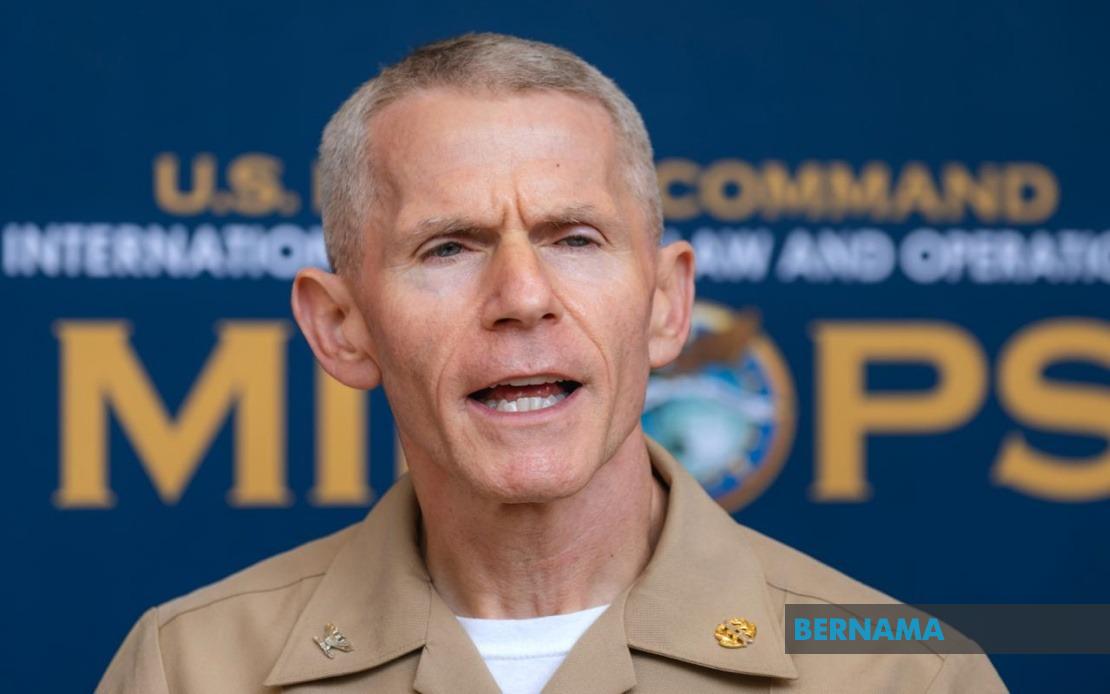
The United States Pacific Command has doubled down on its commitment to maintaining a sustained military presence in the South China Sea, framing the contested waterway as essential to broader regional peace efforts across the Indo-Pacific. Navy Captain Dustin Wallace, serving as USPACOM's Staff Judge Advocate, delivered this message during a high-level international military conference in Kuala Lumpur on Monday, underscoring Washington's determination to counter what it characterises as destabilising activities in one of the world's most strategically significant maritime corridors.
Wallace articulated USPACOM's role as a guarantor of freedom of navigation and commerce, positioning these principles as foundational to the security architecture that benefits all regional states regardless of their military capacity or geographic proximity to disputed territories. This framing carries particular resonance for Malaysia and other Southeast Asian nations that depend heavily on unimpeded passage through waters claimed or contested by multiple parties. The command's emphasis on these universal principles represents an attempt to depoliticise its operations, presenting them as serving collective interests rather than serving any single power's strategic ambitions.
The broader context for USPACOM's statements involves mounting tensions in the South China Sea, where China has expanded its military capabilities and infrastructure on disputed islands and reefs. The United States has conducted regular freedom of navigation operations through the region, drawing protests from Beijing and creating friction that reverberates across Southeast Asia. For nations like Malaysia, which holds its own disputed maritime claims and depends on stable sea lanes for trade, the balance between major power competition and regional stability represents an ongoing diplomatic challenge.
Wallace's comments regarding ASEAN centrality reflect growing American recognition that regional autonomy and institution-building matter to Southeast Asian governments. By explicitly endorsing ASEAN's role in addressing regional security issues, USPACOM signals Washington's willingness to work through established multilateral mechanisms rather than imposing solutions unilaterally. This approach acknowledges that many ASEAN members value their strategic flexibility and resist becoming aligned with any single great power, preferring instead to maintain pragmatic relationships across the board.
The command's stated intention to tailor engagement with individual ASEAN nations according to their specific interests and priorities represents a nuanced diplomatic posture. Different Southeast Asian countries maintain varying threat perceptions, economic dependencies, and strategic preferences. Vietnam and the Philippines, for instance, face direct territorial disputes with China and have moved closer to security partnerships with the United States. Indonesia and Malaysia, while concerned about regional stability and freedom of navigation, have adopted more hedging strategies that preserve room for engagement with Beijing. USPACOM's flexibility acknowledges these differences rather than demanding uniform alignment.
The conference hosting USPACOM's comments, the 37th International Military Law and Operations Conference, itself reflects the growing importance placed on legal frameworks in managing great power competition. By bringing together military leaders, legal experts, policymakers and scholars from over 30 countries, the gathering emphasises that contemporary international disputes are increasingly fought in legal and diplomatic arenas as much as in military ones. The event's theme of advancing security through law and cooperation suggests an attempt to channel great power competition into rules-based processes.
Malaysia's role as a host nation for such a high-level forum demonstrates the country's continuing importance as a neutral venue and respected voice on regional matters. While Malaysia maintains security relationships with the United States, it simultaneously engages pragmatically with China on economic and diplomatic issues. This positioning makes the country an appropriate setting for discussions about preserving the Indo-Pacific's rules-based order, since Malaysia itself exemplifies the kind of strategic balance many regional nations seek to maintain.
Wallace's emphasis on the rule of law and sovereign equality carries particular weight in the context of South China Sea disputes, where competing claims rest on different legal interpretations of maritime law and historical documents. The 2016 arbitration ruling that invalidated China's nine-dash line claim was technically binding under international law, yet Beijing has refused to accept it. By reiterating the importance of legal frameworks, USPACOM aligns itself with the position that disputes should be resolved through established legal mechanisms rather than military coercion or fait accompli tactics that alter the status quo.
The United States' framing of its South China Sea operations as defensive rather than offensive represents a key rhetorical strategy aimed at reassuring regional states about American intentions. By casting USPACOM's role as deterrence against aggression and destabilisation rather than projection of power, Washington attempts to present itself as a status quo power committed to preventing unilateral changes to the regional order. This distinction matters significantly for countries like Malaysia that seek to avoid being drawn into great power confrontation.
Looking forward, the challenge for both USPACOM and regional nations will be maintaining this rules-based approach even as strategic competition intensifies. The South China Sea's importance stems not only from its disputed territories but from its role as a global trade route through which trillions of dollars in commerce pass annually. Any military confrontation in the region would affect maritime commerce worldwide, creating incentives for all parties to pursue de-escalation even amid strategic disagreement. USPACOM's continued emphasis on stability and legal frameworks reflects this reality.
For Malaysian policymakers and citizens, USPACOM's statements underscore the enduring importance of great power management to Southeast Asian security. While Malaysia maintains independent foreign policy aspirations, the region's stability and prosperity increasingly depend on preventing US-China competition from spiralling into military confrontation. The challenge ahead involves maintaining constructive engagement with both powers while advancing regional institutions and legal frameworks that all parties have agreed to respect, however imperfectly.

