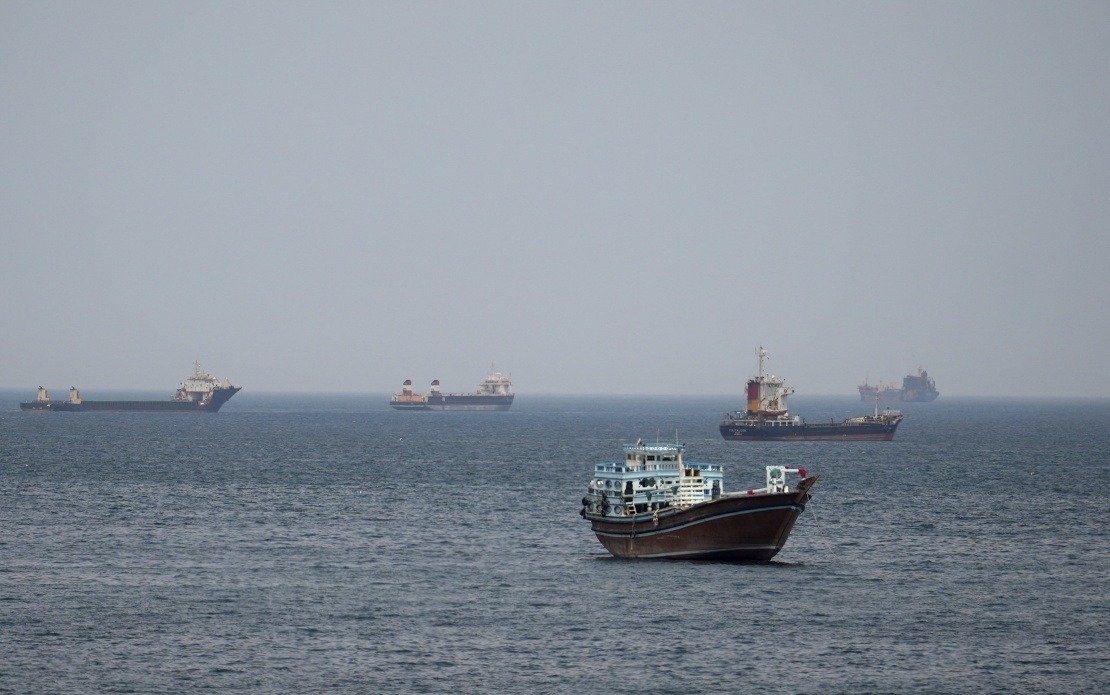
The United States military has facilitated the transit of over 800 commercial vessels through the Strait of Hormuz since early May, according to an announcement by US Central Command on Thursday. In addition to ensuring the safe passage of merchant shipping, American forces have also helped secure the movement of 380 million barrels of crude oil through this critical waterway. Despite mounting regional tensions and direct military confrontations between Washington and Tehran, commercial traffic has remarkably continued to flow through one of the world's most strategically significant maritime chokepoints.
The timing of the announcement underscores the fragile nature of the current situation. Even as CENTCOM was releasing these figures, tensions between the United States and Iran were experiencing a dangerous escalation. Over the preceding forty-eight hours, the two powers had engaged in successive rounds of military strikes against one another, with the security situation deteriorating from an already volatile baseline. The continuation of commercial shipping despite this volatility demonstrates both the critical importance of the corridor to global energy markets and the determination of international maritime operators to maintain essential trade flows.
Thursday witnessed a significant escalation in hostilities, with Iran launching a coordinated series of strikes against American military installations across the region. These attacks targeted facilities in Bahrain, Kuwait, Qatar, and Jordan, representing an expanded geographic scope of Iranian military operations. The strikes were framed by Tehran as retaliation for what Iranian officials characterized as a second consecutive day of American attacks. This back-and-forth pattern of military exchanges represents a dangerous trajectory, with each side responding to perceived provocations with further military action.
For Malaysian and Southeast Asian interests, the implications of sustained tension around the Strait of Hormuz carry considerable weight. The waterway remains crucial for regional energy security, with a substantial portion of crude oil destined for Asian markets transiting through this narrow passage daily. Disruptions to shipping through the strait would directly affect fuel prices and energy costs across the region, with potential consequences for Malaysia's petrochemical sector and broader economic stability. The region's manufacturing industries, which depend heavily on stable energy supplies, would face significant challenges if maritime routes through the strait became unsafe or congested.
The presence of American military assets in the region, ostensibly protecting commercial vessels, reflects the broader strategic competition unfolding in the Middle East. The United States has maintained a substantial military footprint across the Arabian Peninsula and surrounding waters for decades, but recent years have seen renewed emphasis on freedom of navigation operations and the protection of critical shipping lanes. These operations serve multiple purposes: demonstrating American commitment to regional allies, reassuring international shipping operators, and maintaining American influence over critical chokepoints in global trade.
Iran's decision to conduct attacks on commercial vessels and challenge American naval operations reflects its frustration with sanctions and isolation, as well as its strategic calculations about deterrence and regional power. The Islamic Republic views the Strait of Hormuz as a key lever for exerting influence and resistance against what it perceives as American-led pressure. By making the waters around this vital passage unpredictable, Iran attempts to impose costs on American interests and challenge Washington's position as guarantor of maritime security in the region.
The 380 million barrels of crude oil that have successfully transited the strait since early May represent essential supplies for global markets, with Asia-Pacific economies accounting for a substantial share of demand. This volume underscores the economic stakes involved in maintaining open shipping lanes. Any significant disruption would create immediate upward pressure on oil prices globally and could trigger broader economic consequences. For energy-importing nations like Malaysia, such price shocks would have ramifications across government budgets, transportation costs, and industrial competitiveness.
The fact that American military coordination has enabled this shipping volume despite the hostile environment suggests that neither the United States nor Iran currently desires a complete blockade of the waterway. However, this does not mean that the situation is stable or that further escalation is impossible. The tit-for-tat nature of recent military exchanges indicates a dangerous dynamic where miscalculation or accidental incidents could rapidly spiral into more serious conflict. Commercial shipping operators and insurers remain deeply concerned about the risks of operating in these waters, and some shipping companies have already begun implementing additional security measures or routing changes.
The international community, including Southeast Asian nations with significant maritime interests in the region, faces challenges in managing this situation without becoming entangled in great power competition. Malaysia and other ASEAN members have carefully balanced relationships with both the United States and Iran, seeking to maintain diplomatic engagement while protecting national economic interests. The continuation of shipping through the strait, even amid conflict, allows these nations to avoid forced choices about whose side they support in regional disputes.
Looking ahead, the sustainability of current conditions remains uncertain. The escalating pattern of military exchanges, combined with the underlying political tensions between Washington and Tehran, suggests that the situation could deteriorate further. Additional provocations, whether deliberate or accidental, could trigger more serious escalation. For Southeast Asian policymakers and business leaders, monitoring developments in the Strait of Hormuz has become essential to understanding future energy security and supply chain stability for the region.

