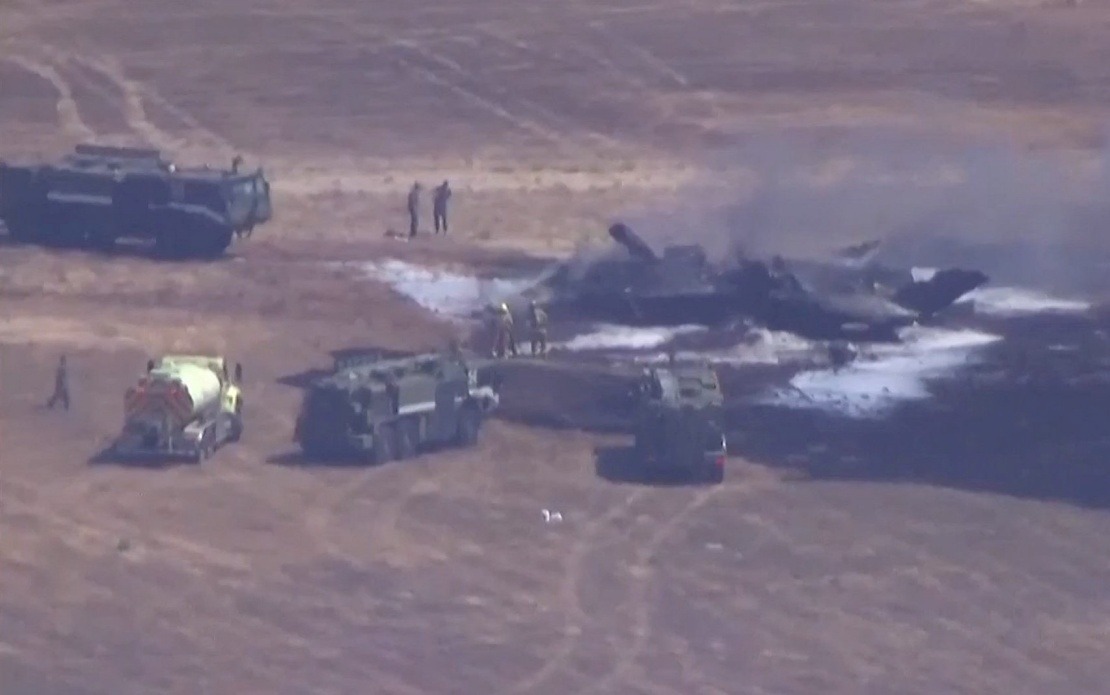
A US Marine Corps F-35B fighter jet experienced a mishap near Marine Corps Air Station (MCAS) Miramar in San Diego, California, on Friday, with emergency personnel mobilising immediately following the incident. The crash occurred at approximately 10 am local time, prompting a swift response from base authorities. Military officials have confirmed that the pilot successfully ejected from the aircraft and was subsequently recovered by rescue personnel, avoiding what could have been a catastrophic loss of life. The pilot was transported to a medical facility for evaluation, though initial reports indicate the airman avoided serious injury.
The incident involved an F-35B assigned to the 3rd Marine Air Wing, Marine Air Group 11, representing a significant loss of advanced military equipment for the US military establishment. MCAS Miramar serves as one of the United States' principal military aviation hubs, hosting approximately 15,000 service members drawn from across all branches of the armed forces. The base's strategic importance in the Pacific region underscores the gravity of losing such a sophisticated and expensive asset. The F-35B variant operated by the Marines differs from its Air Force counterpart, incorporating short takeoff and vertical landing capabilities that enable operations from smaller, less-developed airfields—a critical advantage for expeditionary warfare and rapid deployment scenarios.
The F-35 programme remains one of the most ambitious and costly weapons development initiatives in military history, with each aircraft carrying a substantial procurement and operational cost. This particular incident adds to a pattern of technical challenges and operational difficulties that have dogged the programme since its inception. The loss of an F-35B raises fresh questions about the aircraft's reliability and safety protocols, particularly as the Marine Corps continues expanding its fleet of these jets across operational squadrons globally. For defence analysts and military planners, each crash provides crucial data regarding the platform's vulnerability to environmental and mechanical stressors.
The investigation into the crash's underlying causes remains ongoing, with military authorities likely to examine multiple variables including mechanical failure, pilot error, environmental conditions, and maintenance protocols. Such investigations typically consume weeks or months, involving detailed analysis of flight recorder data, aircraft systems examination, and witness testimony. Understanding what precipitated the mishap holds significance beyond the immediate incident, as findings frequently influence operational procedures, maintenance schedules, and training protocols across the broader fleet. The transparency with which military authorities release investigative conclusions also shapes public confidence in the defence establishment's stewardship of advanced weapons systems.
From a regional perspective, incidents involving advanced US military aircraft carry implications for Indo-Pacific security dynamics and defence partnerships. Southeast Asian nations, including Malaysia, maintain close defence relationships with the United States and benefit from regional stability underpinned by American military capability and presence. The operational readiness of assets like the F-35B directly influences the credibility of US security commitments across the region, particularly as geopolitical tensions involving great power competition intensify. Although this particular crash occurred far from Southeast Asian waters, the broader narrative regarding advanced weapons system reliability resonates throughout defence establishments across the region.
The F-35B's role within broader Marine Corps doctrine emphasises rapid power projection and amphibious operations, making the platform central to forward-deployed naval expeditionary forces. Its vertical landing capability distinguishes it from conventional fighters and allows Marines to operate from specially equipped transport ships and austere landing zones. This flexibility has made it strategically valuable for addressing contingencies across vast ocean expanses, where traditional airbases may prove inaccessible or vulnerable. The loss of a single aircraft, whilst significant, does not fundamentally compromise the programme's strategic utility, though it underscores the ongoing technical challenges inherent in fielding such complex systems.
Pilot safety represents a paramount concern within military aviation, and the successful ejection and recovery in this instance reflects decades of engineering focused on protecting aircrew in emergency situations. Modern fighter jets incorporate sophisticated ejection systems designed to function across an expansive envelope of flight conditions, though pilots face inherent risks when forced to abandon their aircraft. The Marine Corps' successful recovery of this pilot demonstrates the effectiveness of rescue procedures and the value of maintaining robust emergency response capabilities at operational bases. However, the psychological and professional impact on pilot populations when aircraft experience mishaps should not be underestimated, as such incidents can influence morale and confidence in the platforms they operate.
MCAS Miramar's location within the San Diego metropolitan area also raises considerations regarding airspace management, civilian safety, and the interfaces between military operations and civilian populations. Major military air bases inevitably occupy space within increasingly urbanised regions, necessitating careful coordination between military authorities and civilian aviation oversight bodies. The proximity of advanced military aircraft operations to population centres requires exceptional safety protocols and contingency planning to minimise risks to non-combatant civilians. When mishaps occur, the investigation must account for these geographical realities and assess whether any civilian infrastructure or persons faced hazard from the incident.
The broader context of F-35 programme development includes substantial investment from allied nations, many of whom have committed to acquiring the aircraft for their own defence forces. This international dimension adds complexity to how such incidents are perceived and analysed beyond American defence circles. Nations considering F-35 procurement carefully monitor the operational experience of current operators, including mishap rates and the responsiveness of manufacturers and military authorities in addressing technical issues. Transparency regarding investigation findings and remedial measures influences confidence among allied defence establishments in the platform's suitability for their strategic requirements.
Moving forward, military authorities will likely implement whatever corrective measures the investigation determines are warranted, potentially affecting operational procedures, maintenance protocols, or design modifications across the broader fleet. The incident contributes to the cumulative experience base that shapes how the F-35 programme evolves and matures. Whilst individual crashes, whilst regrettable, are not unusual for any advanced weapons platform undergoing operational deployment, the aggregate pattern of incidents informs policy decisions regarding fleet management, training standards, and long-term viability assessments. For Malaysia and other regional partners, monitoring how the United States manages such technical and operational challenges provides insight into the reliability and sustainability of defence partnerships and capabilities upon which regional security increasingly depends.

