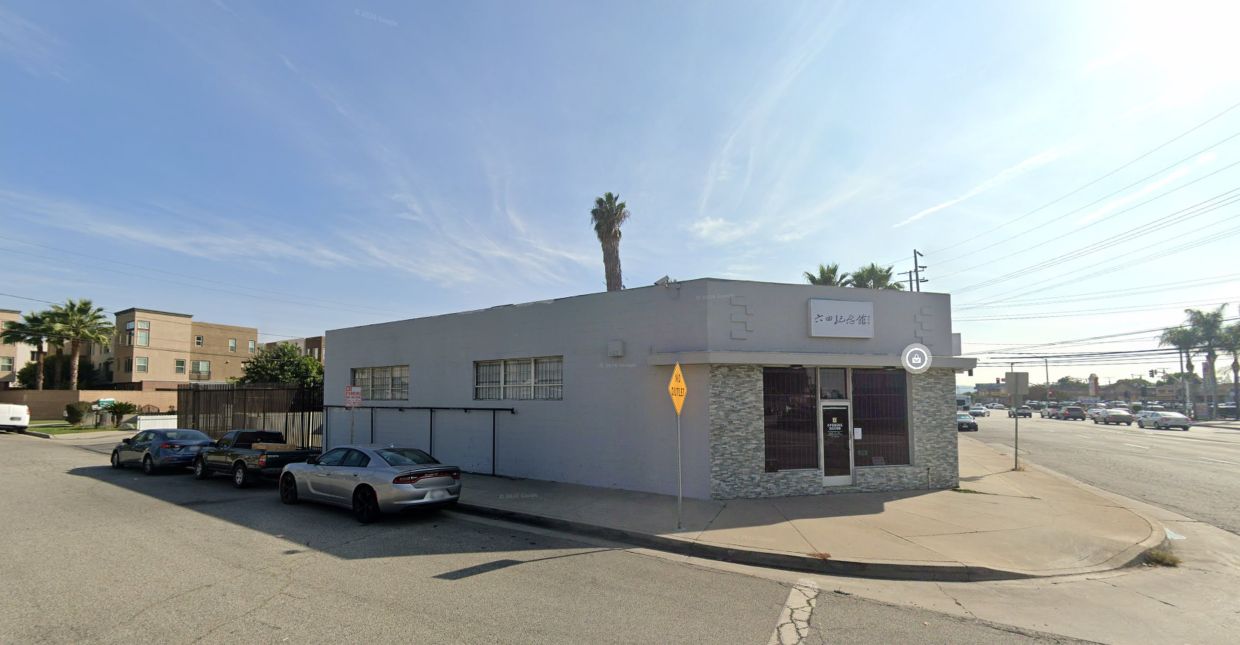
Senior figures in the US Congress have formally requested that federal authorities conduct a comprehensive investigation into a break-in and vandalism incident at a California-based memorial museum dedicated to the 1989 Tiananmen Square crackdown. The letter, submitted to the Justice Department on Thursday, came from John Moolenaar, the Michigan Republican who chairs the House Select Committee on China, and Christopher Smith, a New Jersey Republican serving as co-chairman of the Congressional-Executive Commission on China. Both lawmakers framed the incident as a potential threat to the freedoms enjoyed by Chinese diaspora communities in the United States.
The June 4th Memorial Museum, located in El Monte in Los Angeles County, fell victim to an apparent security breach on May 31, just days before the annual commemoration of the 1989 military crackdown on pro-democracy protesters in Beijing's Tiananmen Square. According to the museum's own account, intruders gained unauthorised access to the facility, spray-painted walls and exhibition displays, damaged property, and deliberately disrupted the building's surveillance equipment. The vandalism appeared deliberate and targeted, with photographs circulated online revealing single lines of orange paint applied across framed newspaper clippings and related historical materials. The museum's management issued a statement condemning those responsible and vowing to pursue legal remedies, while simultaneously expressing resolve not to yield to intimidation.
The museum itself represents a relatively young but symbolically significant institution in the American memorial landscape. Established in 2023, it was initially based in New York before relocating to the Los Angeles area to reduce operational expenses. The facility functions as a non-profit entity under United States tax law and has depended almost entirely on independent fundraising efforts, public donations, and contributions from civil society organisations rather than government support. Online artist collectives associated with the project stated in 2023 that approximately US$500,000 had been raised toward an ultimate goal of US$2 million, demonstrating the grassroots nature of the initiative.
In their letter to the Justice Department, Moolenaar and Smith explicitly urged federal investigators to determine whether the attack represented a coordinated effort. They asked that both the Federal Bureau of Investigation's Los Angeles Field Office and the Justice Department's National Security Division work in tandem with local law enforcement to ascertain whether the incident was planned, encouraged, supported, or executed by individuals acting on behalf of the People's Republic of China or the Communist Party of China. This framing represents a significant escalation in characterising the vandalism from a simple criminal act to a potential instance of what experts term transnational repression, whereby authoritarian governments extend control and intimidation mechanisms into foreign jurisdictions.
The museum itself has publicly stated its suspicion that the incident constitutes transnational repression, though officials have not disclosed the specific evidence underpinning this assessment. The El Monte Police Department has opened an official case and begun investigation, with museum officials claiming to have identified certain clues and points requiring clarification. The institution pledged to cooperate fully with law enforcement authorities to resolve the matter as expeditiously as possible. As of the time of reporting, neither the El Monte police nor the Justice Department had made public statements regarding the status of any investigation into the incident.
The timing of the vandalism carries particular significance within the context of contemporary China-United States relations. The break-in occurred just days before June 4, when Chinese diaspora communities and international human rights advocates annually commemorate the 1989 crackdown, which resulted in numerous deaths and injuries when the Chinese military forcibly dispersed student-led demonstrations calling for democratic reforms. The incident thus occurred during a period of heightened symbolic and political sensitivity, suggesting the vandals may have deliberately targeted the museum to disrupt commemorative activities.
China's official response to such scrutiny has remained consistent and dismissive. The Chinese embassy in Washington did not immediately respond to requests for comment on the congressional letter, but Beijing has established a pattern of characterising international bodies critical of its human rights record as politically motivated instruments. Chinese government statements routinely describe such entities as "political tools with zero credibility" driven by "Cold War mentality" and "ideological bias." This rhetorical stance reflects deeper tensions between Beijing's nationalist narrative and Western emphasis on universal human rights standards.
The two congressional bodies initiating this inquiry represent distinct but complementary mandates within the American legislative structure. The House Select Committee on China, established in January 2023, focuses on economic and security competition between the United States and China. The Congressional-Executive Commission on China, created in 2000 specifically to monitor human rights and the rule of law during Beijing's integration into the World Trade Organization, brings two decades of institutional experience to such investigations. Though neither body possesses authority to propose legislation independently, both can conduct investigations and submit policy recommendations to Congress.
For Malaysian observers and Southeast Asian policymakers, this incident illuminates the complex intersection of diaspora politics, international human rights advocacy, and US-China strategic competition. The case demonstrates how symbolic spaces of remembrance become flashpoints in broader geopolitical struggles. As Malaysia itself maintains significant trade relationships with both the United States and China while hosting substantial Chinese Malaysian communities, the incident underscores the reality that transnational political tensions increasingly manifest in unexpected venues and ways. The apparent targeting of a memorial to a pivotal 1989 incident suggests that historical grievances remain live political issues capable of motivating contemporary actors across international borders.
The vandalism incident and subsequent congressional response also reflect deepening American concerns about the scope of Chinese state activity within US borders. Whether or not the specific allegation of direct involvement by Chinese authorities proves substantiated, the incident demonstrates how memory institutions commemorating contested historical events have become sites of tension in an era of heightened great power competition. The coming weeks will likely reveal whether federal authorities can establish a clear chain of responsibility for the vandalism, and whether such findings will further inflame US-China relations already strained by disputes over technology, trade, and human rights.

