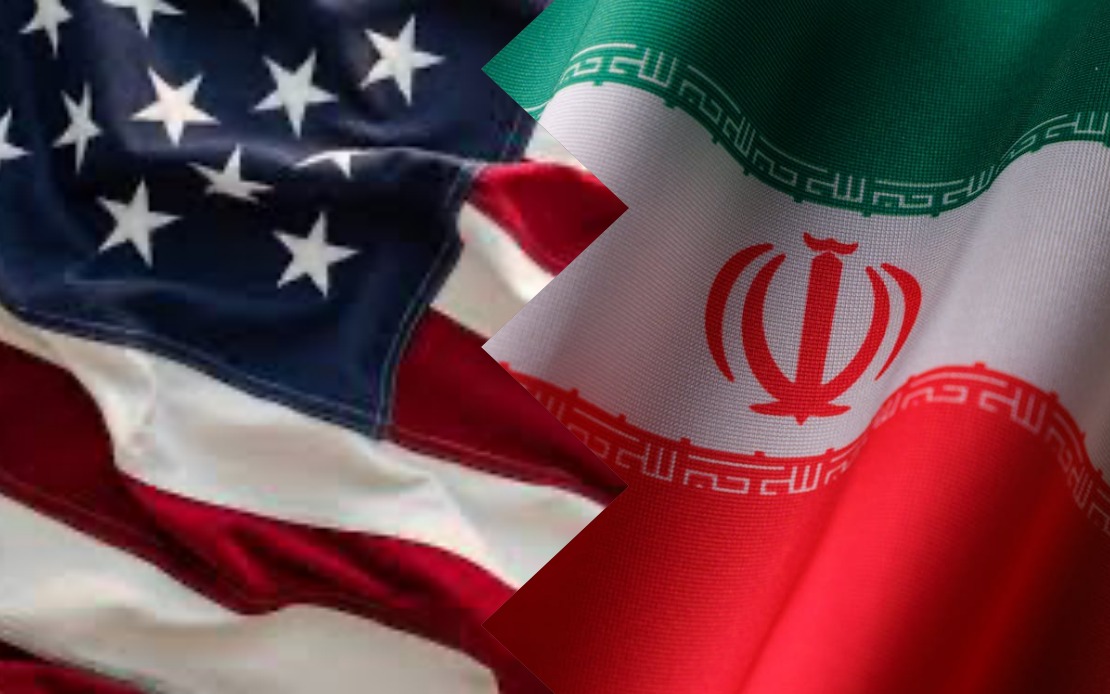
American military forces executed a second round of offensive operations targeting Iran on Wednesday afternoon, marking an intensification of direct military confrontation between Washington and Tehran. The US Central Command confirmed the strikes were launched at 3 p.m. Eastern Time, with operations designed to degrade Iranian military infrastructure that poses threats to international maritime transit through one of the world's most strategically vital waterways. The timing and scope of these operations underscore the volatile state of US-Iran relations and the Trump administration's willingness to pursue military action despite ongoing diplomatic overtures.
The strikes specifically targeted Iranian military capabilities that have been used to threaten vessels navigating freely through the Strait of Hormuz, a narrow passage through which approximately one-third of globally traded seaborne oil flows. This waterway represents a critical economic artery for the global economy and remains one of the most sensitive geopolitical flashpoints in the Middle East. By framing the operations as defensive measures protecting international commerce, the US military seeks to justify its actions within the framework of safeguarding global trade routes rather than purely aggressive military posturing.
President Donald Trump issued a stern warning to Iranian leadership earlier on Wednesday, emphasising that Tehran fully comprehends America's position and capabilities. His cautionary statement carried implicit threats, suggesting that Iran would be well-advised to exercise restraint and compliance with American expectations. The language employed reflects the administration's confidence in its military superiority and its intent to maintain leverage over Iranian decision-making through the credible threat of sustained military pressure.
The second wave of strikes emerged within a broader context of rapid military escalation between the two nations over recent days. The tit-for-tat exchanges represent a concerning pattern whereby each side responds to the other's provocations with increasingly direct military action. This cycle of retaliation risks inadvertently triggering unintended consequences that neither party fully controls, particularly given the densely populated nature of the Persian Gulf region and the presence of numerous international military assets.
Underlying these immediate tensions is the legacy of military strikes launched in February involving both American and Israeli forces against Iranian targets. These attacks marked a significant escalation in the long-standing conflict and fundamentally altered the strategic calculus for both sides. Iran responded to those strikes with its own military operations, creating the conditions for the current cycle of mutual strikes and counter-strikes.
Notably, Pakistan has attempted to mediate a resolution to the escalating conflict by brokering a memorandum of understanding aimed at terminating the warfare between the United States and Iran. However, the continued military operations on both sides suggest that despite these diplomatic efforts, the fundamental grievances and strategic objectives of each nation remain incompatible. The failure of Pakistan's mediation attempts underscores the deep structural tensions that define the bilateral relationship.
For Southeast Asian nations including Malaysia, these developments carry significant implications. Many regional countries depend heavily on stable transit through the Strait of Hormuz for their energy supplies and international commerce. Any sustained conflict in the Persian Gulf region risks disrupting global oil markets, driving up energy costs for all importing nations. Malaysia and other regional economies could face inflationary pressures and economic disruption if the military escalation continues or expands.
The Trump administration's demonstrated willingness to pursue military solutions reflects a broader approach to foreign policy that prioritises demonstrating strength and resolve over diplomatic engagement. This strategy assumes that overwhelming military superiority and credible threats of force will compel adversary compliance with American objectives. However, such approaches often fail to account for how adversaries interpret military pressure through their own strategic frameworks and historical experiences.
Iranian decision-makers face a difficult balancing act between responding to American aggression in ways that preserve national pride and credibility whilst avoiding full-scale warfare that would devastate their nation. The continuation of limited strikes and responses allows both parties to maintain face and demonstrate resolve to domestic constituencies without crossing the threshold into comprehensive conflict. Yet this unstable equilibrium remains vulnerable to miscalculation or accident.
The international community, including regional powers and allies of both the United States and Iran, watches these developments with considerable anxiety. The potential for an uncontrolled escalation involving broader regional powers looms as a significant risk. The presence of multiple military forces from different nations throughout the Persian Gulf and surrounding waters increases the likelihood of unintended engagements or accidents that could trigger wider conflict.
Moving forward, the trajectory of US-Iran relations will depend on whether diplomatic channels can be reopened and whether both sides demonstrate sufficient restraint to halt the current cycle of military operations. The stakes extend far beyond bilateral relations between Washington and Tehran to encompass global energy security, regional stability, and international commerce. For Malaysia and the broader Southeast Asian region, closely monitoring these developments and their potential economic impacts remains essential for policymakers and business leaders planning strategic decisions.

