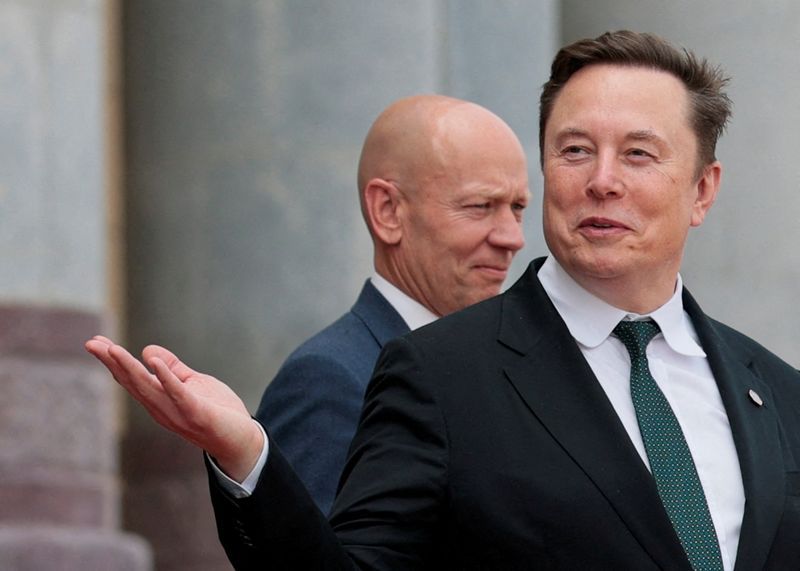
A federal judge in San Francisco has refused to overturn a jury verdict that found Elon Musk defrauded Twitter investors when acquiring the social media platform, dealing a setback to the world's richest person in his legal battle over the $44 billion deal. U.S. District Judge Charles Breyer's decision on Monday rejected Musk's attempt to dismiss the March verdict, even as the judge offered partial relief by finding that Musk was not liable for one of the tweets that the jury had originally found problematic.
The ruling represents a significant moment in what has become one of the highest-profile corporate litigation cases involving a technology billionaire in recent years. Breyer also declined Musk's request to decertify the class of investors who brought the case, meaning the consolidated group action will proceed. Additionally, the judge granted the investors' motion for prejudgment interest, which could substantially increase the final damages award beyond initial estimates.
The original verdict delivered on March 20 found Musk liable for attempting to depress Twitter's stock price during his protracted negotiations to acquire the company. Evidence presented at trial showed that Musk had engaged in a pattern of public statements questioning the platform's integrity, particularly regarding the prevalence of fake accounts and bot activity, at a time when he was trying to either renegotiate the purchase terms or exit the deal entirely. The strategy appeared designed to create downward pressure on the stock price, giving him leverage in negotiations.
Central to the jury's findings were two tweets Musk posted on May 13 and May 17, 2022, in which he cast doubt on Twitter's claims about the proportion of spam and automated accounts on its platform. The jury determined that both tweets constituted fraud because they were knowingly false statements made with intent to manipulate the stock price. However, Judge Breyer took a narrower view in his post-trial analysis. While he acknowledged substantial evidence that the May 13 tweet contained false information and directly triggered a significant decline in Twitter's share price, he found that the May 17 tweet did not generate measurable market reaction, and therefore Musk could not be held liable for it under the relevant legal standards.
This distinction matters because causation—proving that a false statement directly caused quantifiable investor harm—is a critical element in securities fraud cases. The fact that Breyer exempted Musk from liability on one tweet while upholding liability on another demonstrates the judge's careful application of causation doctrine. Nevertheless, the overall verdict stands intact, meaning Musk remains responsible for the fraud findings related to his broader campaign to undermine Twitter's credibility during the acquisition process.
The financial implications remain substantial. Attorneys for the investor class estimated in March that damages could reach approximately $2.5 billion, though the final figure will depend on how the court calculates compensation for the losses suffered by shareholders. The addition of prejudgment interest means investors will receive compensation not just for their losses but also for the time value of money during the period when the case was pending. This interest component can meaningfully increase the ultimate payout.
Musk's legal team has not yet publicly responded to the judge's decision, and it remains unclear whether the billionaire will pursue further appeals. The case has already consumed considerable resources and public attention, raising questions about how long this dispute might continue through the appellate process. Given the magnitude of potential liability and Musk's demonstrated willingness to contest the proceedings vigorously, additional legal challenges would not be surprising.
For Malaysian and Southeast Asian readers, the case carries broader implications about corporate accountability and the legal consequences of public statements by powerful executives. The verdict suggests that even the wealthiest and most influential business leaders can face meaningful legal liability for making false public statements designed to manipulate asset prices. This principle, rooted in securities law frameworks that exist in various forms across many jurisdictions including Malaysia, reinforces the notion that market integrity depends on truthfulness from corporate actors.
The Twitter acquisition saga also illuminates the complex dynamics of major technology acquisitions and the legal risks that arise when negotiations become contentious. Musk's approach to the Twitter deal—initially agreeing, then attempting to back out, triggering litigation, and eventually completing the purchase—has become a cautionary tale about transaction execution and the paper trail of communications that can later be scrutinised in court. The investor fraud findings suggest that public statements made during tense negotiations can expose executives to substantial legal exposure if those statements are later found to be false.
Moreover, the case demonstrates how traditional securities law continues to apply to prominent technology figures and their companies, despite the considerable influence they wield in public discourse. While social media platforms have transformed how information flows and how executives communicate with markets, the fundamental legal requirement that public statements be truthful remains unchanged. Musk's case indicates that celebrity status and commercial success offer no exemption from these longstanding legal obligations.
The preservation of the investor class and the approval of prejudgment interest also signal judicial support for holding corporate defendants accountable for extended litigation periods. These procedural decisions reinforce that investors harmed by securities fraud can pursue comprehensive remedies, not merely the face value of their losses but additional compensation reflecting the delayed justice they have experienced.
As the case moves forward, attention will focus on the specific damages calculation and whether Musk will appeal to higher courts. The decision underscores that in the United States, even transformative technology figures face meaningful legal consequences when they make false statements intended to manipulate market prices, regardless of their prominence or influence in other domains.

