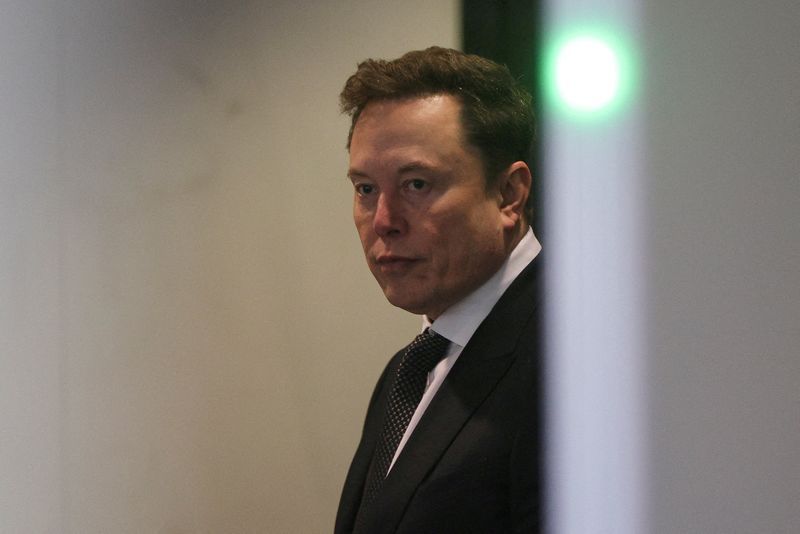
A United States federal judge has granted approval to a settlement between the Securities and Exchange Commission and Elon Musk regarding his purchase of Twitter shares, even while flagging substantial reservations about the agreement's fairness and the enforcement approach it reflects. U.S. District Judge Sparkle Sooknanan in Washington, D.C., acknowledged on Wednesday that her judicial authority to reject a consent judgment is limited, yet she made plain her discomfort with several aspects of the deal, questioning whether regulators had exercised appropriate oversight of the world's wealthiest individual.
The settlement hinges on a trust established in Musk's name paying $1.5 million to resolve allegations that the tech entrepreneur delayed disclosure of his early Twitter purchases for eleven days spanning March and April 2022. According to SEC investigators, this postponement allowed Musk to accumulate shares at depressed prices before the broader market became aware of his involvement, generating an estimated $150 million advantage. Musk has characterised the delay as unintentional, though the regulator maintained that the non-disclosure violated securities laws requiring timely public reporting of significant shareholdings.
Judge Sooknanan's written opinion captured the tension inherent in judicial review of negotiated settlements, describing the court's role as neither a rubber stamp nor an ombudsman for broader governance questions. She noted that while courts must satisfy themselves that settlements meet baseline standards of fairness and reasonableness, determining whether regulatory agencies have adequately disciplined alleged violators ultimately belongs to citizens through democratic processes. The judge's careful framing suggested discomfort with the bounds of her authority whilst simultaneously signalling scepticism about the SEC's enforcement choices.
A particularly acute concern running through Sooknanan's reasoning involved the decision to exclude disgorgement—the return of ill-gotten gains—from the settlement terms. The judge questioned the SEC's assertion that it had not historically pursued such remedies in comparable cases, implying this justification seemed circular and potentially unpersuasive as a matter of principle. She suggested that accepting this rationale, even if defensible in isolation, raised broader questions about the soundness of settling cases on these terms in the first instance.
The judge also scrutinised why the SEC chose to structure the settlement through a trust bearing Musk's name rather than holding Musk himself directly accountable. This arrangement enabled the entrepreneur to publicly declare vindication and assert he had been cleared of wrongdoing, a framing that troubled the court. Sooknanan wondered whether permitting such an outcome served the public interest or merely created a convenient fiction allowing both parties to claim victory without genuine accountability.
A striking aspect of Sooknanan's analysis involved her suspicion that Musk may have received preferential treatment unavailable to ordinary securities violators. She noted that SEC enforcement attorneys appeared visibly surprised when Musk's legal team revealed during earlier proceedings that settlement negotiations had already advanced substantially, suggesting the litigation team may have been sidelined from critical discussions. The judge explicitly questioned whether other alleged securities-law breakers would receive such solicitude or whether this represented a bespoke arrangement.
The timing of the settlement carries potentially significant implications. The deal was announced in May, following the March departure of Margaret Ryan, the SEC's enforcement chief, who exited after only six months following disputes with senior agency leadership over enforcement strategy and priorities. Ryan's brief tenure and contentious exit raise questions about whether leadership transitions and internal disagreements influenced negotiating positions and ultimate settlement terms. The SEC subsequently denied any collusion shaped the outcome, whilst defending the $1.5 million penalty as the largest ever imposed in cases of this category.
For Malaysian and Southeast Asian observers, this episode illuminates recurring tensions in how major democracies regulate billionaire-class actors and corporate enforcement more broadly. Musk's commercial operations extend significantly across Asia, including Tesla's manufacturing footprint and SpaceX's satellite ventures affecting regional telecommunications infrastructure. The apparent ease with which a figure of such global economic influence can navigate regulatory proceedings—despite acknowledged legal violations—raises questions about whether enforcement frameworks adequately constrain powerful individuals, particularly those with substantial political access and resources.
The settlement's modest financial penalty warrants context. At $1.5 million, the sum represents an infinitesimal fraction of Musk's $927.2 billion net worth, according to Forbes estimates. For comparison, the alleged financial benefit Musk obtained through delayed disclosure exceeded $150 million. This profound disparity between gains and penalties suggests enforcement mechanisms may inadequately deter securities violations when perpetrators possess sufficient wealth. The structure creates perverse incentives where calculating the expected cost of regulatory violation—discounted by detection probability and modified penalty—might yield positive expected value for wealthy actors.
Musk's position as a former adviser to Republican President Donald Trump, combined with Judge Sooknanan's appointment by Democratic President Joe Biden, adds another layer to judicial scepticism about potential partisan considerations influencing regulatory outcomes. Though the judge carefully avoided direct accusations, her repeated questioning whether the executive branch, operating through the SEC, had sufficiently held Musk accountable implied concerns that political considerations may have shaped enforcement priorities.
The SEC's defence emphasised that the settlement included an effective injunction binding Musk when operating through the trust—described as his primary investment vehicle for managing wealth. Yet Sooknanan's analysis suggests this remedy, whilst procedurally significant, remains incomplete as a deterrent without meaningful financial consequences. The distinction between preventing future violations and compensating past harms represents a fundamental gap in enforcement philosophy.
This settlement ultimately reflects broader questions about regulatory authority, democratic accountability, and whether civil litigation—however well-intentioned—can adequately address alleged violations by economic titans. As Sooknanan noted, citizens must ultimately decide through electoral processes whether regulatory agencies like the SEC have fulfilled their mandates. Yet in markets spanning continents, including those where Malaysian investors participate, the adequacy of such distant democratic mechanisms remains an open question.

