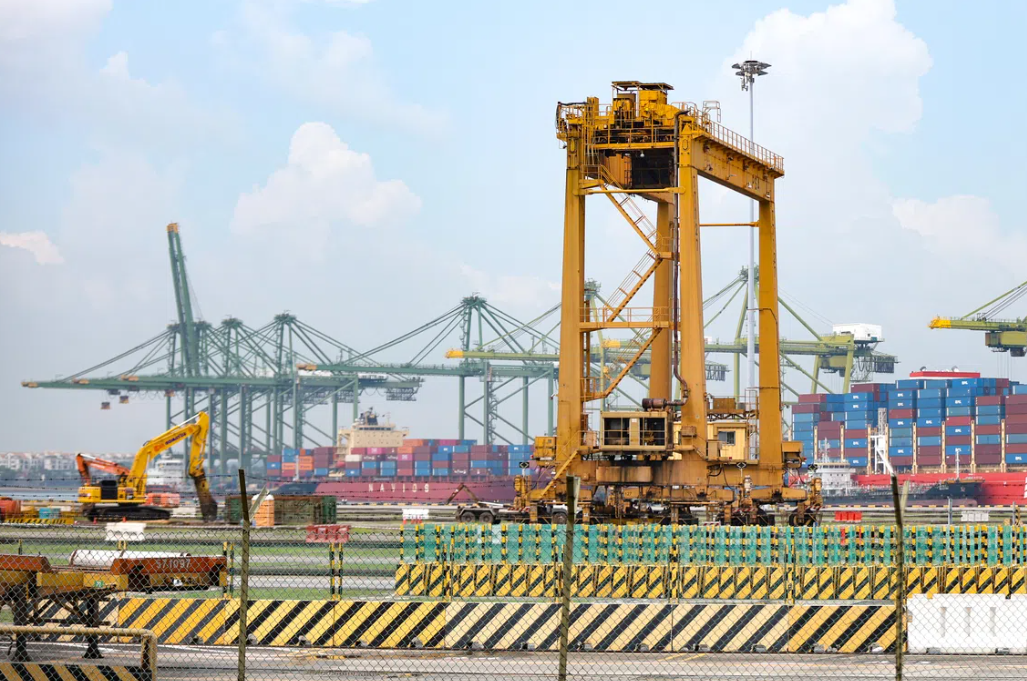
The Trump administration has publicly accused Singapore and dozens of other countries of becoming unwitting or willing conduits for Chinese exporters seeking to evade steep US tariffs through a sophisticated rerouting scheme. In a report released on August 13 titled "The Great Transshipment Scam", the White House detailed how Chinese manufacturers are concealing the true origin of their goods by routing them through intermediate jurisdictions with lower tariff rates, effectively laundering the country of origin before shipment to American markets. The initiative marks an escalation in Washington's trade enforcement apparatus and signals a hardening stance against what it perceives as coordinated efforts to undermine the tariff architecture established following the 2018 trade tensions with Beijing.
The White House estimates that illegal transshipment activities have deprived US federal customs revenues of between US$40 billion and US$303 billion—a staggering range that underscores both the scale of the problem and the uncertainty surrounding precise measurement. These figures draw on both government investigations and proprietary studies from the private sector, suggesting a systematic erosion of trade compliance that extends well beyond isolated cases of smuggling or mislabeling. The administration has signalled its determination to close what it views as a dangerous loophole in global trade architecture, announcing that any goods determined to have been illegally transshipped to circumvent tariffs would face an additional 40 per cent levy.
To operationalize this enforcement agenda, the White House has unveiled an artificial intelligence-powered system called "Detective Border", which represents a technological pivot toward automated detection of suspicious transshipment patterns. The administration insists that "the age of untraceable illegal transshipment is over", framing the initiative as a watershed moment in trade enforcement. Yet the report deliberately refrains from specifying what immediate enforcement actions will follow the identification of these 40 economies, leaving considerable ambiguity about implementation timelines and jurisdictional scope. This measured tone may reflect awareness that heavy-handed approaches could provoke reciprocal tariffs or diplomatic friction with key trading partners.
The research underlying the White House report points to a clear temporal correlation: as China's direct share of US imports declined following 2018 tariffs, the combined export volumes from identified transshipment countries increased proportionally. This statistical pattern aligns with the theory that Chinese manufacturers redirected supply chains to exploit lower-tariff regimes rather than reducing exports altogether. However, the report acknowledges a crucial analytical nuance—not all trade redirection necessarily represents illegal activity. Some of the shift reflects legitimate relocation of manufacturing capacity, genuine foreign direct investment by Chinese firms, and authentic commercial integration. The White House therefore calls for heightened investigative scrutiny to distinguish lawful business adaptation from deliberate tariff evasion.
The 40 flagged economies have been segmented into three distinct tiers reflecting both the scale and nature of transshipment vulnerability. Tier 1 comprises advanced economies with large, legitimate trade relationships with the US—Canada, the European Union, India, Israel, Japan and Taiwan—where transshipment risk exists within broader commercial flows. Tier 2 includes developing and middle-income nations with substantial economic ties to China, encompassing Brazil, Indonesia, Malaysia, Thailand, Turkey and Vietnam. Singapore inhabits Tier 3, a category reserved for smaller economies deemed "opportunistic Chinese targets", alongside Cambodia, Laos, Myanmar and the Philippines. This tiered framework carries important implications for enforcement intensity and geopolitical messaging, with Tier 3 nations particularly vulnerable to scrutiny.
The White House characterizes Tier 3 economies as possessing specific structural vulnerabilities that make them attractive conduits for rerouting. These include low labour costs, free trade zones, strategic port and border infrastructure, bonded warehousing facilities, and specialized assembly capacity. Critically, many Tier 3 economies enjoy preferential access to US markets through bilateral or regional trade agreements, while their customs enforcement capabilities lag those of developed nations. The report suggests that China-linked exporters exploit these weaknesses by performing minimal value-added activities on goods—such as repackaging, simple assembly or relabeling—before re-exporting them under new country-of-origin designations. Some goods may never undergo any transformation, simply passing through warehousing or transshipment hubs before reaching American ports.
Singapore's classification as a Tier 3 jurisdiction warrants particular scrutiny for Malaysian observers, as the city-state functions as a major regional transshipment hub and financial centre through which Chinese goods regularly flow toward Southeast Asian markets and beyond. The White House caution that Beijing may acquire "additional commercial and geopolitical leverage" as local economies become dependent on Chinese inputs, logistics networks and capital carries implications far beyond tariff disputes. It suggests that the US views Southeast Asian economies' deepening integration with Chinese supply chains as a potential vulnerability that could be exploited for geopolitical objectives. For Malaysia and its neighbours, this represents a tangible consequence of the Sino-American trade rivalry that extends into the realm of regional economic autonomy.
Singapore's Ministry of Trade and Industry declined immediate comment when approached by regional media, but Singapore Customs subsequently issued a detailed rebuttal of the transshipment allegations. The agency emphasized that Singapore's regulatory framework aligns with World Customs Organization standards and that transshipped goods cannot legally be relabeled as originating from Singapore, therefore preserving transparency regarding country of origin. Singapore Customs noted that transshipped merchandise merely passes through the jurisdiction via a change of conveyance and does not enter domestic circulation or storage. The agency further stated that it collaborates closely with international counterparts to detect and prosecute illicit goods, suggesting that perceived enforcement gaps may be overstated by Washington.
Singapore has historically maintained that it takes trade compliance seriously, and the city-state's response reflects a careful distinction between legitimate transshipment—a legal activity essential to global commerce—and the illegal concealment of origin that the Trump administration describes. This nuance often escapes public discourse, yet it remains crucial for understanding the tensions at play. Most goods passing through Singapore's ports and warehouses involve perfectly lawful transshipment, with transparent documentation and proper customs declaration. The challenge lies in identifying the fraction that involves deliberate misrepresentation of provenance. Singapore's customs infrastructure and legal framework are generally considered robust by international standards, yet the city-state's status as a major Asian trading hub makes it inevitable that some proportion of problematic cargo will pass through its jurisdiction.
For Malaysia, the White House report carries direct and substantial implications. As a Tier 2 economy with significant economic integration with China, Malaysia faces heightened scrutiny regarding its role in the transshipment nexus. Malaysian ports, particularly those in Kuala Lumpur, Penang and Johor, process substantial volumes of regional trade, including goods originating from or destined for China. The country's free trade zones and bonded warehousing facilities—legitimate commercial infrastructure—may be viewed by American enforcement officials as potential weak links in the tariff compliance chain. Malaysian manufacturers and logistics providers may face increased documentation requirements and customs inspections when trading with US counterparts, raising compliance costs and potentially deterring investment.
The Trump administration's report should also be understood within the context of broader trade enforcement escalation. In July 2026, Washington imposed an additional 12.5 per cent tariff on approximately one-third of Singapore's domestic exports to the US, alleging inadequate enforcement of prohibitions on forced labour imports. This earlier measure demonstrates that the current transshipment investigation represents one front in a multifaceted offensive against what the administration perceives as trade non-compliance across the region. The court decision that undermined the Trump administration's earlier tariff regime appears to have prompted a recalibration toward what officials may consider more defensible enforcement bases. Whether transshipment investigations prove more legally durable than forced labour allegations remains uncertain.
The strategic implications for Southeast Asia extend beyond immediate tariff exposure. The White House's emphasis on technological enforcement solutions—particularly the AI-powered Detective Border system—suggests that American customs screening may become increasingly sophisticated and difficult to evade or negotiate around. Regional trading nations cannot realistically lobby their way out of compliance; instead, they must ensure that their legitimate commerce is transparently documented and that their regulatory frameworks remain genuinely aligned with international standards. For Malaysia and its neighbours, this underscores the importance of strengthening customs capabilities, modernizing port infrastructure, and establishing clear protocols that distinguish lawful transshipment from suspicious transactions. The alternative—continued exposure to escalating tariffs and enforcement actions—threatens not only government revenues but the competitiveness of entire supply chains dependent on trade with the United States.

