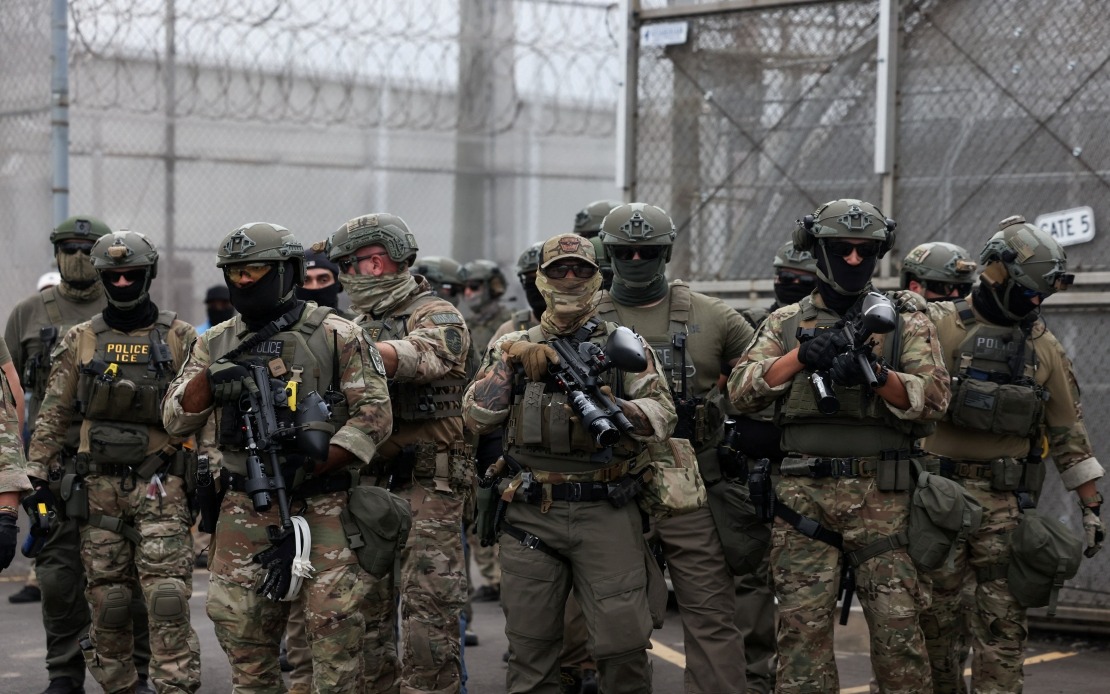
A federal court in California has imposed a nationwide ban on Immigration and Customs Enforcement conducting arrests within immigration courthouses, striking down a key enforcement tactic introduced during President Donald Trump's current administration. The judicial order effectively prevents ICE officers from apprehending migrants at the courthouse entrances, waiting areas, and surrounding grounds where immigration proceedings take place, according to German Press Agency reporting.
The practice being curtailed had permitted ICE to detain individuals regardless of whether their court hearings had concluded. Immigration courts across the United States handle complex deportation cases where migrants face potential removal from the country. When the Trump administration commenced its second term, ICE expanded this controversial courthouse arrest programme, deploying enforcement officers to apprehend individuals in these settings as part of a broader crackdown on immigration enforcement.
Critics of the policy had long warned that permitting immigration authorities to arrest people within courthouse premises fundamentally compromised due process protections. The judges reasoned that when migrants fear arrest upon entering court buildings, they may choose to forgo legal hearings entirely, effectively preventing them from presenting their defence or challenging deportation orders. This dynamic created a perverse incentive structure where the enforcement mechanism itself discouraged migrants from exercising their right to legal proceedings.
The Trump administration had justified the expanded courthouse arrests by issuing new guidelines emphasizing the operational advantages of securing detainees at immigration facilities rather than elsewhere. Agency leadership contended that courthouses represented logical enforcement locations where immigration violators would gather predictably. However, the federal judge found these arguments insufficient from a legal standpoint.
In its reasoning, the court determined that Immigration and Customs Enforcement had not adequately examined the potential drawbacks of implementing this enforcement strategy. The agency provided what the judge characterized as insufficient explanation for abandoning previous restraint regarding courthouse arrests. This failure to engage seriously with the documented concerns about access to justice and due process created what the court saw as a legally vulnerable policy vulnerable to successful challenge.
For Malaysian observers and Southeast Asian readers, this judicial intervention carries significant implications. Malaysia and regional nations host substantial populations of migrant workers, many from countries experiencing difficult economic circumstances. The American court's insistence on procedural fairness in immigration matters establishes a precedent that resonates across international legal frameworks. As Southeast Asian governments grapple with questions about how to manage immigration enforcement while protecting worker rights, this US ruling offers instructive guidance on the constitutional limits of state power in immigration administration.
The ruling also reflects broader tensions within American democracy regarding executive authority during the current administration. Immigration enforcement has emerged as a central policy priority, yet courts continue to scrutinize whether enforcement mechanisms comply with constitutional safeguards. This particular decision signals that judicial branches retain capacity to constrain executive immigration policies even when supported by elected leadership, maintaining institutional checks and balances.
The nationwide scope of the injunction proves particularly significant. Rather than limiting the order to California, the federal judge applied the ruling across all US jurisdictions, preventing ICE from implementing courthouse arrests anywhere in the country. This comprehensive approach underscores the court's conviction that the legal deficiencies identified were systemic rather than localized, affecting the policy's validity everywhere it might be applied.
Migrant advocacy organizations have celebrated the ruling as essential protection for vulnerable populations navigating complex legal systems in unfamiliar circumstances. These groups maintain that enforcement intimidation at courthouses effectively denies migrants meaningful access to justice. For workers in Southeast Asia considering migration to the United States, the decision provides reassurance that legal safeguards persist despite heightened enforcement rhetoric.
The decision also illustrates how American constitutional frameworks limit governmental immigration authority despite broad popular support for enforcement measures. While public opinion in many countries favours stricter immigration controls, courts have consistently held that even popular policies cannot bypass procedural protections. This tension between democratic desires and constitutional constraints shapes how liberal democracies address immigration challenges.
Government response to the ruling remains unclear, though the Trump administration could pursue appeals through higher court levels. The administration may argue that immigration enforcement requires operational flexibility, or it may develop alternative enforcement strategies that address the judge's concerns about due process. The case may ultimately reach the US Supreme Court, where the current judicial majority has shown sympathy to executive immigration authority in previous decisions.
This judicial intervention demonstrates that immigration policy remains contested terrain in American politics, with courts continuing to participate actively in shaping enforcement boundaries. For Malaysia and ASEAN nations observing American legal developments, the case illustrates how constitutional constraints operate as practical limitations on immigration enforcement powers, even when political leaders prioritize controlling migration flows.

