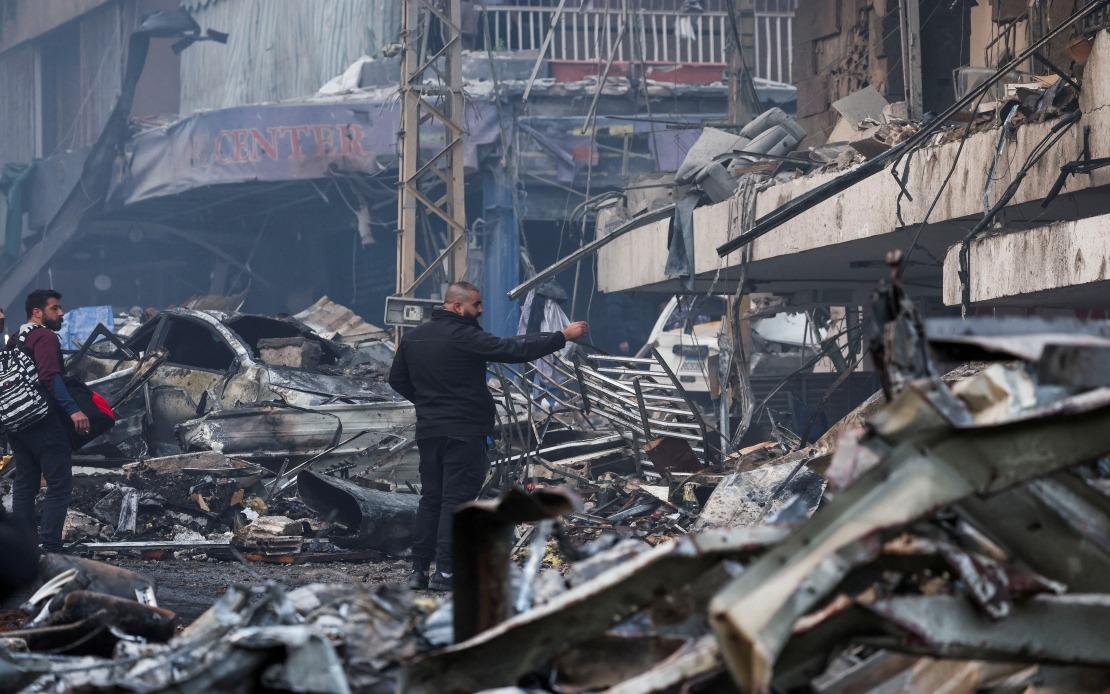
The United States has deployed a monitoring system through its Central Command to observe combat operations between Israel and Hezbollah in Lebanon on a real-time basis, according to statements made by American officials on Monday. The initiative represents Washington's latest effort to underpin diplomatic negotiations aimed at resolving the protracted conflict that has destabilised the eastern Mediterranean region and threatened regional stability.
The establishment of this surveillance mechanism follows high-level telephone conversations conducted on Friday between US Secretary of State Marco Rubio and both Israeli Prime Minister Benjamin Netanyahu and Lebanese President Joseph Aoun. These discussions centred on reinforcing the existing ceasefire agreement and laying groundwork for subsequent negotiations to establish a lasting framework for peace and security between the two nations.
US officials characterised the monitoring system as instrumental in enabling Israel and Lebanon to engage in bilateral negotiations as independent sovereign states. According to an anonymous American official, the arrangement is designed to facilitate discussions leading to a comprehensive settlement that addresses both peace and security concerns. The framework recognises the complexity of achieving lasting stability in a region where border tensions and non-state armed groups have historically posed significant challenges to conventional diplomatic solutions.
Delegations from both Israel and Lebanon were scheduled to arrive in Washington from June 23 to 25 for direct negotiations mediated by American diplomats. These talks represent a continuation of ongoing diplomatic momentum following the activation of the monitoring mechanism. While officials indicated that additional details regarding the monitoring system's operational scope and specific parameters would be disclosed subsequently, the announcement underscores American commitment to preventing a renewed escalation of hostilities.
The timing of this development coincides with broader regional diplomatic initiatives. Qatar and Pakistan jointly announced on Sunday the conclusion of US-Iran discussions held at the Burgenstock resort in Switzerland. These discussions resulted in agreement to establish a "de-confliction cell" comprising representatives from the United States, Iran, and Lebanon, with Qatar and Pakistan serving as facilitators. This mechanism aims to ensure compliance with military ceasefire obligations across Lebanon as established under the Islamabad Memorandum of Understanding.
The Islamabad Memorandum represents a significant diplomatic framework agreed upon between the United States and Iran following remote signing of a preliminary accord the previous week. The document establishes a sixty-day negotiating window during which both nations will pursue resolution of outstanding disputes, including matters concerning Iran's enriched uranium reserves, its nuclear programme development, and various other unresolved bilateral issues. For Southeast Asian observers, this memorandum signals potential de-escalation in regional tensions that have influenced global energy markets and maritime security in critical shipping corridors.
The fourteen-point agreement encompasses multiple components reflecting broader regional security architecture. It mandates immediate and permanent cessation of all military operations across multiple theatres, including Lebanon specifically. The memorandum further stipulates removal of the American naval blockade affecting Iran and guarantees safe passage for commercial shipping through the Strait of Hormuz, a critical international waterway through which approximately one-third of global maritime petroleum trade transits annually.
For Malaysia and other Southeast Asian nations, the significance of these developments extends beyond immediate Middle Eastern concerns. Stability in Lebanon and the broader Middle East directly affects shipping routes, energy supplies, and the security environment in which regional commerce operates. The Strait of Hormuz remains vital to energy security across Asia, with any prolonged regional conflict threatening supply chain disruptions and commodity price volatility that reverberates through regional economies.
The multi-layered diplomatic approach now unfolding—combining US-Israel-Lebanon trilateral negotiations with the broader US-Iran de-escalation framework—suggests recognition among major powers that sustainable regional stability requires addressing multiple conflict vectors simultaneously. The establishment of these monitoring and coordination mechanisms demonstrates acknowledgment that informal or ad-hoc approaches have proven insufficient for managing complex security challenges in the eastern Mediterranean and Persian Gulf regions.
However, significant challenges remain in translating these institutional frameworks into durable peace arrangements. The involvement of non-state armed groups like Hezbollah, whose leadership answers to external powers and pursues ideological objectives transcending conventional state interests, complicates conventional diplomatic resolution models. Previous ceasefire agreements in Lebanon have frequently proven fragile when tested by renewed tensions or incidents along contested borders.
The announcement also reflects American strategic priorities in the Middle East during a period of significant geopolitical reorientation. Washington's engagement in these negotiations while simultaneously pursuing de-escalation with Iran suggests calculation that management of regional powers and reduction of direct US military involvement serve broader strategic interests. This approach differs markedly from previous American policy emphasising military deterrence and containment strategies.
Observers in Southeast Asia should monitor how these diplomatic frameworks evolve and whether the institutional mechanisms prove effective in preventing renewed escalation. Success or failure will signal broader patterns regarding international conflict management, great power engagement in regional disputes, and the viability of negotiated solutions in conflicts involving both state and non-state actors. The implications for maritime security, energy markets, and regional economic stability make these developments of substantial interest to Southeast Asian nations and their economic interests.