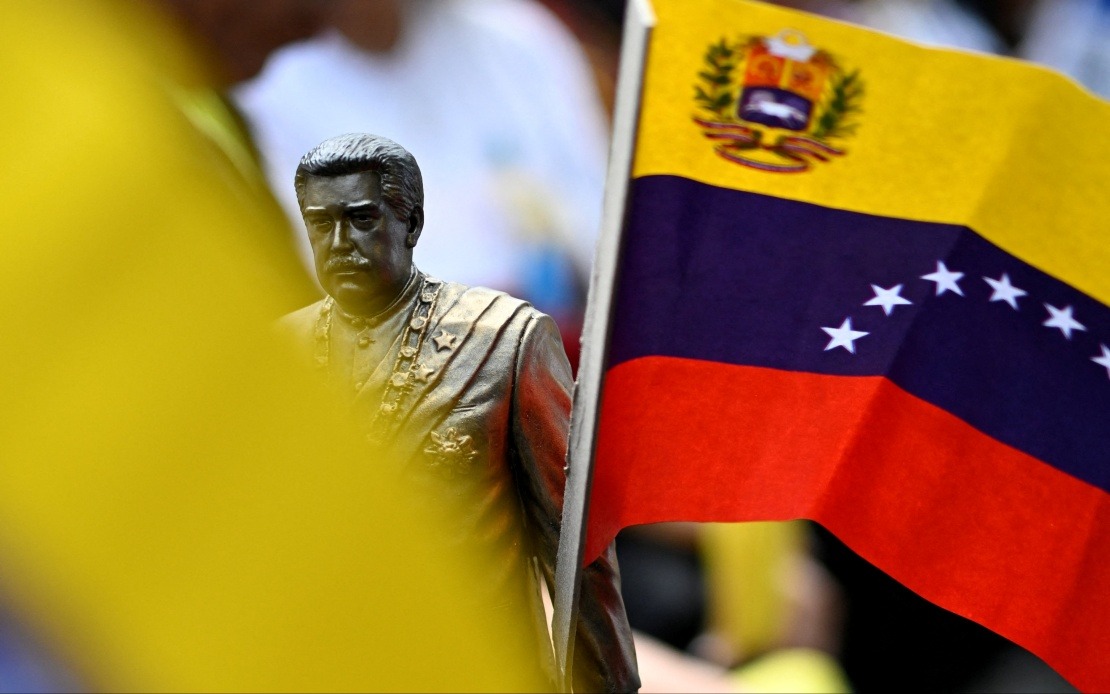
A United States federal judge has set June 1, 2027, as the trial date for Venezuelan President Nicolás Maduro and his wife Cilia Flores on drug trafficking and firearms charges, marking a significant procedural milestone in one of the most contentious international legal cases in recent years. Judge Alvin Hellerstein issued the ruling during a brief 15-minute hearing in Manhattan on Wednesday, with both prosecution and defense teams having agreed to the timeline. The couple, who have maintained their not guilty pleas since their initial arraignment, made their third appearance in New York court as the case proceeds through the American judicial system.
The legal proceedings stem from a dramatic military operation conducted by US forces on January 3, when troops forcibly apprehended Maduro and his wife in Caracas before transporting them to New York. The seizure itself has become a flashpoint for international controversy, with many nations and observers questioning the legitimacy of the military action and its compatibility with established international law governing state sovereignty and the treatment of sitting government officials. Since their capture, the couple has remained detained at the Metropolitan Detention Centre in Brooklyn, where they await trial over two years away.
Maduro's legal team, led by attorney Barry Pollack, has signaled its intention to mount an immediate constitutional challenge based on sovereign immunity principles. This defense strategy represents a potential turning point in the case, as a successful immunity ruling would eliminate the need for trial altogether and force the dismissal of all charges against the Venezuelan leader. Pollack's emphasis on this preliminary motion suggests that defense counsel views it as the most promising avenue for securing their client's release before the trial date arrives. The outcome of this immunity challenge could reshape the entire trajectory of the prosecution.
The international community has responded with alarm to the military intervention and subsequent detention of a sitting president. Nations across Latin America, Africa, and beyond have expressed serious concerns about the precedent being established, viewing the US military action as a violation of fundamental principles enshrined in the United Nations Charter and customary international law. The seizure of a head of state from within their own territory without formal extradition proceedings represents a dramatic assertion of unilateral American power that has troubled even some traditional US allies.
Outside the heavily fortified Manhattan courthouse, demonstrators gathered on Wednesday to voice opposition to both Maduro's detention and US military interventionism more broadly. Protesters carried signs and chanted slogans, their presence underscoring the polarizing nature of the case among American progressive constituencies and international observers. The demonstration reflected growing unease about the implications of allowing military abduction of foreign leaders, particularly when dressed in the language of law enforcement. For many participants, the courtroom proceedings represented merely the legal face of what they viewed as an illegitimate political operation.
Allison Gunderson, a protester from Minneapolis, articulated a central grievance shared by many opponents of the prosecution: that the United States had fundamentally violated international law by kidnapping the president of a sovereign nation and then attempting to prosecute him in American courts. This argument, which echoes criticisms voiced by legal scholars and human rights organizations internationally, challenges the very foundation of the government's claim to jurisdiction. From this perspective, the trial itself becomes complicit in an unlawful regime change operation disguised as criminal justice.
Tom Burke, representing the Anti-War Action Network's steering committee, characterized the entire sequence of events as a clear violation of international legal norms. Burke's comparison of the military seizure to "armed robbery" captured a visceral anger among activists who view the operation as the antithesis of the rule of law. He emphasized that US credibility on the world stage has suffered significantly from such unilateral actions, noting that global observers increasingly distrust American pronouncements about legality and democratic values when the government itself operates outside established legal frameworks. This erosion of soft power represents a tangible cost to American foreign policy credibility.
Sara Flounders, a political commentator and activist, drew attention to the passage of 200 days since Maduro's abduction, framing the extended detention as part of a broader pattern of American interventionism. By linking the Venezuelan situation to US operations in Iran and Cuba, Flounders positioned Maduro's case within a longer historical narrative of American imperial overreach in the Western Hemisphere. Her remarks reflected a perspective increasingly common among critics who view contemporary US foreign policy as continuous with Cold War-era interventionism, merely repackaged in 21st-century language. This historical contextualization has proven influential in mobilizing international opposition to the prosecution.
The case arrives at a moment of heightened tension regarding the limits of American power and the future of international law. The June 2027 trial date provides a temporal marker for what may become a watershed moment in debates about whether military abduction and prosecution of foreign leaders can be justified under any circumstances. As the case proceeds through the courts, Malaysian and regional observers will likely monitor its progress closely, given Southeast Asia's historical experiences with great power interventionism and its stake in maintaining a rules-based international order that constrains unilateral action by any single nation. The outcome may significantly influence how countries in the region assess the reliability of international legal protections for their own sovereignty.
For Venezuela and its government, the 2027 trial represents both a legal challenge and a symbol of the geopolitical pressures confronting the Maduro administration. Whether the immunity defense succeeds or whether the case proceeds to full trial, the international spotlight will remain fixed on how American justice system handles this unprecedented assertion of prosecutorial jurisdiction. The gathering of protesters outside the Manhattan courthouse demonstrates that this remains far more than a narrow legal matter—it touches fundamental questions about international law, state sovereignty, and the permissibility of military force as an instrument of regime change.

