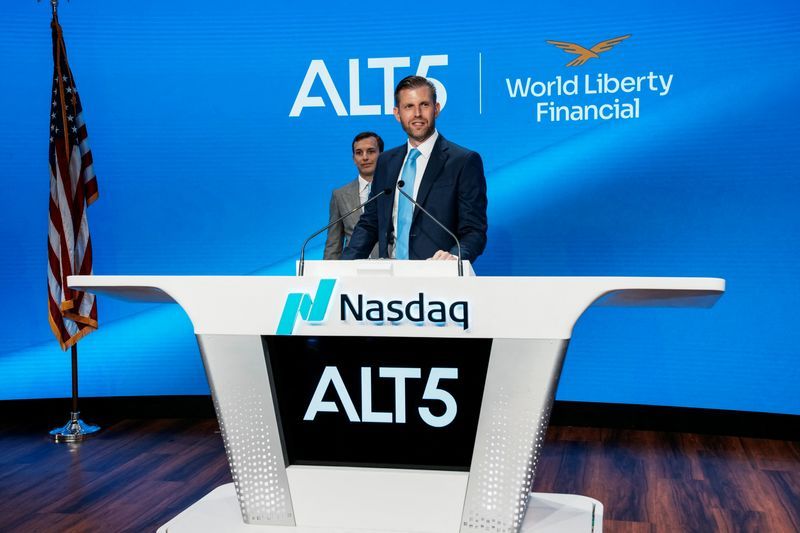
The Office of the Comptroller of the Currency has granted conditional preliminary approval for World Liberty Trust Company's application for a national trust charter, marking a significant regulatory milestone for the Trump-backed cryptocurrency venture. The decision, announced through a letter published on the regulator's website, effectively permits the expansion of World Liberty Financial's stablecoin operations and positions the firm to provide enhanced financial services through a federally chartered trust bank framework.
This regulatory green light arrives amid broader industry momentum in securing similar approvals under the Trump administration's pro-cryptocurrency stance. Comptroller Jonathan Gould, appointed by Trump, has overseen the granting of preliminary approvals to multiple crypto firms, including Ripple and Circle. The trend reflects a significant shift in federal regulatory approach toward digital assets compared to previous administrations, with the banking sector capitalizing on this receptive environment to expand its blockchain-based offerings.
The conditional charter carries substantial operational implications for World Liberty Financial's business model. Currently, the firm relies on BitGo, a business partner, to handle both the issuance of its USD1 stablecoin and custody of the US dollar assets backing it. The approved charter would consolidate these functions under World Liberty's direct control, allowing the company to manage reserves and issue stablecoins independently while operating under federal supervision using standards applied to traditional banking institutions for decades. This consolidation simplifies operations and potentially reduces counterparty risk for institutional clients.
World Liberty Financial has achieved remarkable growth with its flagship USD1 stablecoin since its public announcement in March 2025. Currently ranking as the fourth largest stablecoin by market capitalization at approximately USD 4 billion, the asset has captured substantial market share in the competitive stablecoin ecosystem. The rapid ascent underscores both the appeal of a Trump-associated digital currency to cryptocurrency markets and the commercial potential of dollar-backed tokens in facilitating blockchain-based financial transactions.
The financial rewards flowing to the Trump family through these crypto ventures remain substantial. Reuters calculations estimate that the Trump family earned approximately USD 50 million from USD1 alone through June 2026, while World Liberty Financial channeled more than USD 1.6 billion to the president and his family as of April. These figures highlight the significant commercial value embedded in the family's cryptocurrency portfolio and the substantial financial interests at stake in regulatory decisions surrounding the venture.
Regulatory approval comes with multiple conditions designed to safeguard the operation and maintain oversight mechanisms. World Liberty Trust must maintain minimum capital reserves of USD 20 million, notify regulators of any significant business plan modifications, and employ a qualified individual specifically designated as the firm's internal audit manager. These requirements, standard for such approvals, establish baseline operational standards while creating structured channels for regulatory monitoring of the company's development.
International investor participation in World Liberty Financial triggered regulatory scrutiny and formal responses from the OCC. The regulator received comments expressing concerns about foreign investors holding stakes in the venture, prompting the agency to clarify that such investors would not be classified as principal shareholders. Importantly, the OCC obtained signed passivity agreements from several international investors, including those with potential national security implications, committing them to non-interference in the bank's operations and decision-making processes. Eric Trump, the president's son, signed such an agreement on behalf of a Trump family investment vehicle, establishing formal constraints on family influence over the bank's conduct.
Democratic criticism of the charter approval centres on perceived conflicts of interest and governance opacity. Senators on the Banking Committee previously urged Treasury Secretary Janet Yellen to investigate national security dimensions of a reported USD 500 million investment stake acquired through arrangements linked to the United Arab Emirates' national security adviser. Democrats have characterized the approval process as problematic, questioning the adequacy of public disclosure regarding the company's capital structure and business strategy, and pressing for more transparent examination of the application by career officials rather than politically appointed leadership.
The OCC's approval letter specifically addressed these concerns by asserting that Comptroller Gould and staff members acted consistently with their statutory duties and ethical obligations throughout the review process. The regulator emphasized that career staff conducted the evaluation and would supervise the bank's ongoing operations through nonpolitical examiners, thereby creating institutional separation from political considerations. This explicit framing reflects awareness of the governance questions surrounding the approval and represents a deliberate effort to ground the decision in technical regulatory grounds rather than political factors.
Leadership structures reveal the deep entanglement between Trump administration circles and World Liberty Financial. Zach Witkoff, son of Trump's special diplomatic envoy Steve Witkoff, serves as president, chairman, and CEO of the venture. The Witkoff family, including patriarch Steve Witkoff and his brother Robert, a former insurance executive, were co-founders of World Liberty alongside Trump and his three sons in late 2024. Scott Alper, president of the Witkoff family's real estate business, is proposed as a director. This interconnected leadership structure illustrates how Trump's political and business networks overlap within the cryptocurrency venture.
For Southeast Asian observers, World Liberty Financial's regulatory trajectory carries implications extending beyond immediate US financial markets. The venture's success in securing federal banking privileges may influence how other jurisdictions—including Malaysia, Singapore, and other regional financial centres—approach cryptocurrency firm applications and stablecoin regulatory frameworks. The consolidation of stablecoin issuance and custody under a single federally regulated entity represents an alternative governance model that regional regulators may examine when formulating their own digital currency and stablecoin policies.
World Liberty's articulated mission emphasizes democratizing finance by enabling users to bypass traditional banking infrastructure characterized as restrictive and inequitable. This positioning appeals to cryptocurrency advocates and populations skeptical of conventional financial institutions. The USD1 stablecoin functions as the practical embodiment of this vision, providing a blockchain-based dollar-denominated asset enabling entry to decentralized finance products. Whether this accessible finance narrative translates into sustained adoption or faces regulatory friction in subsequent jurisdictions remains an open question as the venture expands its operations and influence across international markets.

