The United States has taken a formal step toward implementing its ambitious Middle East peace architecture by notifying Congress on July 30 of funding allocations for the International Stabilisation Force planned for Gaza. The announcement, confirmed by State Department officials on Thursday, signals Washington's determination to advance what it describes as President Donald Trump's historic peace initiative, though the plan continues to face significant resistance from Israel's leadership. The move comes amid ongoing negotiations with Palestinian factions and comes after weeks of diplomatic engagement aimed at stabilising the territory following years of conflict.
A State Department spokesperson emphasised the provisional nature of the funding announcement, characterising it as an initial commitment while broader institutional support mechanisms remain under development. The department deliberately withheld specific dollar figures, though officials indicated that financial backing would continue flowing as the Board of Peace—the multinational diplomatic framework overseeing implementation—advances its objectives. This measured approach reflects Washington's recognition that the peace process remains fluid, with multiple parties still negotiating precise terms and conditions for deployment.
The centrepiece of Trump's proposal involves the establishment of an International Stabilisation Force that would operate alongside a reconstituted Palestinian police force in Gaza following a phased Israeli withdrawal. The plan also calls for the complete disarmament of Hamas and other armed groups operating in the territory, a provision that Trump announced had been agreed upon by Hamas on July 31. Washington's framing emphasises the security cooperation between the proposed international force and Palestinian authorities, attempting to bridge longstanding concerns about law and order in post-conflict Gaza.
State Department spokesman Tommy Pigott characterised the funding notification as evidence of US commitment to the broader peace framework, noting that the initiative represents a collaborative effort assembled through the Board of Peace mechanism. He highlighted the release of hostages and the assembly of what he termed a "massive global coalition" as early successes, suggesting that the diplomatic architecture itself has generated momentum beyond the specific peace provisions. The rhetoric underscores Washington's investment in presenting the process as already delivering tangible results, a strategy designed to encourage further compliance from reluctant parties.
Yet the plan faces considerable headwinds, particularly from Israel's government. Prime Minister Benjamin Netanyahu has explicitly rejected key provisions, most notably the phased withdrawal of Israeli forces from Gaza. Netanyahu has insisted that Israeli military operations will continue until Hamas is completely disarmed, a position that effectively contradicts the sequence outlined in Trump's proposal. His public rejection of the plan signals deep scepticism within the Israeli security establishment about whether international forces and Palestinian police can reliably contain security threats, a concern rooted in decades of regional conflict.
The diplomatic friction became increasingly apparent during recent negotiations, when White House advisor Jared Kushner travelled to the region to broker disputes. Kushner met with Hamas officials in Egypt and subsequently held talks with Netanyahu in Israel, accompanied by Board of Peace envoy Nikolay Mladenov. According to media reports, the meetings revealed fundamental disagreements between the American envoy and the Israeli Prime Minister, particularly regarding ongoing Israeli military operations in Gaza. Kushner reportedly opposed the continuation of strikes, while Netanyahu firmly maintained that such operations remained militarily and politically essential.
Hamas has publicly stated its commitment to the agreed roadmap, a posture that contrasts with Netanyahu's rejection and complicates the diplomatic landscape. The Palestinian faction's endorsement provides Washington with leverage to argue that implementation obstacles stem primarily from Israeli intransigence rather than Palestinian unwillingness. This dynamic puts the United States in the delicate position of appearing to coerce its traditional Israeli ally while attempting to maintain credibility with Palestinian representatives.
The humanitarian dimension of the conflict adds urgency and moral weight to these negotiations. A ceasefire agreement officially took effect on October 10, 2025, yet violations by Israeli forces have allegedly killed 1,283 Palestinians and wounded 4,248 others according to figures released by Gaza's Health Ministry. These casualties, occurring under the supposed ceasefire, underscore the fragility of current arrangements and the difficulty of enforcing compliance even after formal agreements are reached. The numbers reflect deep mistrust between parties and raise serious questions about whether international monitoring mechanisms can effectively police Israeli military behaviour.
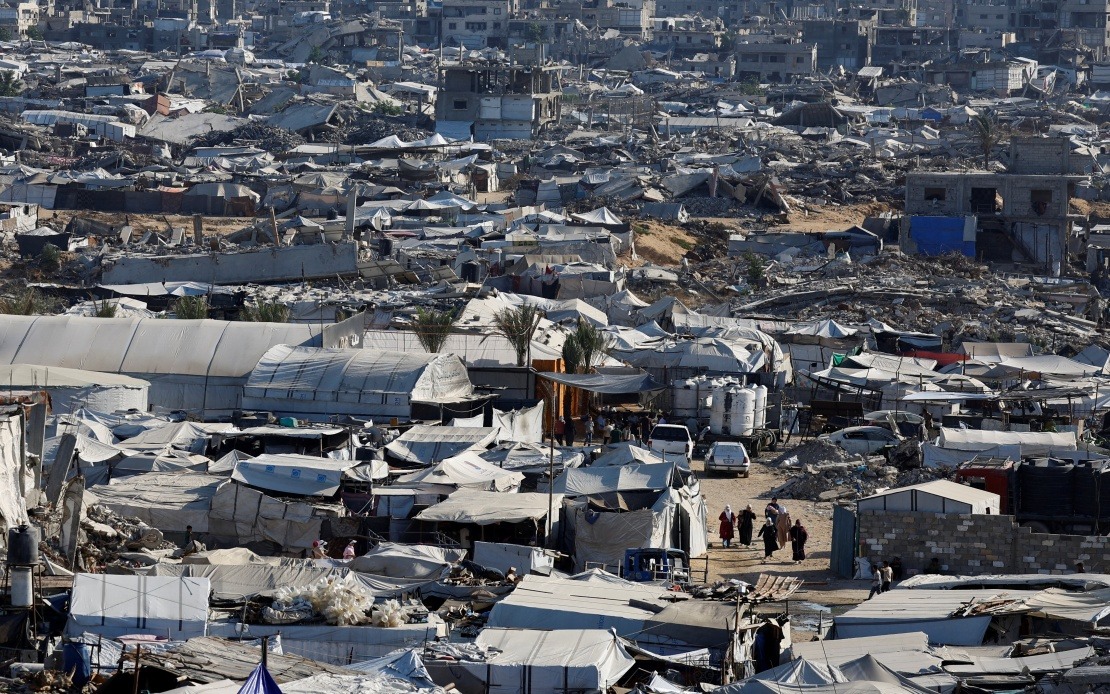
The broader context remains deeply troubling. Israel's military campaign against Gaza, which commenced on October 8, 2023, has resulted in approximately 73,000 Palestinian deaths and more than 174,000 wounded, with roughly 90 percent of the territory's infrastructure destroyed. These staggering figures represent one of the most devastating conflicts in recent history and establish the baseline from which any peace process must operate. The scale of destruction means that stabilisation requires not merely military disarmament but comprehensive reconstruction, institution-building, and trauma recovery—obligations that may extend far beyond what international forces alone can achieve.
For Southeast Asian observers, this unfolding situation carries several implications. The effective collapse or protracted failure of a major US peace initiative would diminish American credibility as a regional security guarantor at a moment when multiple Asian nations depend on Washington's commitment to stability. The funding announcement, while procedurally routine, represents a significant commitment of resources to an uncertain outcome. Furthermore, if the Gaza stabilisation mission falters due to Israeli non-cooperation, it may establish a precedent whereby militarily powerful US allies can effectively veto American diplomatic initiatives without serious consequences—a prospect with troubling implications for regional dynamics and US alliance management throughout Asia.
The Congressional notification requirement reflects American constitutional procedures but also creates transparency that underscores the political stakes involved. Unlike covert operations, this funding mechanism ensures that legislators can monitor and challenge the expenditure, adding a domestic political dimension to the international negotiations. The fact that the State Department proceeded with notification despite Netanyahu's public rejection suggests confidence that the plan remains viable, or alternatively, a determination to establish a clear record of American commitment regardless of immediate reception.
Moving forward, success will require either a significant shift in Netanyahu's position, a breakthrough in negotiated terms that addresses Israeli security concerns while maintaining the framework's core provisions, or some combination of international pressure and internal Israeli political developments that create space for compromise. The next weeks will likely prove decisive, with the Board of Peace attempting to bridge positions that currently appear far apart. Whether the International Stabilisation Force eventually deploys to Gaza depends entirely on whether these diplomatic efforts can transform the current impasse into workable agreements acceptable to all major parties.

