The Upper Rajang Development Agency (URDA) is pivoting its development strategy toward innovation and technology-driven solutions for communities across the region, signalling a fundamental shift away from traditional commodity-based economies. Speaking in Sibu on July 16, URDA chairman Datuk Seri Alexander Nanta Linggi outlined an ambitious roadmap that positions higher education institutions, development agencies, and grassroots communities as equal partners in building sustainable rural prosperity. The approach reflects growing recognition that isolated agricultural production can no longer provide the stable income streams rural economies require in an increasingly competitive marketplace.
Nanta's vision emphasises that rural development must transcend the extractive model of harvesting and exporting unprocessed materials. Instead, communities need to develop integrated value chains where raw outputs are transformed into refined, market-ready products commanding premium prices. This represents a considerable reorientation of how Sarawak's interior regions approach economic activity, moving from a producer mentality toward entrepreneurial capability building. The shift acknowledges that global market dynamics have rendered simple commodity exports vulnerable to price volatility and supply chain disruptions, forcing policymakers to identify higher-margin alternatives.
Evidence supporting this strategic pivot comes from the measurable success of the High Impact Community Projects (HICP), which have delivered tangible results to participating households. Documentation shows that participants experienced income growth exceeding 25 per cent, a performance metric that validates investment in structured knowledge transfer and technological capacity building. These outcomes are particularly significant for Malaysian rural contexts where subsistence agriculture has long dominated livelihoods, suggesting that targeted intervention combining education, resources, and market linkages can yield substantial improvement within realistic timeframes. The consistency of such gains across multiple project locations indicates that the model is replicable and scalable across diverse communities.
The partnership framework URDA is developing with academic institutions represents a departure from conventional development agency operations. Universities traditionally function as research producers operating in relative isolation from immediate community needs, yet Nanta argues they must become strategic development partners with clear accountability to rural welfare. This repositioning requires academic institutions to align research agendas with the practical problems communities face, ensuring that laboratory findings transition into viable business opportunities. When universities embed their expertise within comprehensive development initiatives, research becomes not an abstract pursuit but a tool for tangible livelihood transformation.
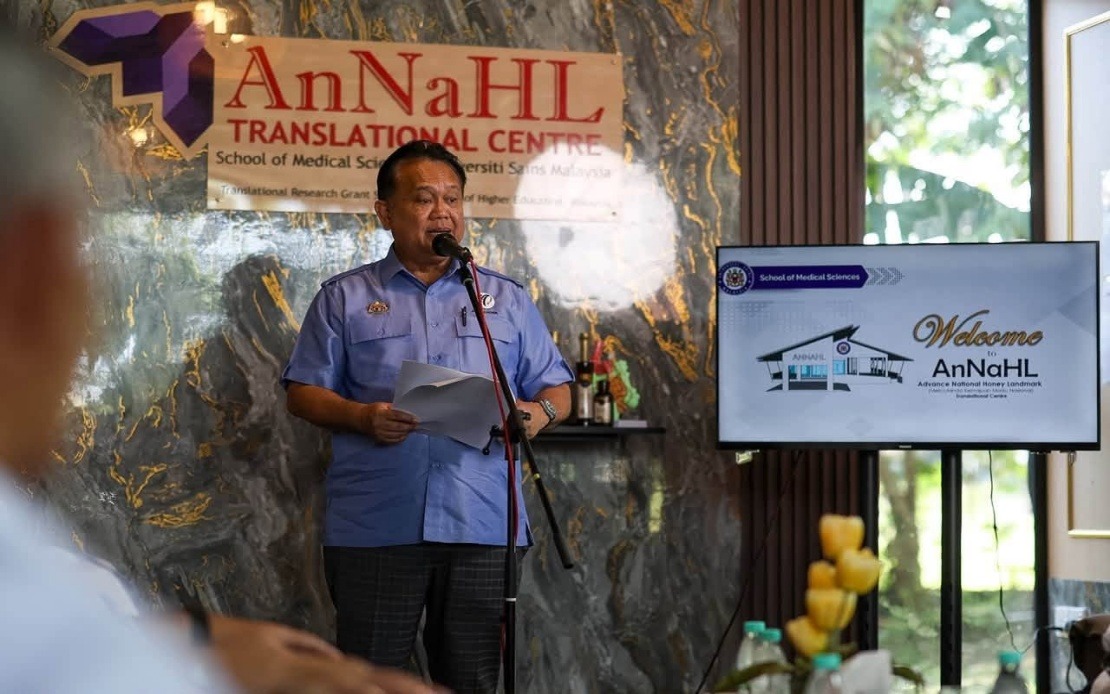
A recent collaborative visit between URDA and the Regional Corridor Development Authority (RECODA) to the Advanced National Honey Landmark (AnNaHL) Translational Centre at Universiti Sains Malaysia's Health Campus in Kubang Kerian, Kelantan exemplifies this partnership model in action. The facility demonstrates how academic research infrastructure can serve as operational hubs for product development, skills training, and market preparation. Such centres function as bridges between theoretical knowledge and practical implementation, allowing communities to learn advanced production techniques, understand quality standards, and develop marketing strategies within professional environments.
Stingless bee farming has emerged as a priority focus within Kapit parliamentary constituency, where several locations have been designated for high-impact community projects. This crop selection reflects deliberate identification of products with strong market demand, environmental sustainability credentials, and suitability for smallholder production systems. Stingless bee honey commands significant price premiums compared to conventional honey due to its perceived health properties and limited availability, making it attractive for farmers seeking higher-value alternatives to conventional agriculture. The species' reduced management requirements compared to conventional bees also reduce barriers to entry for communities transitioning to this production model.
The proposed development of processing, marketing, training, and product development infrastructure specifically for stingless bee products indicates comprehensive value chain construction rather than isolated production support. Farmers require far more than technical cultivation knowledge; they need access to processing equipment, quality assurance systems, branding development, and distribution channels. By establishing coordinated infrastructure addressing these sequential steps, URDA creates conditions where community producers can capture substantially more value from their output. Processing honey into value-added products such as cosmetics or dietary supplements multiplies returns available at village level rather than concentrating profits at urban intermediary stages.
For Malaysian and Southeast Asian contexts, URDA's approach offers important lessons about sustainable rural development that moves beyond simplistic agricultural extension models. The recognition that technology and innovation transfer must be embedded within supportive institutional frameworks addresses a persistent challenge in development programmes: ensuring knowledge adoption persists after external support concludes. By building local institutional capacity through university partnerships and structured community projects, URDA creates self-reinforcing systems where communities develop internal capability to drive continuous improvement without perpetual external dependency.
The broader implications extend beyond Sarawak's interior regions to rural areas across Malaysia confronting similar economic pressures. As agricultural commodities face structural oversupply and price depression, rural communities nationwide require strategic repositioning toward knowledge-intensive, differentiated products. The URDA model demonstrates that such transitions are achievable within realistic development timelines when partnerships combine academic expertise, government implementation capacity, and community participation. Success metrics like the 25 per cent income growth from HICP projects provide compelling evidence that such investments deliver measurable returns, potentially influencing resource allocation across other rural development agencies.
Implementing this vision at scale presents considerable coordination challenges requiring sustained commitment from multiple stakeholders. Universities must genuinely embed rural development within their missions rather than treating it as peripheral community service. Government agencies require institutional flexibility to support experimental approaches rather than rigidly prescribing development models. Communities themselves must invest time and effort in capability development, accepting that transformation occurs gradually rather than instantaneously. The success of URDA's initiative will ultimately depend on whether all participants maintain commitment through the inevitable difficulties implementation entails, and whether political support remains stable across election cycles and administrative transitions.

