Universiti Pendidikan Sultan Idris (UPSI) is pursuing an ambitious expansion strategy that extends well beyond traditional academic offerings, with serious planning underway to bring a private specialist hospital to its Tanjong Malim campus. The initiative represents a significant shift in how Malaysia's teacher-training focused institution envisions its role within the broader community, signalling confidence in the economic and demographic trajectory of the region while addressing genuine gaps in healthcare accessibility for its growing international student body.
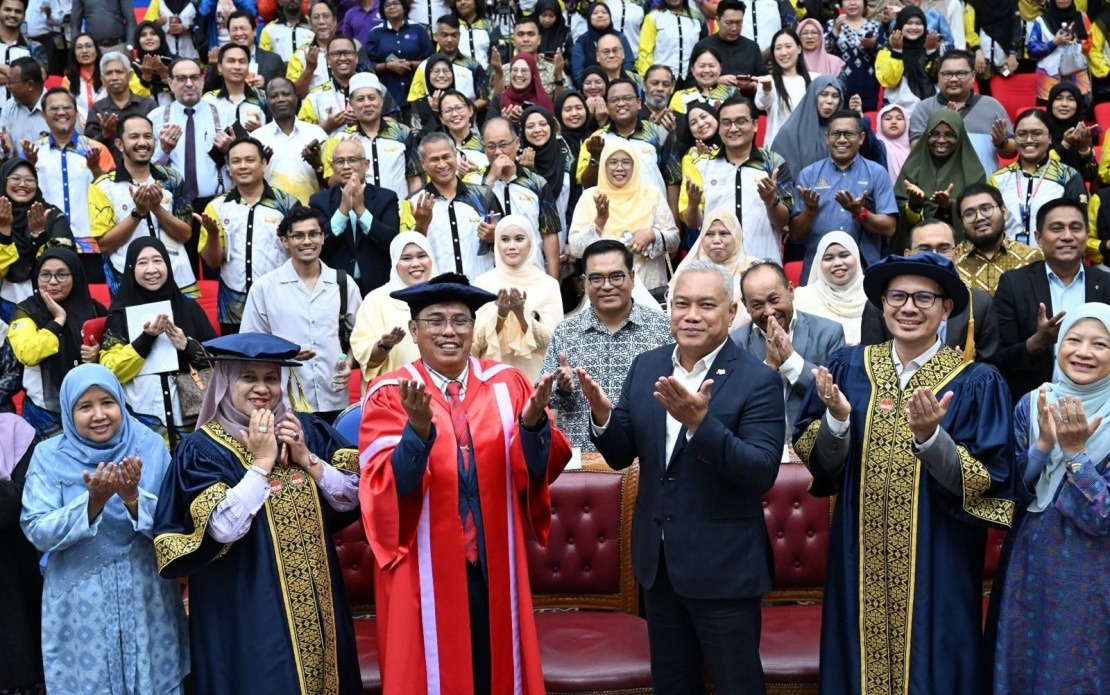
Vice-Chancellor Prof Datuk Dr Md Amin Md Taff outlined the hospital project at a recent faculty event, emphasizing that UPSI is actively evaluating partnership models with private healthcare operators interested in establishing specialist medical services either within Tanjong Malim or on university property. The institution is not simply hoping for such a facility to emerge—it is systematically examining business structures and operational frameworks that would make the venture financially viable while maintaining alignment with UPSI's educational mission and community obligations.
The healthcare component addresses an identified need among UPSI's expanding international cohort, whose members currently have limited access to specialist medical care in the immediate vicinity. As tertiary institutions increasingly compete globally for premium talent and top-performing students, peripheral amenities like healthcare quality directly influence recruitment outcomes. A dedicated hospital would remove a significant friction point for families evaluating whether to send their children to study in Perak, particularly from Southeast Asian and international markets where medical infrastructure considerations weigh heavily in university selection.
Beyond the hospital initiative, UPSI is developing a complementary vision for Tanjong Malim that encompasses retirement facilities designed specifically for its former staff. This second pillar of the expansion strategy reveals thoughtful institutional planning around the full lifecycle relationship between the university and its personnel. Rather than allowing retired academics and administrators to disperse after decades of service, the university proposes creating a dedicated retirement community that maintains meaningful connection to campus life, fostering continued intellectual engagement and institutional loyalty while addressing the practical housing and lifestyle needs of aging faculty members.
The retirement resort concept carries broader implications for Malaysian higher education policy and the emerging knowledge economy narrative that policymakers have promoted around Tanjong Malim's development. If executed effectively, such facilities could become a template for other established universities, particularly those in secondary cities seeking to build comprehensive ecosystems that serve multiple generations and demographic categories. The model transforms the university from an isolated academic institution into a true community anchor that shapes long-term residential patterns and local economic activity.
Prof Md Amin explicitly framed both initiatives within UPSI's strategic positioning relative to Tanjong Malim's projected growth as an educational hub. The area's trajectory depends not merely on the presence of university infrastructure but on the accumulation of supporting facilities that create genuine livability and attract complementary institutions. Healthcare services and quality-of-life amenities for retirees function as economic multipliers that generate ongoing expenditure, employment, and tax revenue long after the initial infrastructure investments are recovered.
The exploration phase currently underway reflects prudent institutional stewardship, as UPSI is not rushing into capital commitments without thorough due diligence on partnership structures and operational sustainability. Healthcare facilities in Malaysia operate within a complex regulatory framework involving the Ministry of Health, state health departments, and private sector oversight bodies. UPSI's careful examination of viable business models acknowledges these constraints while seeking to navigate them toward a workable solution that satisfies regulatory requirements and financial projections simultaneously.
Meanwhile, the recognition extended to retiring Dean Prof Dr Abdul Talib Mohamed Hashim, whose 20-year tenure is being appropriately acknowledged, underscores an institutional culture that values continuity and relationship depth. His extensive service exemplifies the kind of career-long commitment that the proposed retirement facilities would honor and sustain, creating incentives for talented administrators to remain invested in UPSI's mission across their full professional lives rather than seeking opportunities elsewhere as they approach retirement age.
The timing of these announcements coincides with broader national conversations around healthcare capacity and accessibility in secondary cities. Malaysia's healthcare infrastructure remains concentrated in major urban centres, leaving smaller towns underserved relative to population and demographic needs. UPSI's initiative, if successfully realized, would directly address a genuine gap while demonstrating how anchor institutions can drive local development beyond their primary educational functions. The private hospital model also aligns with current government policies encouraging public-private partnerships to expand healthcare provision, offering potential synergies with broader Perak state development objectives.
For Malaysian higher education stakeholders, the UPSI model merits close attention as an example of institutional strategic thinking that extends institutional planning horizons across decades rather than single budget cycles. Few universities have articulated such comprehensive visions for their surrounding communities, yet doing so appears increasingly essential for attracting and retaining top academic talent in competitive global markets. The convergence of specialized healthcare, retirement amenities, educational facilities, and knowledge-sector infrastructure represents an emerging template for 21st-century university towns that transcends the traditional campus boundaries of previous generations.
As UPSI progresses through this exploratory phase, potential partners in both healthcare and retirement facility development will likely watch closely to assess market demand and operational feasibility. The outcomes of these initiatives could meaningfully influence how Malaysian universities conceive their institutional missions and community relationships, potentially catalyzing similar expansions at other regional campuses seeking competitive differentiation and long-term sustainable growth beyond teaching revenue alone.

