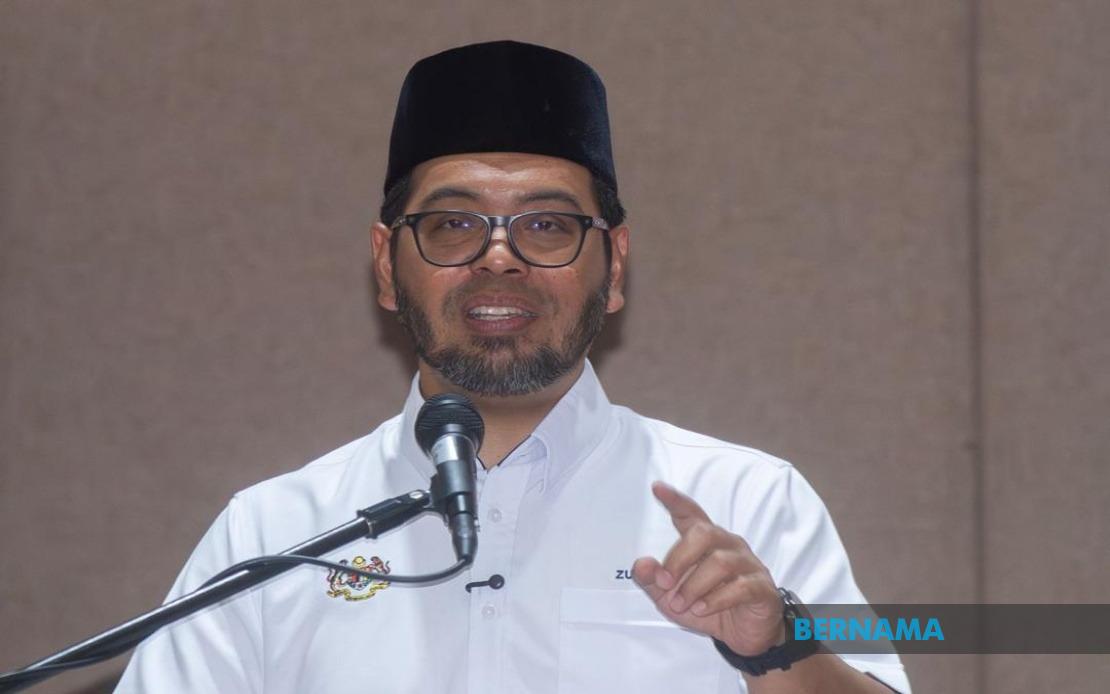
Dr Zulkifli Hasan, Minister in the Prime Minister's Department (Religious Affairs), has sounded a stark warning about the cascade of difficulties that arise when couples fail to formally register their marriages, emphasising that the consequences extend far beyond the couple themselves to affect their children's fundamental rights and welfare. Speaking at the launch of the 2026 Federal Territories Syariah Law Literacy Programme in Labuan on August 9, Dr Zulkifli drew attention to a persistent problem affecting some Malaysian families: couples who have cohabited for decades in an unofficial marital arrangement or who have contracted marriages through unauthorised registrars in contravention of the Islamic Family Law (Federal Territories) Act 1984 (Act 303).
The minister underscored that the implications of neglecting marriage registration constitute far more than a bureaucratic inconvenience or minor administrative oversight. When unions lack official recognition, children become the primary casualties, facing substantial practical impediments in their daily lives and long-term prospects. Among the most immediate and tangible consequences is the difficulty in obtaining birth certificates, a foundational document essential for accessing virtually every subsequent government service and institutional interaction. Without proper birth certification, children encounter barriers when attempting to enrol in schools, access health services, or establish their legal identity and citizenship status.
Beyond education and healthcare, the absence of officially registered marriages creates profound complications regarding a child's lineage and genealogical status. This ambiguity can trigger disputes over inheritance rights and the distribution of estates according to Islamic law principles of faraid, particularly when a parent or family member passes away. The financial security of children can be jeopardised when questions about succession arise, and the distribution of assets becomes contested due to the absence of clear legal documentation of the family structure. Similarly, the situation places wives in an extremely precarious position, as they lose legal recourse to claim maintenance payments (nafkah) or settlement provisions (mutaah) if the marriage dissolves or the husband abandons his family responsibilities.
The government's approach to addressing this issue reflects a nuanced understanding that punitive measures are counterproductive. Rather than adopting enforcement-focused tactics, Dr Zulkifli emphasised that the Religious Affairs Ministry, working alongside religious authorities and collaborative partners, is pursuing a constructive and facilitative strategy aimed at resolving outstanding marriage registration cases and clarifying ambiguous marriage situations. The ministry frames marriage registration not as an onerous legal requirement imposed from above, but as a protective mechanism that safeguards family interests and prevents contentious disputes when circumstances change or mortality enters the picture.
The 2026 Federal Territories Syariah Law Literacy Programme represents a practical manifestation of this proactive approach. By establishing interactive counters staffed with knowledgeable officers, the initiative allows affected residents to approach authorities without fear of retribution and to resolve longstanding registration issues in a supportive environment. This outreach model acknowledges that many individuals may be unaware of the legal implications of their marital status or may simply lack accessible pathways to complete the necessary procedures. The programme's inclusive design signals that the government views marriage registration as a shared responsibility requiring cooperation from multiple stakeholders.
The collaborative nature of the programme illustrates the comprehensive institutional engagement required to tackle this systemic issue. Partners include the Labuan Member of Parliament's Office, Federal Territories Syariah Court, Federal Territories Islamic Religious Department (JAWI), Federal Territories Islamic Religious Council (MAIWP), Legal Aid Department, Federal Territories Mufti Department, Tabung Haji, and Yayasan Pembangunan Ekonomi Islam Malaysia (YAPEIM). This multi-agency coordination ensures that couples and families receive holistic support addressing not only the technical registration process but also legal advice, financial guidance, and other welfare considerations.
For Malaysian families and particularly for those in the Federal Territories, the message carries immediate relevance. Couples who have married outside their official jurisdiction, who have utilised unregistered or unlicensed marriage solemnisers, or who have simply neglected to complete formal registration procedures face a window of opportunity to rectify their status without facing punitive consequences. The programme's existence reflects official recognition that a significant population faces these complications, and it signals the government's commitment to normalising their legal status.
The regulatory framework governing marriage registration in Malaysia exists fundamentally to protect vulnerable household members, especially children who have no agency in determining their parents' compliance with legal formalities. The Islamic Family Law framework emphasises not control for its own sake but the preservation of family integrity and the prevention of harm to dependents. When marriages remain unregistered, the legal protections embedded within that framework become inaccessible, leaving children and spouses without recourse should disputes, abandonment, or death create instability.
Dr Zulkifli's articulation of marriage registration as a form of protection rather than a burden represents an important reframing of public discourse around family law compliance. By emphasising how formal recognition serves the interests of families and children, the minister positions legal compliance as consistent with, rather than opposed to, family welfare. This messaging may prove crucial in encouraging voluntary registration among populations who previously viewed marriage formalisation as peripheral or as an unnecessary government imposition. For Malaysian society more broadly, ensuring that all children can access birth certificates, receive uninterrupted education, and inherit according to established legal principles requires normalising the completion of formal marriage registration across all communities.

