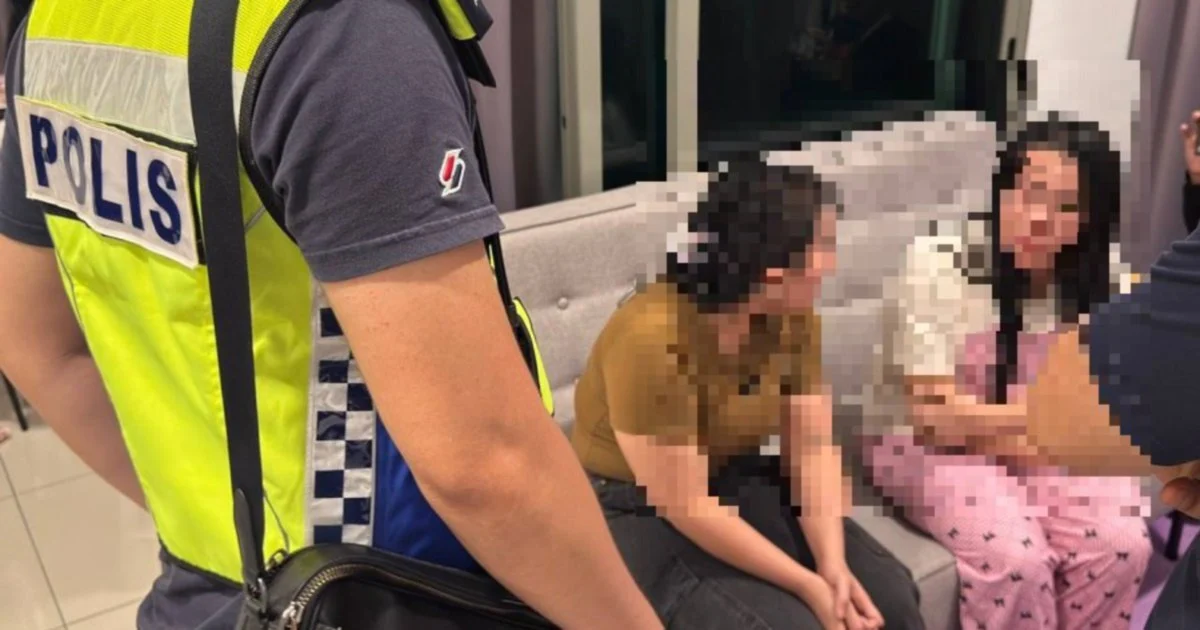
A university student found herself in police custody after officers conducted an enforcement operation targeting an apartment in Cyberjaya yesterday, which authorities allege was being operated as a location for sex work. The student's attempt to generate additional income during her academic recess period culminated in her detention as part of the operation, marking a significant turn in her educational pursuits.
Cyberjaya, Malaysia's flagship cybercity and a major hub for technology and business operations, has long grappled with enforcement challenges across various domains. The raid represents part of broader police efforts to address vice activities within the federal territory, which encompasses numerous residential and commercial complexes that authorities have identified as requiring closer monitoring.
The timing of the alleged prostitution operation is particularly noteworthy given that the student undertook the activity during a semester break period. Students across Malaysian universities increasingly face financial pressures, with many balancing tuition fees, accommodation costs, and living expenses against limited family support or employment opportunities. The case underscores the economic vulnerabilities that can lead young people toward high-risk income-generating activities, particularly during periods when regular part-time employment may be difficult to secure.
The apartment unit that became the focus of yesterday's enforcement operation appears to have been deliberately selected by the student and any associates as a venue for such activities. The decision to operate from a residential location rather than an established commercial establishment suggests an attempt to avoid detection, though police intelligence eventually led to the discovery and subsequent action.
University administrators and student welfare organisations across Malaysia have increasingly highlighted concerns regarding economic desperation among students, particularly those from lower-income family backgrounds. The pursuit of quick financial solutions, while understandable given genuine hardship, can expose vulnerable individuals to legal consequences under Malaysia's existing legislation governing sexual services and related activities.
Laws pertaining to prostitution and related offences in Malaysia carry serious implications for those convicted, including potential imprisonment, fines, and lasting criminal records that can substantially impact future employment prospects and educational pursuits. For a university student, an arrest and conviction in such circumstances carries particular gravity, as many institutions impose disciplinary measures ranging from suspension to expulsion based on criminal convictions.
The enforcement operation reflects a broader pattern of police activity targeting vice-related matters in urban areas. Cyberjaya, being a planned federal territory with significant residential populations, presents particular operational challenges for law enforcement seeking to identify and address illegal activities operating from within apartment complexes and residential units that form substantial portions of the city's infrastructure.
Cyber crimes, organised criminal networks, and vice-related operations increasingly utilise online platforms and applications to connect service providers with clients, making detection and enforcement considerably more complex than in previous decades. Police investigations into such activities now routinely incorporate digital forensics and online intelligence gathering alongside traditional investigative methods.
The incident carries broader implications for student welfare and financial support mechanisms within Malaysia's higher education landscape. University counselling services and financial assistance programmes face mounting demand as student cohorts expand and cost-of-living pressures intensify, yet many institutions remain under-resourced to address these mounting challenges comprehensively.
Families and friends of students ensnared in such circumstances often face significant social stigma alongside the legal repercussions their relatives encounter. The intersection of financial desperation, legal vulnerability, and social shame creates compounding pressures that may impede rehabilitation and reintegration into society following conviction or police action.
Police are expected to conduct thorough investigations into the operational mechanics of the alleged prostitution network, including identifying any additional individuals involved in facilitating or benefiting from the activities. Such enquiries typically extend beyond the individual arrested to examine networks of exploitation or facilitation that may operate across multiple locations.
The case serves as a cautionary reminder of the precarious circumstances that can arise when young people facing genuine financial constraints seek rapid income solutions without adequate consideration of legal and personal safety dimensions. It equally highlights the continuing demand among enforcement agencies for comprehensive prevention strategies that address root causes of vulnerability rather than managing only the immediate consequences through arrest and prosecution.

