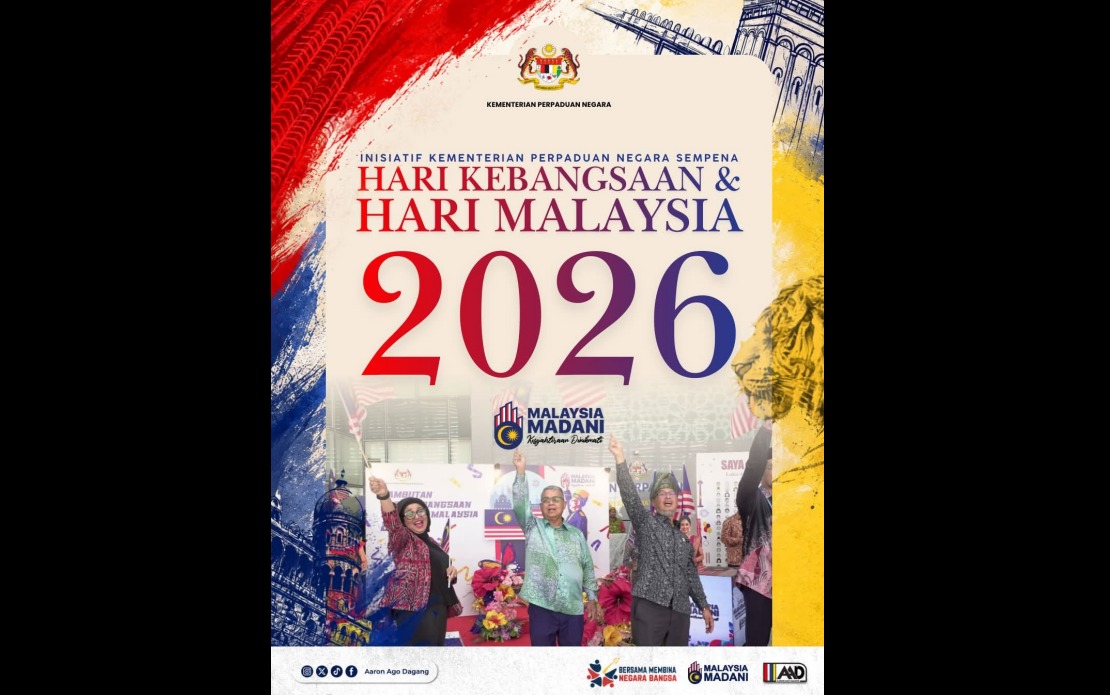
The National Unity Ministry has unveiled an ambitious calendar of 11 programmes designed to deepen Malaysians' connection to their nation during the 2026 National Day and Malaysia Day festivities. Minister Datuk Aaron Ago Dagang announced the comprehensive slate of activities in Putrajaya, positioning the year as a significant moment for citizens to reflect on the nation's journey and shared values.
The initiatives represent a deliberate strategy to weave together themes of nationhood, historical significance, cultural heritage and patriotic sentiment. By distributing these programmes across both major national commemorations—National Day on August 31st and Malaysia Day on September 16th—the ministry aims to create extended periods of national engagement rather than isolated celebratory moments. This extended approach recognises that building national identity requires sustained, layered messaging rather than single-day events.
Among the planned activities is the 2026 National Unity Integration Movement, which will serve as an umbrella framework for grassroots participation across communities. The ministry intends this programme to directly involve ordinary Malaysians in nation-building activities, moving beyond passive observation of national symbols toward active engagement in building social cohesion. This initiative addresses a growing recognition that national identity strengthens when citizens feel personally invested in its construction.
A dedicated Malaysia's Merdeka Children Celebration signals the ministry's focus on generational transmission of patriotic values. By specifically targeting younger Malaysians, the programmes seek to instil a sense of belonging and historical consciousness from formative years. This approach acknowledges that children who develop emotional connections to national celebrations during childhood often carry those sentiments into adulthood, creating long-term cultural effects.
The Exhibition on Independence will provide a space for Malaysians to engage with the historical narrative of their nation's path to sovereignty. Through curated displays and interpretive materials, such exhibitions offer opportunities for citizens to understand the sacrifices, negotiations and collective efforts that shaped modern Malaysia. For younger generations with limited direct connection to independence struggles, these exhibitions serve as educational anchors, grounding abstract concepts of nation in tangible historical evidence.
A commemorative programme honouring Tun Abdul Razak, Malaysia's second Prime Minister, situates leadership and governance at the centre of national identity discussions. By highlighting influential historical figures, the ministry reinforces the idea that national development depends on visionary leadership and collective responsibility. This personalisation of history makes abstract political concepts more relatable and memorable.
The Pesta Bola Merdeka Exhibition connects sports and national pride, recognising that athletic competition serves as a powerful vehicle for patriotic expression. Football holds particular significance across Malaysian communities, transcending ethnic and religious boundaries. Leveraging this unifying sport demonstrates sophisticated understanding of how diverse populations can find common ground through shared passion and spectacle.
The Night at the Museum initiative transforms cultural institutions into spaces of evening engagement, potentially attracting participants who cannot visit during standard daytime hours. This accessibility consideration acknowledges working Malaysians and families managing school schedules. Extended museum hours during national celebrations democratise access to cultural and historical knowledge.
The Rukun Negara Oratory Competition directly engages citizens in articulating the five principles of the nation's social contract. By requiring participants to speak publicly about national principles—the supremacy of the Constitution, the institution of the Malay Rulers, the supremacy of Islam, Malay-Muslim special rights and English language status—the competition creates forums for reasoned, civic discourse around potentially sensitive topics. Oratory competitions can transform divisive subjects into opportunities for persuasive, thoughtful dialogue grounded in constitutional values.
Minister Datuk Aaron Ago Dagang emphasised that these programmes deliberately embrace Malaysia's ethnic, religious, cultural and regional diversity rather than attempting to suppress it. This inclusive framing distinguishes the ministry's approach from historical nation-building efforts that imposed uniformity. By celebrating Malaysia's plural character while strengthening shared identity, the initiatives propose that unity and diversity strengthen rather than contradict each other.
For Malaysian readers, these 2026 programmes signal government commitment to proactive nation-building through cultural and civic engagement. The breadth of initiatives—spanning children's celebrations, historical exhibitions, sporting events, oratory competitions and community movements—suggests recognition that national identity operates across multiple registers: emotional, intellectual, physical and institutional. Rather than relying solely on political rhetoric or symbolic gestures, the ministry is investing in experiential and participatory activities.
The timing of these announcements, over a year before the 2026 celebrations, indicates serious planning rather than last-minute organisational efforts. This advance preparation suggests the ministry intends these programmes to build momentum throughout the year, creating anticipation and sustained engagement. For event organisers, cultural institutions and community groups, the early announcement provides time to align their own activities with national themes.
Southeast Asian observers might note Malaysia's approach to national identity construction through inclusive, diverse programming. In a region where nation-building remains ongoing and often contested, Malaysia's framework—emphasising constitutional principles, historical commemoration, cultural celebration and citizen participation—offers one model for achieving cohesion across plural societies. The ministry's success in executing these 11 initiatives will likely influence regional thinking about how multiethnic democracies maintain unified national identity while respecting difference.

