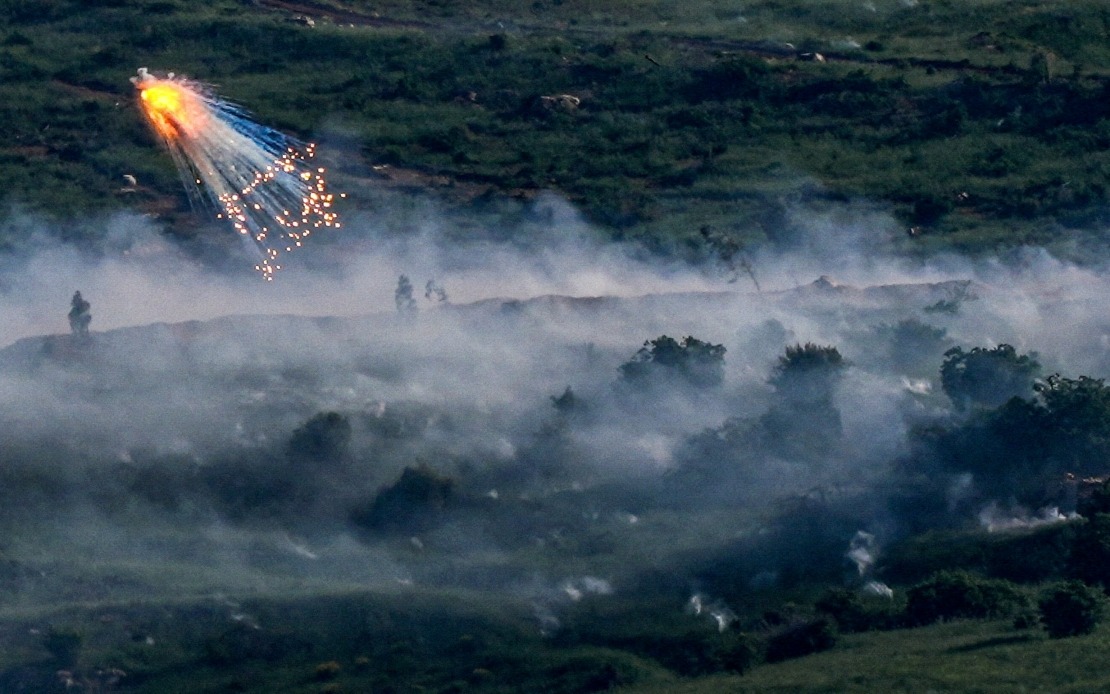
The United States has instructed its citizens to refrain from traveling to Lebanon and the northern regions of Israel, with American diplomatic missions citing deteriorating security conditions and the unpredictable nature of the current geopolitical environment in West Asia. Both the US Embassy in Beirut and the US Embassy in Jerusalem issued formal advisories on Saturday, reflecting mounting concerns about the trajectory of tensions across the broader Middle Eastern theatre.
The Beirut embassy's statement specifically highlighted the complexity of the prevailing security landscape, noting that "due to high tensions in the West Asia, the security environment remains complex with the potential for unforeseen escalation." This language reflects the diplomatic community's assessment that the region has entered a phase where conventional risk calculations may no longer apply, and developments could spiral beyond the control of established diplomatic channels.
The advisory from Jerusalem went further in scope, urging Americans to avoid not only Gaza and northern Israel but also to reconsider all travel to and through West Asia more broadly, with a narrow exception for the Taba crossing between Egypt and Israel. The breadth of this warning signals that American officials view the instability as pervasive across multiple territories and crossing points, rather than confined to specific flashpoint areas.
For Malaysian citizens and businesses operating in the region, these American travel warnings carry significant implications. Malaysia maintains substantial commercial, educational, and diaspora communities throughout the Levantine region and broader Middle East. When major Western powers issue such sweeping advisories, the ripple effects typically extend to insurance policies, business operations, and the movement of personnel, often affecting regional stability beyond the immediate zone of conflict.
The timing of these warnings comes against a backdrop of simmering tensions between the United States and Iran, despite what was presented as a breakthrough diplomatic arrangement. In June, both nations had agreed to a Pakistan-brokered memorandum of understanding aimed at halting their military exchanges and establishing a framework for lasting peace. However, the intervening weeks have seen a resumption of hostile actions and counter-actions between Washington and Tehran, suggesting the accord has either been inadequately implemented or has failed to address the underlying strategic competition driving their conflict.
The fragility of this arrangement underscores a broader challenge in regional diplomacy: agreements negotiated at the highest levels frequently founder when faced with the structural incentives and proxy dynamics that characterize Middle Eastern geopolitics. Pakistan's role as broker, while noteworthy, reflects the limited leverage that even established regional powers possess when attempting to mediate between global superpowers with fundamentally divergent interests.
Lebanon presents a particularly acute concern within this calculus. The country has long served as a arena for proxy conflicts, hosting Hezbollah and other armed groups with varying allegiances to Iran and other regional powers. Escalating Israeli-Iranian tensions inevitably engulf Lebanon, given Hezbollah's integrated role in both Lebanese politics and Iranian strategic planning. The country's already fragile institutional capacity makes it especially vulnerable to spillover effects from broader regional confrontations.
Northern Israel, meanwhile, sits directly opposite Lebanon across the shared border region. Military installations, civilian populations, and strategic infrastructure in this zone face heightened risk should tensions between Israel and Iran-aligned actors translate into active hostilities. The civilian toll of any such escalation would likely be substantial, making the American advisory a reasonable precautionary measure for those without compelling reasons to remain.
For Malaysian travelers, business professionals, and students currently in these areas or contemplating journeys there, the advisory creates immediate practical complications. Insurance premiums for coverage in designated high-risk zones typically spike or become unavailable. Employers may enforce mandatory departures. University programmes and professional assignments may be suspended or relocated. These cascading effects can persist for months even after the immediate security threat subsides, as risk-averse organisations move slowly to restore operations.
The broader narrative here extends beyond immediate security concerns to encompass questions about the sustainability of diplomatic arrangements in regions where military capabilities, ideological commitments, and strategic competition intersect. The June Pakistan-brokered agreement between the US and Iran represents an important aspiration toward stability, but its repeated failures to hold suggest that deeper structural accommodations and confidence-building measures remain elusive.
Southeast Asian nations, including Malaysia, have vested interests in Middle Eastern stability from multiple angles. Energy security, maritime commerce through the region, religious and cultural ties, and diplomatic relationships all depend on de-escalation. When American embassies issue warnings of this magnitude, it signals that private diplomatic channels have been unable to prevent deterioration, and that the official assessment now leans toward preparing for contingencies rather than preventing them.
The contrast between the June memorandum and the current advisory illustrates how quickly geopolitical situations can destabilize when underlying tensions remain unresolved. Sustainable regional peace requires addressing not merely the symptoms of competition but the root strategic interests driving it. Until such fundamental accommodations are achieved, travel advisories may become an increasingly familiar feature of West Asian diplomacy, affecting not only Americans but the millions of people from Asia-Pacific nations who maintain presence and interests throughout the region.

