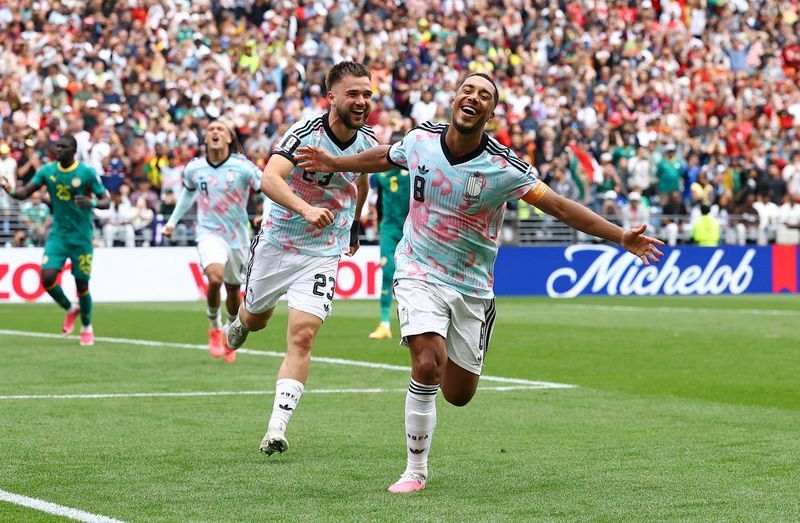
The United States will meet Belgium in a World Cup quarter-final encounter at Seattle's Lumen Field on July 4, a matchup that captures the contrasting trajectories of two sides headed in opposite directions. For the American team, the tournament has evolved from a modest goal of reaching the knockout rounds into something far more ambitious—a genuine push toward deeper advancement on home soil. Belgium, meanwhile, represents a stern test of whether the momentum built through successive victories can be sustained against a European powerhouse laden with experience and proven talent at the highest levels of club and international football.
American expectations entering the World Cup were notably restrained. Supporters and analysts alike regarded qualification for the last sixteen as a credible achievement for Mauricio Pochettino's squad, reflecting realistic assessments of the team's pedigree and previous tournament performances. The group stage, however, has rewritten that narrative entirely. Victories over Paraguay and Australia established early momentum, but the performance against Bosnia proved transformative—a 2-0 triumph achieved while operating at numerical disadvantage for the final thirty-six minutes demonstrated resilience and tactical discipline that suggested this American side possessed qualities beyond what pre-tournament forecasts had anticipated. Each subsequent performance has only amplified domestic confidence and media enthusiasm surrounding the campaign.
Belgium's path through the tournament tells a markedly different story. The Belgian contingent have not yet produced the commanding performances expected of a squad boasting such considerable depth and individual quality. Their contest against Senegal typified this inconsistency—trailing for large stretches, they required a dramatic late intervention to secure progression. A controversial penalty decision in extra time, confirmed through video review, ultimately determined the outcome, though the manner of advancement left observers questioning whether Belgium possess the consistency required to mount a serious title challenge. For a generation of Belgian players, this may represent a final opportunity to achieve the world stage success that has eluded them throughout their careers.
The Belgian squad carries the weight of what international football observers have termed their "Golden Generation." Kevin De Bruyne, commanding midfielder and Manchester City's creative cornerstone, has long been regarded as one of the tournament's finest players. Romelu Lukaku brings proven goal-scoring pedigree, while goalkeeper Thibaut Courtois offers the kind of shot-stopping excellence that has defined his career at Real Madrid. These players, collectively in the twilight of their peak years, understand that World Cup opportunities become increasingly scarce as careers progress. Whether this provides additional motivation or creates psychological pressure remains an open question heading into the Seattle encounter.
America's defensive organization will face a searching examination against Belgian creativity. Prior to the tournament, the back line represented the perceived weak point in Pochettino's tactical scheme, yet the Bosnia performance demonstrated marked improvement and structural solidity. Jeremy Doku, Belgium's attacking winger, has operated below his full capacity thus far, appearing subdued and failing to deliver the breakthrough performances expected of him. Should the American defence maintain its recent organization while pressing effectively, they might successfully nullify Doku's threatening runs and limit the creative supply lines that feed Belgium's more dangerous attacking players.
The matchup resurrects memories of a previous encounter between these nations in 2014. That knockout fixture in Brazil saw Belgium prevail after extra time in a contest remembered principally for Tim Howard's extraordinary goalkeeping display. The American goalkeeper produced a tournament record with sixteen saves, demonstrating shot-stopping prowess that nonetheless could not overcome Belgium's superior overall control of play. That defeat represented American elimination following a spirited late surge that ultimately fell short. A decade later, another knockout showdown carries echoes of that previous encounter while occurring under entirely different circumstances and with different personnel populating both squads.
The United States faces a significant personnel challenge ahead of the match. Folarin Balogun, the striker who scored during the Bosnia encounter before receiving a red card in the second half, remains suspended and unavailable for selection. His absence forces Pochettino toward crucial tactical decisions regarding attacking personnel and formation. The loss of a goal contributor introduces uncertainty into a team that has functioned with increasing cohesion and understanding throughout the tournament. Selecting adequate replacement attacking options without disrupting the defensive stability that has become increasingly apparent represents a complex managerial challenge.
From a regional perspective, this American success carries implications for global football dynamics and the continued professionalization of the sport within North America. A deeper World Cup run extends the tournament's prominence within American popular consciousness, potentially deepening investment in soccer at domestic levels. Southeast Asian football observers, cognizant of the sport's growing importance across the region, will monitor how American commercial and cultural influence within the sport potentially reshapes global competitive landscapes, particularly regarding investment and talent development priorities.
Midfield maestro Tyler Adams articulated the American ambition succinctly, emphasizing the squad's desire to establish a lasting legacy and mark upon proceedings. The rhetoric reflects confidence without overreach—acknowledgment that extended tournament runs build national sporting narratives and cultural resonance. The further American advancement progresses, the greater the opportunity to capture domestic attention and reshape global perceptions regarding the sport's trajectory within the United States. Belgian players, conversely, seek vindication after a generation of near-misses at major tournaments, understanding that advancing from this confrontation represents progress toward previously unfulfilled objectives.

