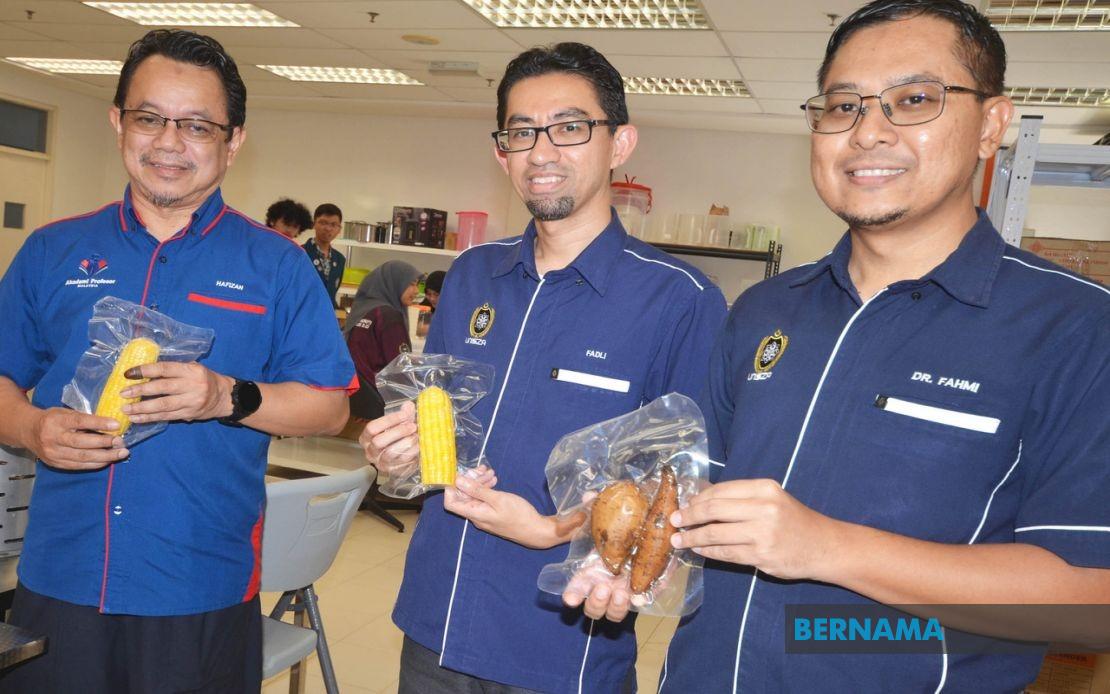
Universiti Sultan Zainal Abidin (UniSZA) has launched an ambitious community-driven project designed to rescue farmers from the grip of middlemen exploitation and prevent valuable crops from languishing unsold in fields across Terengganu. The Dapur Komuniti initiative, anchored at the university's Besut campus alongside a Sustainable Community Farm, represents a multifaceted response to a persistent problem that has plagued rural communities throughout Malaysia's agricultural heartland—the disconnect between farm-gate prices and market value, coupled with the inability of smallholder farmers to access modern marketing channels.
According to Prof Dr Hafizan Juahir, dean of the faculty overseeing the initiative, the project tackles oversupply through innovation and value creation rather than simply improving distribution. The facility functions simultaneously as a research and development centre, a food processing hub, and a community education platform. Its primary objective is to convert agricultural produce that cannot be sold in fresh form into shelf-stable, higher-margin products with market demand extending beyond a year. This approach directly addresses a fundamental challenge facing rural Terengganu: farmers producing quality commodities that deteriorate rapidly, lose market value quickly, or cannot reach consumers due to logistical constraints and the absence of digital marketing infrastructure.
The economic pressures facing Besut's farming community reveal the depth of the problem the initiative seeks to solve. Farmers in the district have historically struggled with marketing their output, facing pressure from intermediaries who purchase directly from farms at depressed prices. These middlemen capture the value that should rightfully accrue to farmers, creating a system where growers receive minimal compensation for their labour while urban consumers pay substantially higher prices. Sweet potatoes exemplify this exploitation—Besut farmers previously received less than RM2 per kilogramme, yet identical produce commanded significantly higher prices in markets across Kuantan, Pahang, and major Malaysian cities. This disparity results not from differences in quality but from logistical barriers and the limited digital marketing capacity among farmers, many of whom lack access to online sales platforms or the technical knowledge to leverage them effectively.
Waste emerges as a companion problem to low prices. When farmers cannot find buyers at acceptable prices, produce often rots in the field or storage facilities. UniSZA's initiative directly combats this through product development grounded in practical agricultural realities. One exemplary product demonstrates the concept's viability: pickled Terengganu Sweet Melon, created from lower-grade melons that would otherwise be discarded entirely. By converting these substandard fruits into a shelf-stable delicacy, the university has simultaneously reduced food waste and created an additional income source for farmers. The melon product illustrates the broader operational model—identifying agricultural byproducts and lower-quality output that possess commercial potential when appropriately processed, then capturing that value through skilled food transformation.
The transformation process involves more than simply preserving food; it represents a deliberate economic upgrade strategy. Raw agricultural commodities typically command low prices and require rapid sale to prevent spoilage. Value-added products—whether pickled, dried, canned, or further processed—permit extended shelf lives, reach wider geographic markets, and command premium pricing. Farmers who can convert their own produce or partner with processing facilities thus capture substantially greater margins than those selling fresh output to middlemen. UniSZA's facility enables exactly this transition, converting unsaleable surplus into revenue-generating products whilst simultaneously reducing the wastage that economists estimate costs Malaysia's agricultural sector billions annually.
Critically, the initiative extends beyond the farm gate to encompass workforce development aligned with industry standards. UniSZA provides hands-on food processing training to local residents and farmers, enabling them to develop technical competency in producing value-added agricultural goods. This skills transfer represents a significant departure from traditional extension services, which typically focus on improving cultivation techniques rather than post-harvest value creation. By equipping farmers and community members with practical processing knowledge, the initiative creates entrepreneurial pathways—individuals can establish small food businesses, supply institutional buyers, or develop products for retail distribution without dependence on university facilities.
The university is currently in discussions with Malaysia's Department of Skills Development to establish the Dapur Komuniti as an accredited training centre for the Malaysian Skills Certificate (SKM) in food processing. This institutional recognition would transform the facility from a university initiative into a formal credentialing mechanism, enabling participants to earn nationally recognised qualifications. Such credentials carry particular significance for career advancement and business licensing in Malaysia's regulated food sector. UniSZA students completing the programme would graduate with both bachelor's degrees and SKM Level 3 food processing certifications, creating a distinctive employment advantage in an increasingly credential-conscious market.
Beyond the student population, the initiative specifically targets Malaysian Armed Forces veterans as beneficiaries of its skills training. Military personnel transitioning to civilian life frequently encounter employment challenges, particularly in rural areas where job opportunities remain limited. By equipping veterans with formal food processing qualifications and entrepreneurial skills, UniSZA enables this demographic to pursue income-generating ventures—establishing small processing businesses, securing employment in food manufacturing, or contracting to supply institutional canteens. The programme thus addresses both rural economic development and veteran welfare simultaneously, recognising that rural communities encompass diverse populations with specific needs.
The Dapur Komuniti initiative reflects broader recognition within Malaysia's higher education sector that universities possess unique potential to address regional economic challenges. Besut and surrounding areas of Terengganu possess substantial agricultural productivity but lack the infrastructure, processing facilities, and market integration that transform farming into viable livelihoods. By locating its food innovation hub on campus and coupling it with the Sustainable Community Farm, UniSZA creates a controlled environment where innovations can be tested, refined, and transferred to farmers. The proximity of research facilities, skilled personnel, and educational infrastructure enables rapid iteration and evidence-based problem-solving.
The economic implications for Terengganu's agricultural sector could prove substantial if the model scales successfully. Rather than attempting to increase production—a strategy that exacerbates oversupply—or encouraging farmers to exit agriculture entirely, the Dapur Komuniti approach increases the value extracted from existing production. Even modest price improvements from value-added processing could materially improve farmer incomes and reduce the economic pressure that drives rural-urban migration. For Malaysia more broadly, the initiative demonstrates a potentially replicable model that other universities could adapt to regional agricultural contexts, suggesting pathways toward more sustainable and equitable food systems.
However, success ultimately depends on effective commercialisation and market integration beyond the university setting. Food processing businesses require consistent supply, stringent quality control, compliance with regulatory frameworks, and reliable distribution channels. The transition from university-supported initiative to sustainable commercial operation remains the critical challenge. If UniSZA can establish formal partnership agreements with farmer cooperatives, secure retail distribution for its value-added products, and support graduate entrepreneurs in establishing independent processing businesses, the initiative could generate transformative economic benefits for Terengganu's agricultural communities. The coming years will reveal whether Dapur Komuniti can bridge the gap between innovation and market sustainability.

