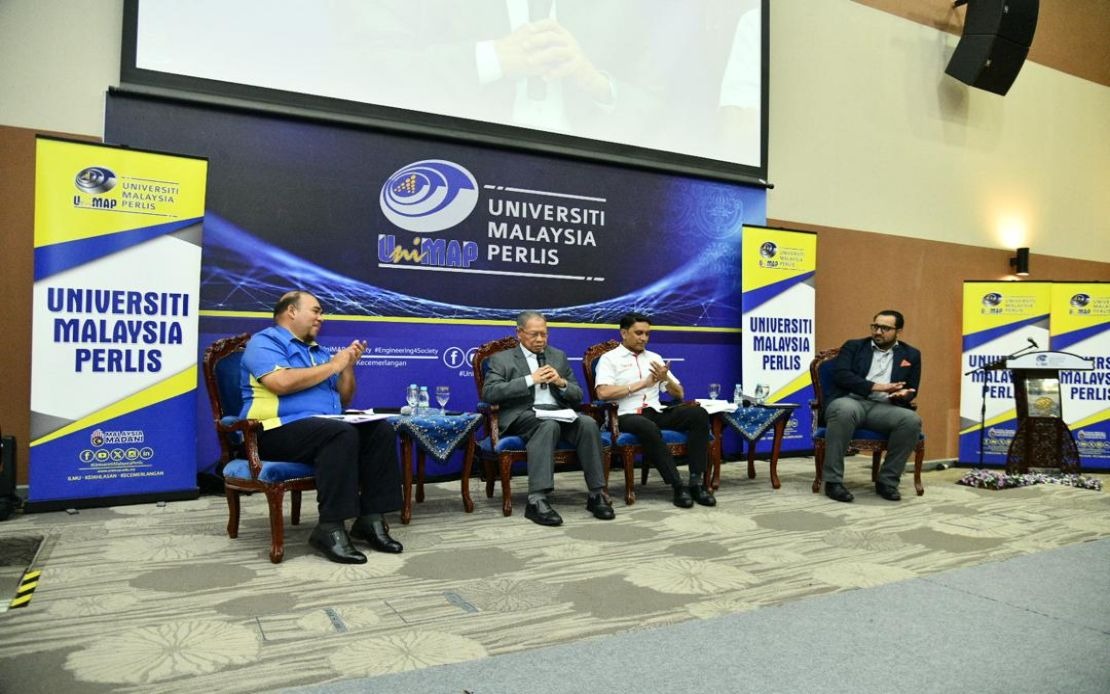
Universiti Malaysia Perlis (UniMAP) has positioned itself as a critical engine for Malaysia's semiconductor ambitions, producing nearly 2,000 graduates annually who enter the electrical and electronics industries. Speaking at the From Semiconductor Policy to Industry Forum at the university in Arau, Vice-Chancellor Datuk Prof Dr Zaliman Sauli outlined how the institution is directly supporting the government's National Semiconductor Strategy, which carries the ambitious target of nurturing 60,000 skilled workers and engineers by 2030. The university's output represents a meaningful contribution to this goal, though the scale of the challenge ahead remains substantial.
The importance of UniMAP's role cannot be overstated given the transformation semiconductors have undergone in the global economy. Once primarily associated with computing hardware, chip technology now underpins an expanding ecosystem encompassing artificial intelligence systems, electric vehicles, telecommunications infrastructure, and cloud computing facilities. Malaysia recognises this shift and has moved to position itself strategically within the global semiconductor value chain. As the world's sixth-largest semiconductor exporter, the country commands seven percent of global chip trade and holds a particularly strong position in the Assembly, Testing and Packaging segment, accounting for 13 percent of that specialised market globally.
Employability data from UniMAP reveals the direct pipeline between classroom and industry. Graduate Employability metrics for 2024 and 2025 indicate that over 30 percent of the university's graduates commence their careers within the electrical and electronics sector, suggesting strong alignment between curriculum offerings and labour market demand. This concentration demonstrates the effectiveness of UniMAP's focus on disciplines directly relevant to semiconductor manufacturing, design, and infrastructure development. For Malaysian readers concerned with youth employment prospects, this represents tangible evidence that technical qualification pathways lead to stable professional opportunities.
The university has implemented a multi-faceted strategy to deepen connections between academic training and industry requirements. Through the Industry-on-Campus initiative, semiconductor and electronics companies establish presence within the university environment, allowing students exposure to contemporary workplace conditions and technologies. Industry Advisory Panels ensure that course design remains responsive to evolving sector needs rather than calcifying around outdated competencies. The recruitment of International Adjunct Professors brings exposure to global best practices and research frontiers, while industry-recognised professional certification programmes provide graduates with credentials that carry weight beyond Malaysia's borders.
Zaliman emphasised that maintaining Malaysia's competitiveness in semiconductors depends on cultivating an ecosystem where government, academic institutions, and industry stakeholders operate in synchronised coordination. Northern Malaysia, home to UniMAP, has emerged as a particular focus for semiconductor development. The Northern Corridor Implementation Authority, represented at the forum by Chief Executive Datuk Mohamad Haris Kader Sultan, represents the government's institutional commitment to transforming the region into a technology hub. This geographical concentration of effort, resources, and infrastructure development creates competitive advantages that extend beyond individual companies to regional and national levels.
The semiconductor sector's significance for Malaysia extends well beyond economic metrics. As global supply chain vulnerabilities have become evident through recent disruptions, nations controlling semiconductor capacity possess strategic autonomy in technology development and national defence. Malaysia's positioning as a major exporter and processor of chips places it at the intersection of geopolitical interests, particularly as developed economies seek to reduce dependence on single-source suppliers concentrated in Taiwan and South Korea. UniMAP's workforce development therefore carries implications that transcend commercial considerations.
Former International Trade and Industry Minister Datuk Seri Dr Mustapa Mohamed participated in the forum discussions, signalling sustained ministerial attention to semiconductor strategy across different government administrations. This continuity suggests that semiconductor development has achieved cross-party consensus status in Malaysian politics, reducing the risk of disruptive policy reversals. Micron Technology Inc Malaysia's representative Ahmed Zaki Moten brought perspective from one of the world's largest semiconductor manufacturers, bridging the gap between multinational corporate interests and local development objectives.
The challenge moving forward involves scaling UniMAP's output and quality to match the National Semiconductor Strategy's 60,000-worker target while maintaining educational standards. Nearly 2,000 graduates annually represents substantial capacity, yet achieving 60,000 skilled workers by 2030 will require engagement from multiple universities, vocational institutions, and private training providers across Malaysia. UniMAP's experience provides a model that other institutions might replicate and adapt to their regional contexts.
Regional implications also warrant consideration for Southeast Asian readers. Malaysia's semiconductor strategy creates spillover effects throughout the region. Supply chains link to Singapore's financial services and design capabilities, Thailand's manufacturing infrastructure, and Vietnam's emerging electronics assembly base. A strengthened Malaysian semiconductor workforce potentially anchors a more cohesive regional technology ecosystem, enhancing collective resilience against external shocks and reducing the region's dependency on external suppliers. UniMAP's workforce development thus represents not merely a domestic achievement but a contribution to broader Southeast Asian technological maturation.
The university's emphasis on continuous partnership enhancement recognises that workforce development in advanced sectors requires ongoing adaptation. Semiconductor technology cycles move rapidly; what constitutes cutting-edge knowledge today becomes baseline competency within years. UniMAP's commitment to regular consultation with industry ensures that curriculum evolution tracks technological change rather than lagging it. This adaptive capacity may ultimately prove as valuable as the raw number of graduates produced.

