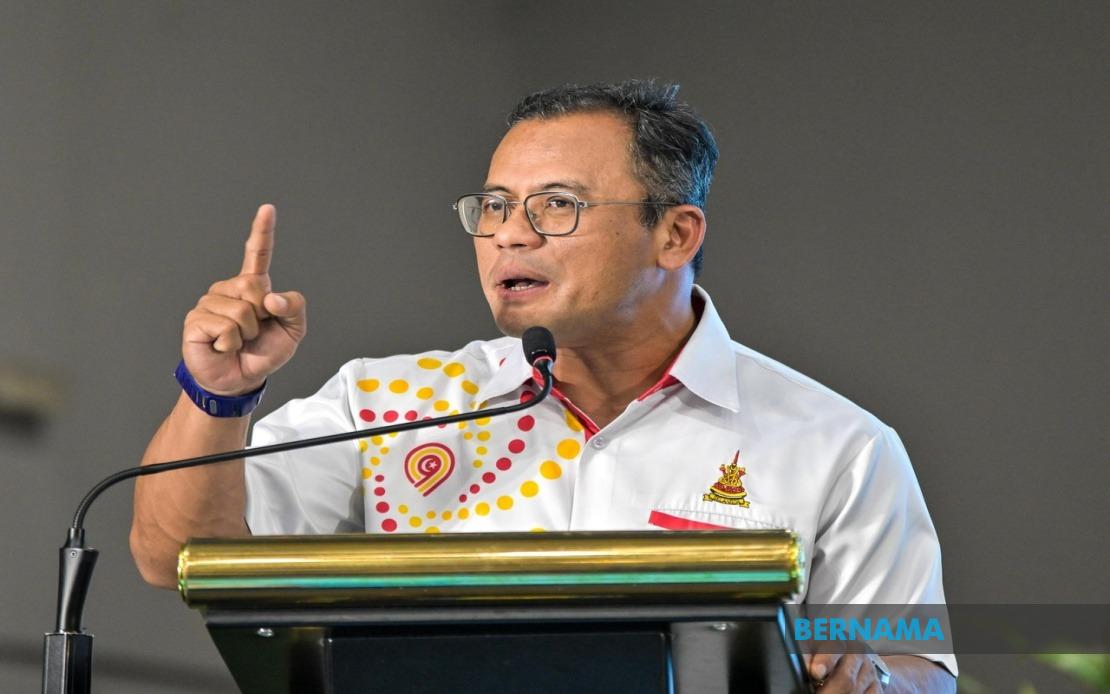
Selangor Menteri Besar Datuk Seri Amirudin Shari has emphasized that superficial familiarity with the Rukun Negara falls short of what the nation requires to maintain social cohesion, arguing instead that Malaysians must grasp the foundational values underpinning each of the five principles if the country is to withstand efforts by political actors to weaponize divisive narratives.
Speaking at the MADANI Kita Bersama Komuniti Ampang Jaya programme in Kuala Lumpur, Amirudin outlined a troubling pattern whereby citizens recite the Rukun Negara without comprehending the intentions behind its crafting. This gap between mechanical recitation and substantive engagement, he warned, leaves society vulnerable to exploitation through identity politics, a phenomenon that has periodically threatened Malaysia's multicultural fabric. He contended that when citizens understand not just what the five principles say but why they were inscribed into the national consciousness, they develop intellectual and moral defences against attempts to stoke sectarian or racial tension through emotionally charged discourse.
The Menteri Besar drew particular attention to the first principle concerning Belief in God, illustrating how surface-level understanding can obscure deeper meaning. Many Malaysians, he noted, interpret this principle narrowly through a religious lens alone, yet the architects of the Rukun Negara intended it to communicate something far more expansive: that diverse spiritual traditions, when properly understood, should naturally incline believers toward greater tolerance and mutual respect rather than antagonism. This reframing transforms what might appear to some as a religiously exclusive statement into an affirmation of pluralistic coexistence—a critical distinction in a nation home to Islam, Buddhism, Christianity, Hinduism, Sikhism and other faiths.
Amirudin's remarks arrive amid ongoing public discourse about how Malaysia's foundational values should be invoked in contemporary governance and national ceremonies. Recently, some officials have incorporated the Rukun Negara's preamble and stated objectives into formal readings at government events, a practice that generated criticism from quarters contending the government was subtly altering or diluting the original formulation. The Selangor leader moved to quash this interpretation, characterizing the initiative not as revision but as restoration—an attempt to resurrect awareness of the document's intentional architecture and the specific goals its framers sought to advance.
He elaborated that those who leveled accusations of governmental overreach misunderstood the purpose behind expanding the readings. The underlying objective, Amirudin explained, centres on retrieving a layer of meaning that has receded from public consciousness over decades. The primary ambition embedded within the Rukun Negara, he stressed, concerns fostering unity across racial and ethnic lines—a principle that demands constant reinforcement given Malaysia's history of periodic communal tensions and the persistent appeal of identity-based political mobilization to segments of the electorate.
The emphasis on recovering forgotten objectives reflects a broader concern within Malaysia's political and administrative establishment about the sufficiency of existing social cohesion mechanisms in an era of intensified polarization. Digital communication platforms have accelerated the spread of sectarian messaging, while economic anxieties and generational shifts have altered the political landscape in ways that sometimes activate dormant identity grievances. In this context, revitalizing comprehensive understanding of the Rukun Negara functions as a countermeasure—an effort to inoculate society against the divisive framing that characterizes much contemporary political competition.
The Deputy National Unity Minister Yuneswaran Ramaraj attended the Ampang Jaya event alongside state assemblyman representatives Syed Ahmad Abdul Rahman Alhadad from Lembah Jaya and Mohd Kamri Kamaruddin from Bukit Antarabangsa, signaling institutional alignment around the messaging priority. This configuration of officials suggests coordination across multiple tiers of governance to promote the deeper engagement with national values that Amirudin advocates.
For Malaysian readers navigating a political environment where appeals to ethnic and religious identity carry considerable resonance, Amirudin's intervention offers a reminder that the nation's foundational architecture was deliberately constructed to accommodate diversity rather than enforce uniformity. The Rukun Negara emerged during a transformative moment in Malaysia's history when leaders from different communities negotiated a social contract recognizing multiple identities while establishing common ground. That negotiated consensus—codified in five principles—remains relevant but requires periodic reactivation through renewed understanding.
The challenge Amirudin identifies extends beyond education or ceremonial practice. It touches on how political actors themselves deploy language and framing around national identity. When political entrepreneurs consistently invoke ethnic or religious identity as the primary organizing principle for political competition, they implicitly downgrade the unifying vision that the Rukun Negara represents. Conversely, when leaders consistently highlight how genuine comprehension of these five principles reveals their universal, inclusive intent, they model an alternative political culture—one where national interest transcends particularistic loyalties.
Moving forward, the question becomes whether initiatives to deepen Rukun Negara understanding can meaningfully shape political behavior and public sentiment, or whether they represent primarily symbolic gestures insufficient to counter structural incentives driving identity-based competition. Malaysia's continued stability depends partly on how successfully its institutional leaders can translate abstract constitutional principles into lived civic practices that citizens experience as genuine rather than performative.

