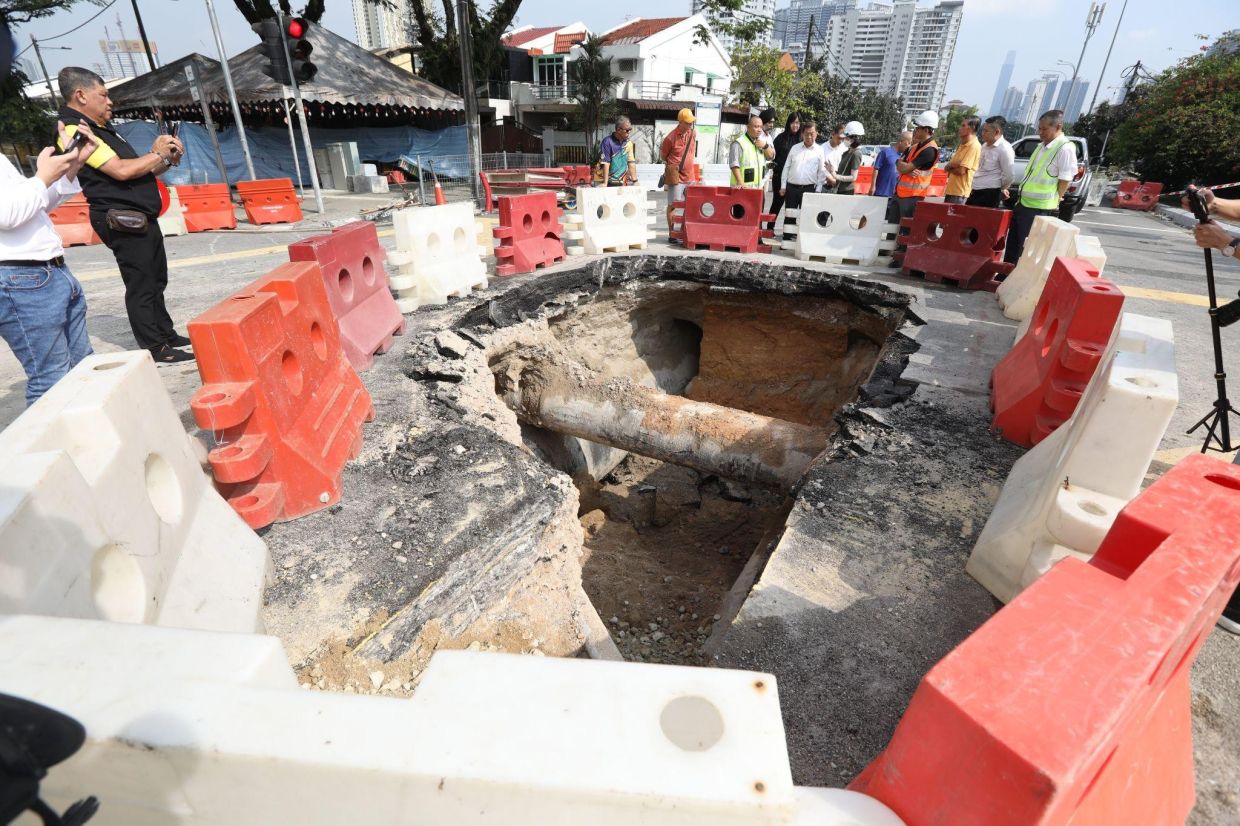
Malaysia's intensifying rainfall patterns are triggering a cascade of infrastructure challenges, with sinkholes emerging as a growing public safety concern. As the country grapples with more frequent and severe downpours, underground sewerage systems—often neglected and out of sight—face mounting pressure that threatens not only the pipes themselves but also the ground stability that supports roads, buildings and communities above. The phenomenon reflects a broader pattern affecting Southeast Asia as climate change reshapes weather behaviour, making the condition of hidden infrastructure networks suddenly front and centre in urban planning discussions.
Sinkholes do not emerge from a single cause but rather from a complex interplay of geological, hydrological and human factors. Natural geological conditions beneath the surface, combined with shifting groundwater patterns, create inherent instability that requires careful management. Construction activities and damage to underground utilities can trigger failure, but the condition of aged infrastructure—particularly sewerage networks installed decades ago—often serves as the primary catalyst. Each incident demands forensic investigation to identify the specific sequence of events, meaning broad preventive strategies must account for the diversity of risk scenarios facing operators.
Infrastructure operators across the region have begun recognising that reactive maintenance—waiting for failure and then responding—no longer suffices in an era of climatic unpredictability. Indah Water Konsortium, Malaysia's national sewerage company, has shifted toward anticipatory asset management, prioritising risk-based assessment and targeted intervention before catastrophic failure occurs. This approach acknowledges that Malaysia's sewerage system, sprawling across approximately 22,500km of public pipelines, cannot be monitored uniformly; instead, resources concentrate on the most vulnerable sections where failure carries the gravest consequences.
The network's critical arteries comprise large reinforced concrete trunk sewers, those measuring 600mm in diameter and above, which carry the heaviest loads and operate near or at full capacity during peak flows. These massive conduits face relentless chemical assault from hydrogen sulphide gas—a byproduct of anaerobic sewage decomposition—that accelerates concrete corrosion and gradually weakens structural integrity. The combination of sustained high flow velocities, chemical degradation and the sheer volume of waste material creates an environment where structural failure becomes not a matter of if but when, unless intervention occurs.
To combat this deterioration, IWK deploys an arsenal of inspection technologies adapted to varied field conditions. Ground Penetrating Radar penetrates the earth to reveal subsurface anomalies, while Closed-Circuit Television crawler systems navigate the interior of pipes to document damage in precise detail. Push rod and pole cameras extend inspection capability to sections where larger equipment cannot access, creating a comprehensive diagnostic portrait of pipe condition. This technological layering ensures that assessment does not rely on a single detection method, reducing the risk of missing critical defects that could precipitate sudden collapse.
Once inspections identify compromised sections, rehabilitation proceeds through two principal pathways. Trenchless sewer lining—a technique that instals new material within existing pipes without excavation—offers a minimally disruptive solution that restores structural capacity while avoiding surface disruption. Full replacement becomes necessary for pipes with damage too extensive for lining, though this approach requires significant excavation and community disruption. The choice between approaches reflects not only technical assessment but also cost-benefit analysis and urban context, making rehabilitation planning as much an exercise in competing priorities as in engineering.
The mechanism linking extreme rainfall to sinkhole formation reveals the interconnected vulnerabilities of urban infrastructure systems. When heavy rain saturates the ground, the soil loses its bearing capacity while groundwater pressure mounts. Simultaneously, intense precipitation forces unprecedented volumes of stormwater into sewerage networks already operating near maximum capacity, creating hydraulic shock that stresses aging pipes. Cracks and breaks that might have remained dormant under normal operating conditions suddenly fail under this combined assault, allowing sewage and groundwater to escape. As subsurface soil washes away through these breaches, expanding voids develop beneath the surface until the ground above, lacking support, suddenly collapses into sinkholes measuring several metres across.
IWK Chief Executive Officer Narendran Maniam has articulated the cascading consequences of this process, describing how ground destabilisation, pipe displacement and blockage compound one another. The elevated water pressure during heavy rainfall forces pipes to crack and burst, requiring complete replacement rather than repair. Ageing pipes prove particularly susceptible, having accumulated minor damage over decades that renders them fragile under stress. The interplay between heavy rainfall, saturated ground, failed pipes and collapsing voids illustrates why sinkhole prevention requires not isolated interventions but integrated management of the entire system.
Rainwater intrusion into sewerage networks represents an often-overlooked driver of system failure. Cracks in pipes, unsealed joints and deteriorated manhole covers allow stormwater to enter the system en masse during heavy downpours. This influx overwhelms treatment capacity and forces pipes to operate under pressures far exceeding design specifications. Older infrastructure, lacking modern standards for water tightness, proves especially vulnerable to this infiltration, with each rainstorm delivering more damage that accumulates across the years. The result is a system gradually weakened by processes invisible to observers until sudden failure announces the problem dramatically.
Recognising that awareness and preparedness across the organisation correlates with effective emergency response, IWK recently conducted a comprehensive crisis simulation exercise at its Asian Sewerage Training, Research & Innovation Centre of Excellence, or ASTRICE. The scenario replicated a major sinkhole incident with casualties and suspected pipeline damage, testing every dimension of emergency response from team mobilisation and internal decision-making through coordination with external agencies including the Fire and Rescue Department and Royal Malaysia Police. Such exercises serve multiple functions simultaneously: they expose procedural gaps, build institutional muscle memory and validate communication channels before real-world crises demand flawless execution.
The simulation methodology proved invaluable in hardening IWK's crisis management architecture. By conducting the exercise in controlled conditions, the organisation gained insights without risking public safety, subsequently translating findings into revised standard operating procedures. Employees across operational levels gained clarity regarding their roles and responsibilities during emergencies, reducing the confusion that typically characterises crisis response. Documentation of these refined procedures ensures institutional knowledge persists despite staff turnover, embedding lessons learned into the organisation's permanent operating framework.
The convergence of climatic volatility and aging infrastructure creates a defining challenge for Southeast Asian utilities in coming decades. As extreme weather events increase in frequency and intensity, the margin for error in infrastructure management narrows correspondingly. Malaysia's approach—combining proactive technological assessment, targeted rehabilitation, organisational readiness and inter-agency coordination—offers a model for regional peers navigating similar pressures. Yet scaling such efforts demands sustained investment, specialist expertise and political commitment to underground infrastructure that seldom generates the visibility of surface projects, even as its failure threatens public safety and urban functionality with dramatic speed.

