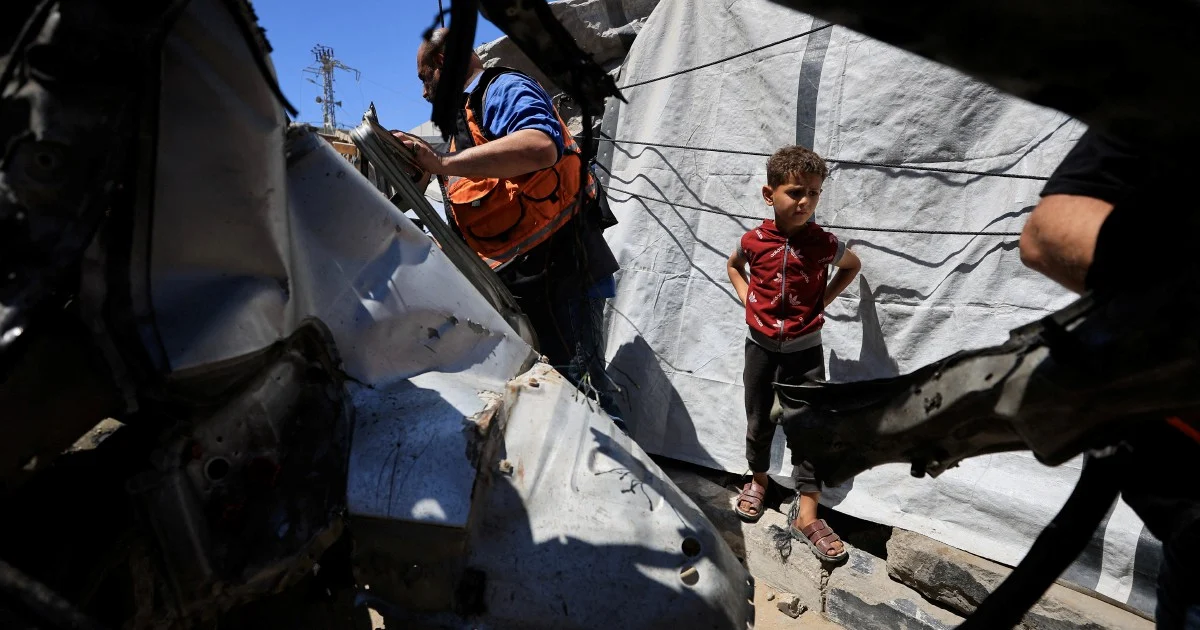
United Nations investigators have issued a damning assessment accusing Israel of systematically targeting Palestinian children in Gaza, describing the practice as integral to what they characterise as genocide in the territory. The investigation team presented their conclusions in Geneva on Tuesday, triggering immediate rejection from Israeli authorities who disputed the characterisation and the underlying methodology.
The UN inquiry represents one of the most serious allegations levelled against Israel through official international channels during the current conflict. By specifically identifying the deliberate targeting of children—historically among the most protected categories under international law—the investigators have framed the accusations in terms that carry particular weight in international humanitarian discourse and legal proceedings.
The researchers conducting the probe examined documented incidents and patterns of conduct across Gaza, concluding that targeting children constituted a deliberate strategy rather than incidental harm resulting from military operations. This distinction matters considerably under international law, as intentionality is essential to establishing genocide charges. The investigators argued that the evidence of deliberate targeting, when combined with other factors, supports their characterisation of the overall situation as genocide.
For Malaysia and other Southeast Asian nations navigating complex foreign policy positions, the UN findings complicate diplomatic calculations. Several countries in the region have attempted to maintain relationships with both Israel and Palestinian authorities, or have aligned with Arab League positions without fully endorsing genocide rhetoric. This report forces clearer positioning, as ignoring findings from UN bodies risks criticism from human rights constituencies while endorsing them strains relations with Western allies and Israel itself.
The investigation also carries implications for international criminal justice mechanisms. If substantiated through further legal processes, genocide findings could theoretically trigger obligations under the Genocide Convention, including intervention by other signatories. This theoretical framework, though rarely activated in practice, means the UN's characterisation establishes a legal foundation that could influence discussions at the International Court of Justice or International Criminal Court.
Israel's immediate rejection of the findings reflects broader Israeli arguments that military operations target combatants and infrastructure rather than civilians as an end goal. Israeli officials contend that civilian casualties, including children, result from Hamas's presence in civilian areas and its use of civilian infrastructure for military purposes. They argue that their military exercises appropriate caution within the constraints of combat operations and that international investigators lack sufficient ground-level access to make comprehensive assessments.
The investigation's conclusions about deliberate targeting depend heavily on interpretation of evidence, including communications between military personnel, patterns in strikes, and survivor testimonies. Critics of such investigations argue that reconstructing intentions from military actions involves inherent analytical challenges, particularly when reviewing military decision-making under operational pressure. Defenders of the investigation maintain that the sheer volume and consistency of incidents involving children indicate systematic rather than accidental patterns.
The timing of this report coincides with ongoing diplomatic efforts and evolving international responses to the Gaza situation. Various countries have faced domestic pressure from peace advocates and human rights groups to take stronger positions against Israel, while others worry about precedents that could affect their own military operations or alliances. The genocide framing particularly affects those nations that have signed the Genocide Convention, creating legal and political obligations to address such findings seriously.
For regional security dynamics, the UN's assessment strengthens the hand of those advocating for Palestinian causes while potentially isolating Israel further from international consensus. In Southeast Asia specifically, countries with substantial Muslim populations face heightened pressure to respond meaningfully to reports of this severity. Yet several nations in the region maintain pragmatic economic and security relationships with Israel, creating internal tensions between popular sentiment and state policy.
The investigation's focus on children specifically targets what many nations recognise as a particularly egregious violation. International law traditionally grants heightened protection to children, and targeting them crosses thresholds that even many supporters of Israeli security operations find difficult to defend politically. This aspect of the findings may prove more difficult for Israel to counter through diplomatic channels than broader allegations about military proportionality or civilian casualties in armed conflict.
Moving forward, the investigation's conclusions will likely feature prominently in discussions at the United Nations General Assembly and may inform decisions by various countries regarding arms sales, diplomatic recognition, or participation in international forums with Israeli representatives. The report also establishes documentation that could become evidence in future legal proceedings, regardless of immediate political outcomes.
For policymakers in Malaysia and across Southeast Asia, the report underscores how profoundly the Gaza situation has become embedded in international law and diplomacy. Rather than remaining primarily a regional conflict or humanitarian emergency, it now intersects with fundamental questions about genocide law, military accountability, and the state system's capacity to enforce international humanitarian norms. These dimensions will shape regional discussions and voting patterns in international bodies for the foreseeable future.