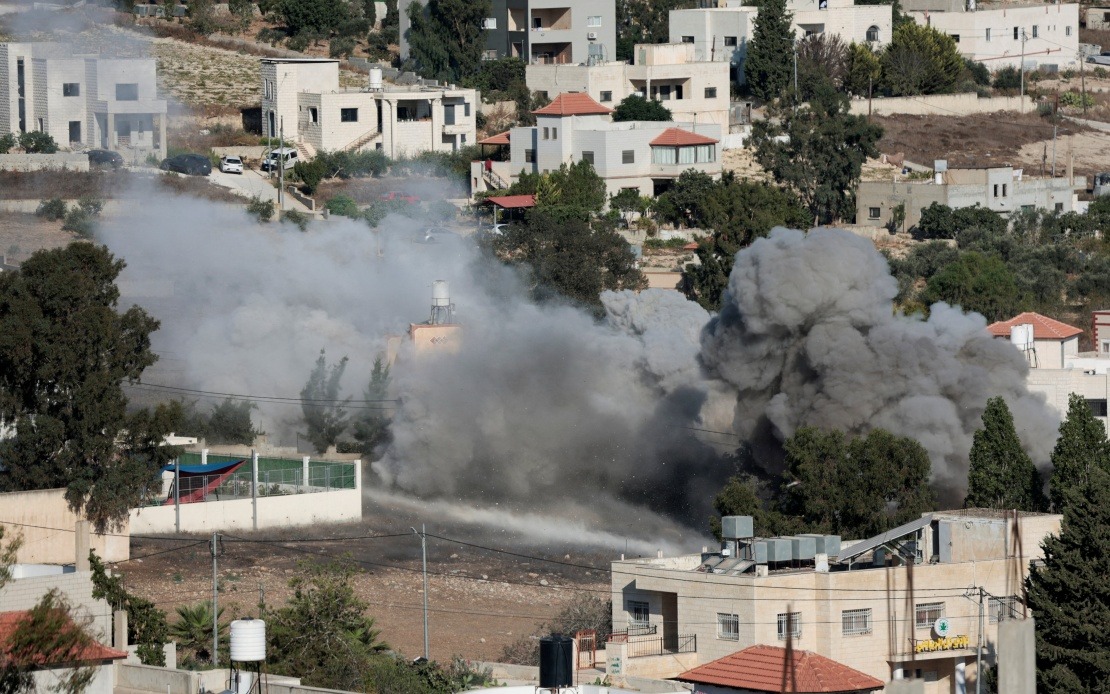
The United Nations Human Rights Office operating in the Occupied Palestinian Territory has issued a stark warning that violence perpetrated by Israeli settlers against Palestinian communities has reached levels that international observers consider unacceptable. According to reports relayed by the Palestine News and Info Agency, the UN office documented systematic patterns of aggression that extend beyond isolated incidents to constitute what it characterises as an organised campaign of harassment and intimidation designed to displace Palestinian families from their ancestral lands.
The UN office has directed urgent appeals to Israeli authorities, demanding the removal of settlers engaged in violent conduct against Palestinian populations. Beyond physical removal, the international body has called for accountability mechanisms that address the widespread appropriation of Palestinian property and the ongoing expansion of Israeli settlements into territories recognised under international law as occupied land requiring protection. This represents a significant escalation in the UN's public rhetoric on the issue, moving from documentation to explicit demands for remedial action by Israeli security forces.
A particularly instructive case emerged following the establishment of an Israeli settler outpost near the village of Qusra, located south of Nablus, in November 2025. The UN office reported that settlers rapidly consolidated control over adjacent territory, after which a dramatic intensification of confrontations with Palestinian residents ensued. The documented incidents reveal a troubling spectrum of violations, ranging from intrusions into private residences and physical confrontations to deliberate damage of property, theft of resources, and arson attacks—including a significant assault on a mosque serving the local community.
The documented abuses escalated dramatically in July of the current year when settlers from an outpost in the Ras al-Ain region implemented a coordinated blockade against three Palestinian households. Settlers severed access to essential utilities, disconnecting both water and electricity supplies that residents depend upon for survival. By 9 August, the blockade tightened considerably when settlers sealed all pathways to the affected homes, erected physical barriers, and established what amounted to a siege preventing residents from departing or receiving outside assistance.
This confinement affected approximately fifteen people, including at least two children, who found themselves unable to access basic necessities or maintain connection to vital services. The families reportedly petitioned Israeli military personnel positioned nearby for intervention, but soldiers declined to act. The UN office further documented that Israeli security forces actively obstructed attempts by medical personnel, human rights advocates, and journalists to reach the trapped families, effectively isolating them from potential support networks. This pattern of obstruction suggests a level of coordination or tolerance that extends beyond passive failure to maintain order.
While Israeli military personnel removed the physical tent structure that settlers had erected on 12 August, they declined to remove the settlers themselves. The blockade consequently persisted, with settlers maintaining a surrounding presence that continued to restrict movement and prevent normal access to the properties. This selective intervention—removing infrastructure while leaving the perpetrators in place—has raised questions about the operational priorities and intentions of Israeli security forces in the region.
The UN Human Rights Office characterised the settler conduct as criminal activities that either enjoyed active support or occurred with the silent acquiescence of Israeli authorities as the military power overseeing the territory. Officials stressed that these actions have rendered existence untenable for affected Palestinian families and represent a deliberate strategy aimed at psychological and practical coercion designed to compel relocation. The office warned that the window for intervention to prevent forced displacement is rapidly narrowing as conditions deteriorate.
The UN has anchored its position within the framework of an International Court of Justice determination that definitively established the illegality of all Israeli settlements under international law. Building on this foundation, the UN office asserted that Israel must cease all settlement expansion activities, evacuate the settler population engaged in violence, and terminate its unlawful occupation of West Bank territory. The office emphasised that pending resolution of the broader political situation, Israel remains bound by obligations under established international law to safeguard Palestinian populations from private violence.
These obligations specifically encompass the prevention of settler attacks through meaningful security measures, the investigation of incidents that do occur, and the imposition of consequences against perpetrators proportionate to the severity of violations committed. The UN office stressed that accountability must extend not merely to those committing direct violence but also to institutional actors—whether officials or security personnel—who facilitate, tolerate, or fail to prevent such attacks through actionable negligence. This layered accountability framework reflects international jurisprudence holding occupying powers responsible for maintaining minimal standards of order and protection within territories under their control.
For Malaysian observers and policymakers, this UN documentation carries particular significance within the broader context of Southeast Asian engagement with Middle Eastern conflicts and international humanitarian law. Malaysia has historically positioned itself as a vocal advocate for Palestinian rights within international forums, and the escalation of settler violence documented by the UN office aligns with concerns repeatedly raised by Kuala Lumpur regarding the humanitarian dimensions of occupation. The case study from Qusra illustrates how systematic coercion and property seizure operate on the ground, providing concrete examples that animate abstract discussions of international humanitarian obligations.
The situation also underscores ongoing tensions between national security imperatives claimed by occupying powers and the individual rights of civilian populations inhabiting disputed territories—a distinction that carries relevance for Malaysia and other nations navigating complex security environments. The UN's emphasis on institutional accountability rather than merely individual criminal responsibility reflects evolving international norms regarding state obligations, norms that extend beyond the immediate Israeli-Palestinian context to influence global standards for occupation, settlement, and civilian protection.
As the region confronts these documented abuses and the international community deliberates appropriate responses, the three families confined near Qusra represent both specific victims requiring immediate assistance and symbols of a broader pattern demanding systemic resolution. The UN's escalating language and detailed documentation suggest that international patience with the status quo is eroding, even as practical mechanisms for enforcing compliance remain constrained by the political dynamics that have long characterised this conflict.

