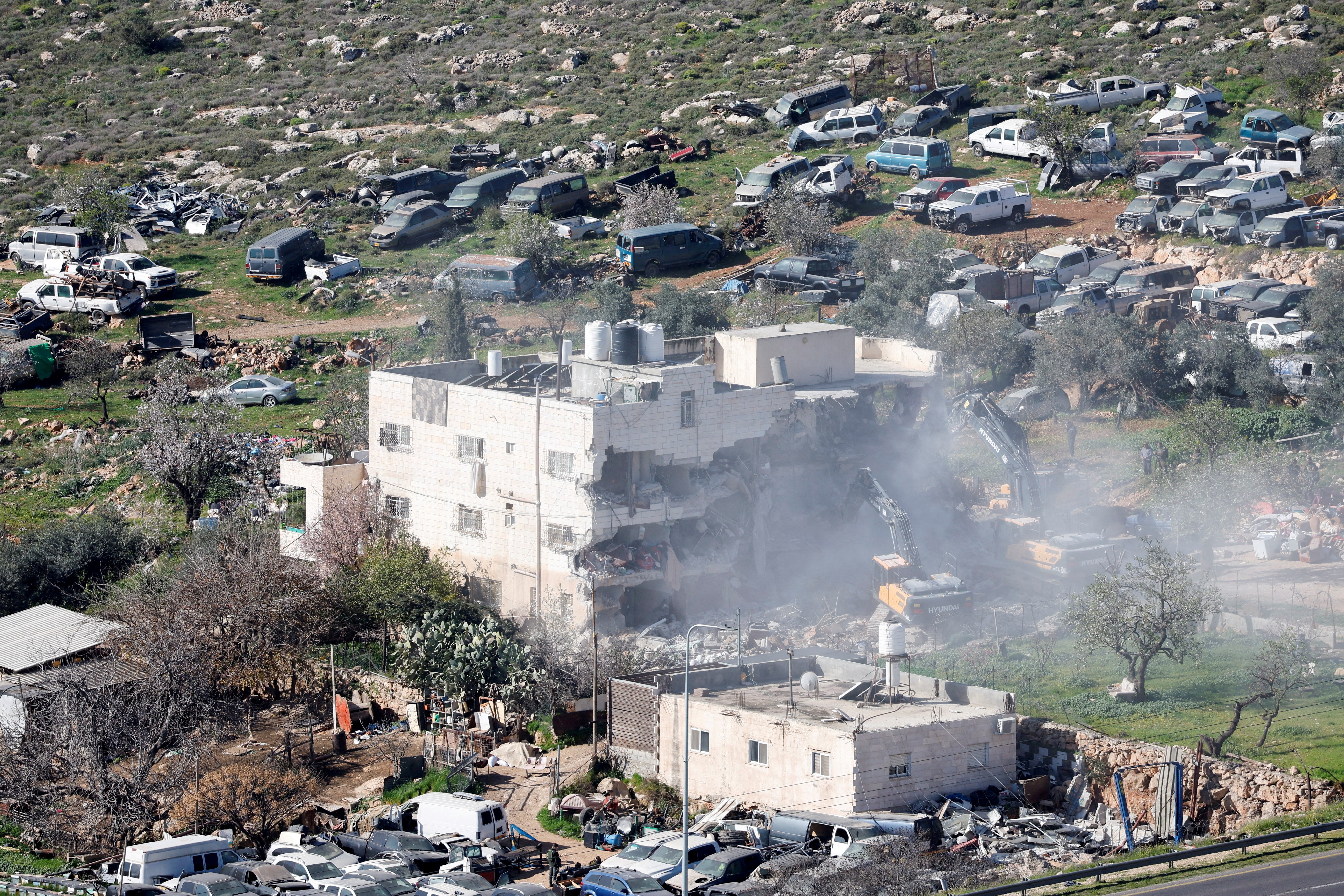
United Nations Secretary-General Antonio Guterres has voiced alarm at mounting reports of fresh illegal Israeli settlement outposts in the occupied West Bank, demanding that Israel immediately halt such construction efforts. The warning, delivered through his spokesperson Stephane Dujarric at a press briefing in New York on Wednesday, comes amid escalating tensions over territorial expansion that international bodies have consistently flagged as obstacles to lasting peace in the region.
The UN chief's statement zeroes in on the E1 settlement project as a particularly grave flashpoint. According to Dujarric, this specific development threatens to cut off connectivity between the northern and southern portions of the West Bank, fundamentally altering the geographic and political landscape of Palestinian territories. The strategic implications of such a division would extend far beyond settlement logistics, potentially undermining the basic territorial coherence upon which any future Palestinian state would depend.
Guterres framed the expansion as presenting an "existential threat" to the two-state solution, the long-standing international framework for resolving the Israeli-Palestinian conflict. This characterisation reflects mounting anxiety within the United Nations system that continued settlement activity is progressively narrowing the geographic space available for a viable Palestinian state, making negotiated settlements increasingly difficult. The language employed—existential threat—signals that UN leadership views these developments as capable of fundamentally reshaping the conflict's trajectory in ways that may prove irreversible.
The UN Secretary-General is not relying on abstract principles alone in his appeal. Dujarric explicitly referenced the International Court of Justice's advisory opinion issued on July 19, 2024, a landmark legal determination that carries significant weight in international law discourse. By grounding his statement in this recent judicial assessment, Guterres is invoking a recognized international legal authority to underscore that settlement expansion contravenes established international norms and obligations.
The International Court of Justice's ruling itself was unambiguous in its findings. The court concluded that Israel's continued presence in the occupied Palestinian territory constitutes an unlawful occupation under international law. More specifically, the court mandated that Israel must terminate its presence "as rapidly as possible," cease all new settlement construction with immediate effect, evacuate all settlers from occupied territories, and provide compensation for damages inflicted through its actions and policies. This represents one of the most forceful international judicial pronouncements on the conflict in recent years.
Guterres's invocation of this advisory opinion is strategically significant for several reasons. First, it anchors the UN's position in legal rather than purely political arguments, making it harder for any party to dismiss the concerns as mere rhetorical posturing. Second, it establishes that the Secretary-General is not introducing novel demands but rather calling for compliance with determinations already made by the world's highest court. Third, the explicit reference to the court's timeline requirement—that cessation occur "as rapidly as possible"—suggests mounting impatience with the pace of developments on the ground.
For Malaysia and other Southeast Asian nations, the UN's renewed focus on this issue carries several implications. As middle powers with substantial Muslim-majority populations and historical commitment to international law and non-alignment, Southeast Asian countries have long maintained careful positions on Israeli-Palestinian matters. The strengthening of legal precedents against settlement expansion provides these nations with firmer international backing for their existing stances, should they choose to voice support for Palestinian positions or advocate for compliance with international law at multilateral forums.
The emphasis on the E1 settlement specifically warrants closer examination. This area occupies strategic real estate between Ramallah and Jericho, and its development would effectively create a physical barrier dividing Palestinian territories. Beyond the immediate geographic consequences, such division would compromise the practical governance and administration of any future Palestinian state, making the provision of basic services and the maintenance of territorial integrity extraordinarily challenging. The settlement thus represents not merely an incremental land grab but a potential structural reconfiguration of Palestinian space itself.
The UN's call for Israel to "act in accordance with relevant UN resolutions" references decades of international consensus crystallized through the Security Council and General Assembly. Multiple resolutions have designated Israeli settlements as illegal under international law, yet implementation has remained elusive. By reiterating these calls in conjunction with the fresh ICJ opinion, Guterres is attempting to create cumulative pressure through the accumulation of authoritative international legal pronouncements, even as enforcement mechanisms remain limited.
The timing of this statement, in August 2024, reflects a broader pattern of escalating concern within international institutions about the trajectory of events on the ground. Reports of new outposts have become increasingly frequent, suggesting either an acceleration in settlement activity or enhanced international scrutiny and documentation of such activities. Either way, the phenomenon appears to be commanding greater attention from the UN system than previously.
For observers in the region and beyond, the question now centers on the likely impact of such statements. While UN pronouncements carry moral and diplomatic weight, they carry limited enforcement capacity without Security Council backing, which remains difficult to achieve given the permanent members' divergent interests. Nevertheless, the accumulation of legal determinations and official warnings may eventually constrain the political space within which settlements can continue unchecked, even if not immediately halting their expansion.

