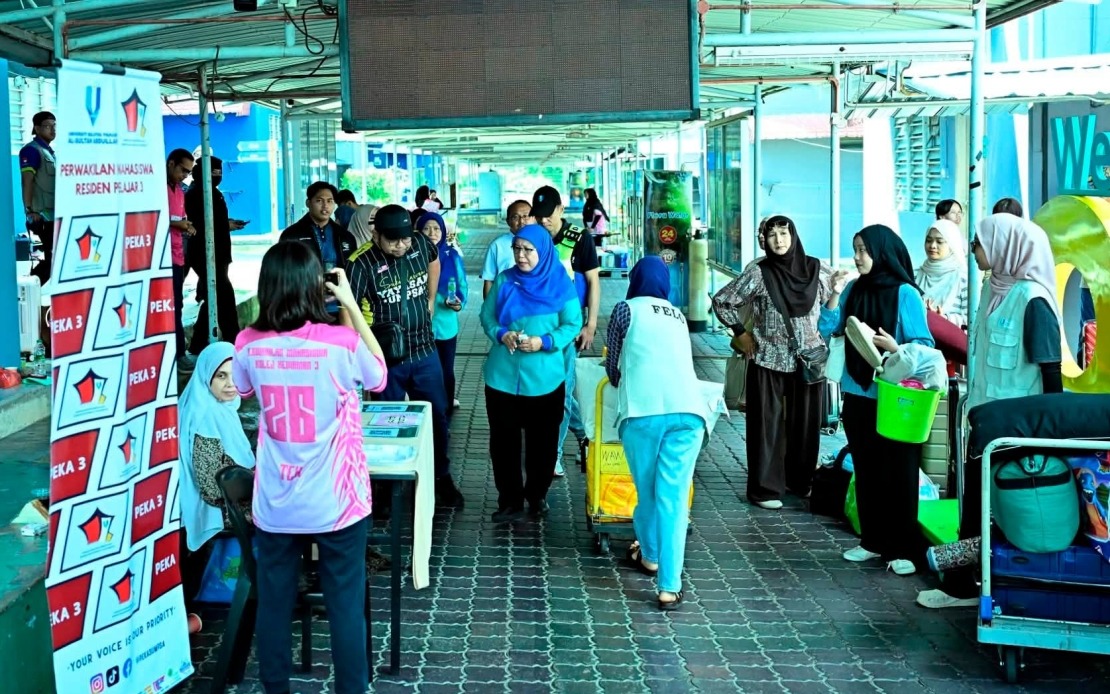
Universiti Malaysia Pahang Al-Sultan Abdullah (UMPSA) has doubled down on its pledge to ensure that financial constraints do not prevent qualified students from accessing higher education, with Vice-Chancellor Prof Dr Yatimah Alias emphasising the institution's unwavering dedication to student welfare. Speaking during the registration of new students in Kuantan on July 19, Yatimah underscored that equitable access to quality education remains a foundational principle guiding the university's operations and resource allocation decisions.
The commitment extends beyond rhetoric into concrete financial mechanisms designed to lighten the burden on cash-strapped families. During the current intake cycle, UMPSA has distributed scholarships to 20 students, each package encompassing full tuition fee coverage plus a regular monthly stipend—a combination that addresses both immediate enrolment costs and sustenance needs throughout the academic year. This dual-pronged approach recognises that many disadvantaged students abandon their studies not due to inability to pay tuition, but because they lack funds for accommodation, meals, and learning materials.
Beyond traditional scholarships, the university has activated the UMPSA Foundation to provide emergency financial relief targeting students facing acute hardship. An Early Education Incentive grant of RM1,000 has been extended to qualifying students in need, representing targeted intervention for those encountering unexpected financial crises mid-semester. Such emergency funds serve a critical function in Malaysia's higher education ecosystem, where a single domestic emergency can derail a student's academic trajectory if institutional safety nets are unavailable.
The July intake has yielded a record-breaking cohort of 1,045 new diploma students enrolled for the 2026/2027 academic session, representing the largest single intake since UMPSA's establishment. This surge reflects growing confidence in the institution's academic offerings and, significantly, suggests that enhanced financial support mechanisms may be lowering barriers to entry for students from lower-income backgrounds. The expansion of access aligns with national policy objectives articulated in Malaysia's education blueprint, which prioritises increasing tertiary enrolment rates across socioeconomic strata.
Yatimah's engagement with newly registered students during the July intake provided direct opportunity to communicate the university's support infrastructure, moving beyond formal announcements to establish personal connections with beneficiaries. Such interactions underscore institutional commitment and signal to students that they are valued members of the academic community rather than marginal participants tolerated through charity. This relational dimension matters significantly for student retention and psychological wellbeing, particularly for those navigating university for the first time.
The proliferation of financial assistance programmes at UMPSA reflects broader recognition within Malaysia's public university sector that merit-based admission policies require corresponding financial support mechanisms to translate opportunity into actual educational outcomes. Without scholarships and grants, admitting capable students from disadvantaged backgrounds becomes performative rather than transformative. The university's investment in financial aid thus represents genuine implementation of meritocratic principles rather than superficial commitment to equity rhetoric.
For Malaysian policymakers and education planners, UMPSA's model offers insights into scaling financial support without compromising institutional sustainability. The leveraging of both direct university budgets and foundation funding demonstrates diversified financing approaches that reduce dependency on government allocations alone. As public universities nationwide confront tightening budgets, replicating UMPSA's multi-source funding model may enable peer institutions to expand access without proportional increases in state subsidy.
The emphasis on academic support services alongside financial assistance also merits attention. UMPSA's commitment extends to ensuring students possess requisite learning resources, tutoring services, and mentorship—recognising that financial aid alone cannot close achievement gaps rooted in prior educational disparities. Many underprivileged students enter university with weaker foundational knowledge compared to peers from better-resourced schools, necessitating sustained pedagogical intervention throughout their studies.
For students in Peninsular Malaysia and Borneo contemplating tertiary education, UMPSA's Kuantan-based operations represent an accessible option relative to concentrations of public universities in Selangor and Kuala Lumpur. Geographic accessibility combined with strengthened financial support potentially expands the effective reach of affordable higher education across dispersed populations, addressing regional educational disparities that persist despite decades of national development.
The record intake also signals growing demand for diploma-level qualifications in Malaysia's labour market, reflecting employer preference for work-ready graduates combining theoretical knowledge with applied skills. UMPSA's ability to accommodate 1,045 new diploma students suggests confidence in labour market absorption for its graduates, making the accessibility investments particularly consequential for students' post-graduation economic prospects.
Looking ahead, UMPSA's trajectory will partly depend on institutional capacity to maintain both financial support generosity and educational quality as enrolments expand. Rapid growth in student numbers without corresponding infrastructure development risks eroding the academic experience that justifies university investment. The university must therefore balance access maximisation with quality preservation—a tension familiar to policymakers across Southeast Asia navigating democratisation of tertiary education.

