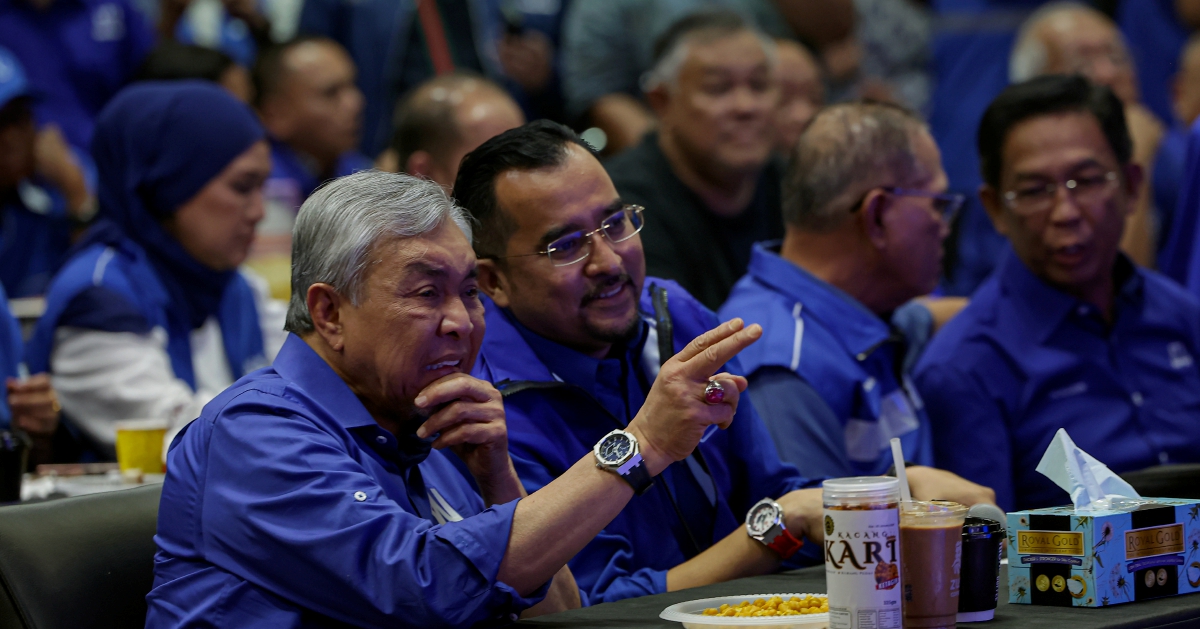
Umno's top administrative officer Datuk Dr Asyraf Wajdi Dusuki has issued a pointed reminder to the party faithful in the aftermath of Barisan Nasional's electoral success in Negri Sembilan, stressing that the coalition must adopt a measured approach and sidestep the pitfalls of complacency that have historically damaged its standing among voters.
Speaking in Kuala Lumpur, the party secretary-general framed the Negri Sembilan outcome not as a licence for triumphalism but as a fresh opportunity to rebuild public trust through disciplined governance and accountability. His words carry particular weight given Umno's turbulent recent history, marked by internal scandals, leadership transitions, and electoral setbacks that fundamentally reshaped Malaysia's political landscape in the past decade.
The cautionary message reflects a broader reckoning within Barisan Nasional about the conditions that precipitated its stunning 2018 general election defeat. That loss was widely attributed to voter fatigue with the ruling coalition's perceived disconnect from ordinary concerns, compounded by governance failures and the weight of various high-profile investigations affecting senior party figures. The bloc subsequently regained ground through a combination of structural adjustments, changes in national leadership, and electoral realignments that restored its competitiveness.
Ashyraf's exhortation gains significance within the regional context of Malaysian politics, where electoral swings have become more volatile and unpredictable. The Negri Sembilan result signals that Barisan Nasional can still mobilise support in traditionally stronghold territories, yet the party leadership recognises that such victories demand careful stewardship rather than the assumption of permanent electoral dominance that characterised earlier decades of its rule.
For Umno specifically, maintaining party discipline and presenting a coherent governance vision remains essential. The party has undergone substantial internal restructuring and leadership renewal over recent years, investing considerable effort in rebuilding its grassroots machinery and rehabilitating its public image. Any lapse into arrogant decision-making or exclusionary politics risks squandering these painstaking efforts and reigniting voter scepticism about the coalition's commitment to genuine reform.
The secretary-general's appeal also addresses the perpetual tension between celebrating electoral victories and sustaining the political groundwork required to maintain them. In Malaysian politics, where regional and ethnic considerations heavily influence voting patterns, a single impressive performance in one state can create false impressions of broader momentum. Negri Sembilan's outcome, while important for Barisan Nasional's morale and strategic positioning, must be consolidated through consistent delivery of public services and transparent administration rather than through the display of power that historically alienated voters.
Asyraf's warning about repeating mistakes carries implicit reference to patterns observed during Barisan Nasional's previous tenure of unchallenged dominance, when the coalition faced mounting criticism over alleged cronyism, selective enforcement of accountability, and insufficient responsiveness to evolving demographic and economic demands. These issues contributed significantly to the emergence of stronger political alternatives and the fracturing of the coalition's traditional support bases among younger voters and urban populations.
The Negri Sembilan election presents Barisan Nasional with a testing ground for demonstrating institutional learning. How the coalition implements policies in the state, manages resource allocation, addresses constituent grievances, and conducts itself in the political arena will substantially influence public perception of its fitness for broader governance responsibilities. A cautious, inclusive approach rooted in concrete service delivery contrasts sharply with the posturing that damaged the coalition's credibility in previous cycles.
For Malaysian voters observing these political developments, Asyraf's counsel represents at least a rhetorical acknowledgement that electoral success requires ongoing validation rather than simply capitalising on transient advantages. This framing aligns with the more fragmented political environment that has characterised Malaysian democracy since 2018, where no coalition can take sustained voter support for granted and where the connection between governance performance and electoral outcomes has become markedly more direct.
The emphasis on humility also reflects pragmatic political calculation. Umno remains acutely aware that its coalition partners within Barisan Nasional—including parties representing Sabah, Sarawak, and other component territories—scrutinise how resources and political standing are distributed. Displays of Umno arrogance risk breeding resentment among these allies and potentially fracturing the coalition infrastructure that collectively has restored Barisan Nasional's viability.
As Malaysia moves toward future electoral contests at state and national levels, the reception of Asyraf's message within Umno will indicate whether the party has genuinely internalised the lessons of 2018 or whether recent electoral gains are generating fresh overconfidence. The challenge for Malaysian politics more broadly involves ensuring that political parties channel electoral mandates toward improving governance quality and public welfare rather than consolidating power for its own sake. Asyraf's call for restraint, should it be genuinely heeded throughout Barisan Nasional's structures, might contribute toward that healthier democratic equilibrium.

