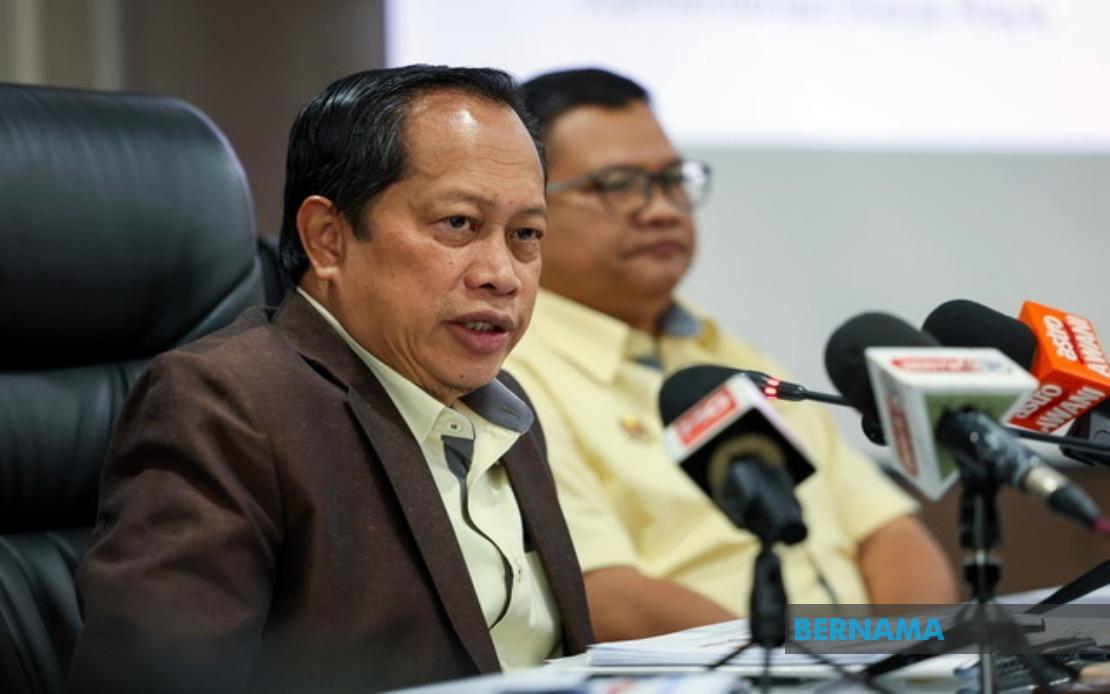
UMNO's leadership will convene on August 28 to finalise the party's political positioning for the upcoming Melaka state election, with the outcome expected to clarify a crucial strategic question that has generated substantial speculation across Malaysia's political landscape. The party's Supreme Council, chaired by President Datuk Seri Dr Ahmad Zahid Hamidi, will assess multiple scenarios ranging from contesting solo to forming electoral alliances with rival coalitions, according to Supreme Council member Datuk Seri Dr Ahmad Maslan.
The timing of this meeting reflects the mounting pressure to establish clarity before Melaka's state government mandate expires on December 31, leaving a finite window for campaign preparation and coalition negotiation. With the political situation in Melaka remaining notably fluid compared to other Malaysian states, UMNO faces a decision that could reshape the competitive dynamics not only in the southern state but potentially influence coalition strategies across the country. The Deputy Works Minister's acknowledgment that no final decision has been reached underscores the complexity and sensitivity surrounding the matter within UMNO's highest decision-making circles.
Median reports and public statements from various UMNO personalities in Melaka have fuelled competing narratives about potential partnerships. Discussions have circulated regarding possible cooperation between Barisan Nasional and Pakatan Harapan, mirroring federal-level collaboration, as well as speculation about Perikatan Nasional involvement. This cacophony of proposals reflects internal divisions or at minimum a genuine exploration of multiple scenarios, with no coherent party position yet established. Ahmad Maslan's remarks emphasise that these floating suggestions represent exploratory discourse rather than policy commitments, cautioning against premature interpretation of fragmentary comments by individual party figures.
The current parliamentary composition provides essential context for understanding Melaka's political arithmetic. Barisan Nasional commands 21 of 28 seats following the 15th state election, establishing a commanding majority. Pakatan Harapan holds five seats, while Perikatan Nasional secured two seats, creating a configuration where BN operates from genuine strength. However, the state executive council includes Pakatan Harapan representatives, a structural arrangement that mirrors the Unity Government framework operating at the federal level and potentially suggests a template for renewed cooperation.
This federalised representation at state level demonstrates how Kuala Lumpur's coalition mathematics have begun filtering downward to subnational politics. The presence of PH assemblymen in Melaka's executive structure despite BN's numerical dominance indicates that cooperation between the two coalitions has already established practical institutional footing. Whether this informal arrangement constitutes a sufficient foundation for formalised electoral cooperation in the coming state election remains the central question animating the August 28 deliberations.
For Malaysian political observers, the Melaka situation exemplifies broader tensions within BN's strategic calculus. The coalition retains sufficient parliamentary strength to govern independently, yet cooperation with opposition partners offers potential advantages including expanded legitimacy, reduced defection risks, and alignment with the federal government's stated commitment to institutional stability. Conversely, solo contestation would allow UMNO to mobilise its traditional base without compromise and potentially recapture opposition credentials that have eroded through federal governance participation.
The stakes extend beyond Melaka's state assembly outcomes. How UMNO navigates this decision will signal the party's longer-term orientation toward power-sharing arrangements. An alliance with Pakatan Harapan would reinforce the federal unity framework and suggest UMNO's acceptance of permanent coalition politics rather than two-bloc competition. Selection of Perikatan Nasional collaboration would represent a dramatic realignment, effectively splintering Malaysia's Malay-Muslim political space and reshuffling Peninsular electoral mathematics. Independent contestation would telegraph UMNO's confidence in traditional constituencies and its unwillingness to subordinate decision-making to coalition partners.
Ahmad Maslan's public statement carries implicit significance by emphasising that BN must calibrate its political approach according to each state's particular circumstances and strategic environment. This formulation appears designed to preclude expectations of uniform national strategy, potentially accommodating different arrangements in different states. Such flexibility could enable Melaka to pursue one path while other states follow divergent approaches, allowing leadership to manage factional pressures through geographic differentiation. However, this decentralised approach creates coordination challenges and could generate accusations of arbitrary decision-making if selection criteria appear inconsistent across states.
The Deputy Works Minister explicitly urged all party members to accept whatever decision emerges from the August 28 meeting without further internal contestation. This framing suggests awareness that the Supreme Council's deliberations will resolve genuine internal disagreement rather than merely formalise consensus. By preemptively requesting party discipline, UMNO leadership appears anticipating that a segment of the membership may view the chosen path as strategically misguided or institutionally objectionable. The call for unity around whatever decision emerges thus represents an attempt to prevent the Melaka election from becoming an internal battleground where factional forces contest not just the outcome but the legitimacy of leadership choices.
For Malaysian voters and political analysts, the August 28 meeting will provide crucial clarity about UMNO's post-electoral evolution under current leadership. The decision will illuminate whether UMNO perceives itself as the senior partner in an inherently unstable grand coalition or as a party capable of asserting independent authority where numerical strength permits. It will also indicate whether federal-level unity frameworks have achieved sufficient institutional maturity to extend downward naturally or whether subnational politics retain sufficient independence to generate divergent arrangements. The coming weeks until the Supreme Council meeting will likely feature intensified lobbying by different coalition partners seeking to influence UMNO's calculations, making the August 28 decision a genuine inflection point in Malaysian political development.

