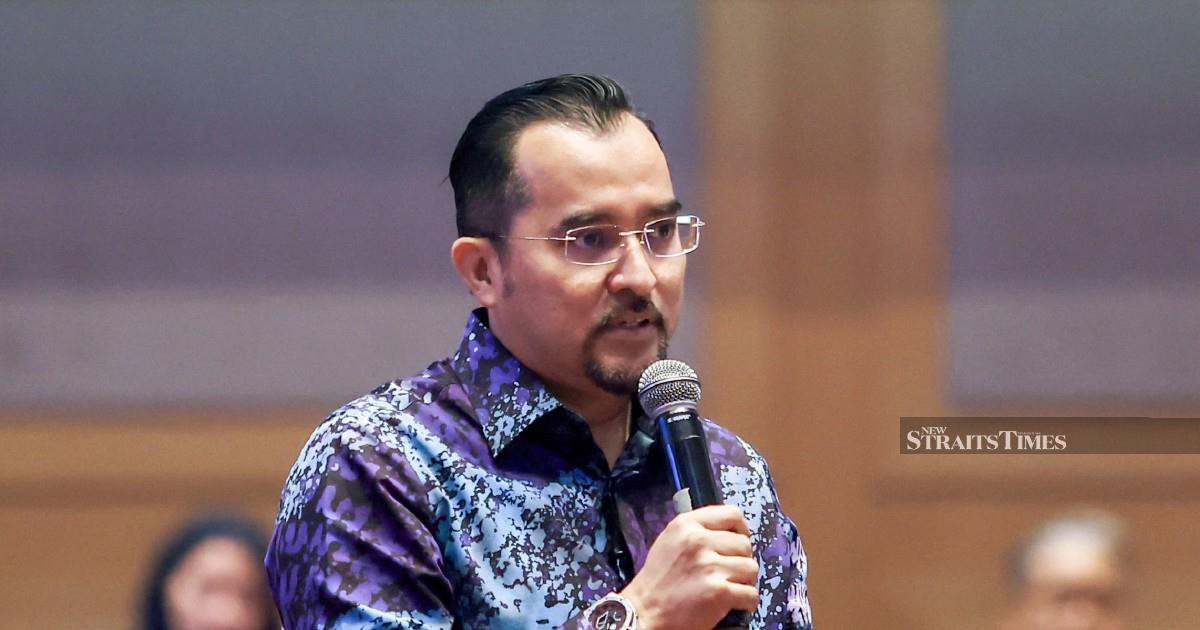
Umno's leadership has pushed back strongly against mounting criticism that the party is engaged in a coordinated effort to shield those accountable for serious financial mismanagement at Lembaga Tabung Haji (TH). In his defence, party secretary-general Datuk Dr Asyraf Wajdi Dusuki categorically rejected the characterisation that Umno is staging what critics have termed a 'charade'—a calculated performance designed to deflect accountability while protecting implicated figures from genuine investigation and legal consequences.
The allegation reflects deepening frustration among Malaysian stakeholders over the handling of one of the country's most significant governance failures. Lembaga Tabung Haji, the statutory body responsible for managing funds contributed by millions of Malaysian Muslim pilgrims preparing for the Hajj, has become synonymous with corporate dysfunction following revelations of substantial losses, questionable investment decisions, and management failures that have devastated the savings of ordinary Malaysians.
The controversy surrounding TH has acquired particular political dimension because of Umno's historical connection to the institution. For decades, the party maintained close ties with the body's leadership and operations, with various senior Umno figures holding positions that provided oversight or direct influence over TH's strategic direction. This historical relationship has created expectations among the public that Umno bears some responsibility for ensuring accountability for what transpired and for supporting transparent investigations into how TH's financial position deteriorated so dramatically.
Critics contend that Umno's recent public statements regarding TH are designed primarily to manage the party's political image rather than to facilitate genuine accountability. The perception that Umno is orchestrating damage control—rather than genuinely supporting investigations—has been reinforced by the fragmented and sometimes contradictory responses from various party figures. When statements from different Umno leaders appear to emphasise different aspects of the situation or adopt varying tones, observers naturally question whether the party has adopted a coherent commitment to transparency or is instead calibrating its messaging for tactical advantage.
The timing of Umno's current position also invites scrutiny. The party made substantial electoral losses during the most recent general elections, partly attributed to public anger over governance failures and financial scandals during Umno-led administrations. Against this backdrop, Umno's effort to distance itself from the TH scandal—even as critics argue it is simultaneously obstructing accountability—can appear to be opportunistic repositioning rather than principled commitment to institutional reform.
For ordinary Malaysians, the TH scandal represents far more than a technical accounting problem or technical governance failure. The institution holds the savings of several million individuals who contributed funds from their salaries specifically for the purpose of undertaking the Islamic pilgrimage to Mecca. When those savings were substantially diminished through mismanagement, it created tangible hardship for families who faced difficult choices about whether they could still afford to fulfil their religious obligations. The emotional and spiritual dimensions of this loss amplify public demand for accountability and transparent investigation.
Regional observers have noted that Malaysia's experience with TH reflects broader patterns evident across Southeast Asia, where state-owned and statutorily managed institutions sometimes become vehicles for political manipulation and financial mismanagement. The credibility of Malaysia's institutions of governance—particularly those managing public or community assets—depends substantially on demonstrating that accountability mechanisms function fairly and that no political party can effectively shield its allies from investigation and consequences.
The Malaysian government has commenced legal proceedings and established investigating committees examining TH's conduct. However, the effectiveness and independence of these mechanisms remain subjects of public concern. If these processes are perceived as inadequate or compromised by political interference, confidence in Malaysia's broader institutional structures will continue to erode. This represents precisely the outcome that Umno's disclaimers are presumably designed to prevent.
Datuk Dr Asyraf Wajdi Dusuki's rejection of the cover-up allegations appears intended to reposition Umno as supporting genuine accountability while simultaneously distancing the party from complicity in mismanagement. However, this message will likely prove persuasive only if accompanied by concrete actions demonstrating that Umno is actively cooperating with investigations and explicitly urging the government to pursue accountability wherever evidence leads, regardless of the political consequences for party figures or allies.
The broader Malaysian public appears increasingly sceptical of political reassurances that are unaccompanied by substantive institutional reform or visible consequences for those responsible. Umno's credibility on this issue will ultimately depend not on what party leaders say about the TH scandal, but on what independent observers can verify regarding actual patterns of investigation, transparency, and accountability in the months ahead.

