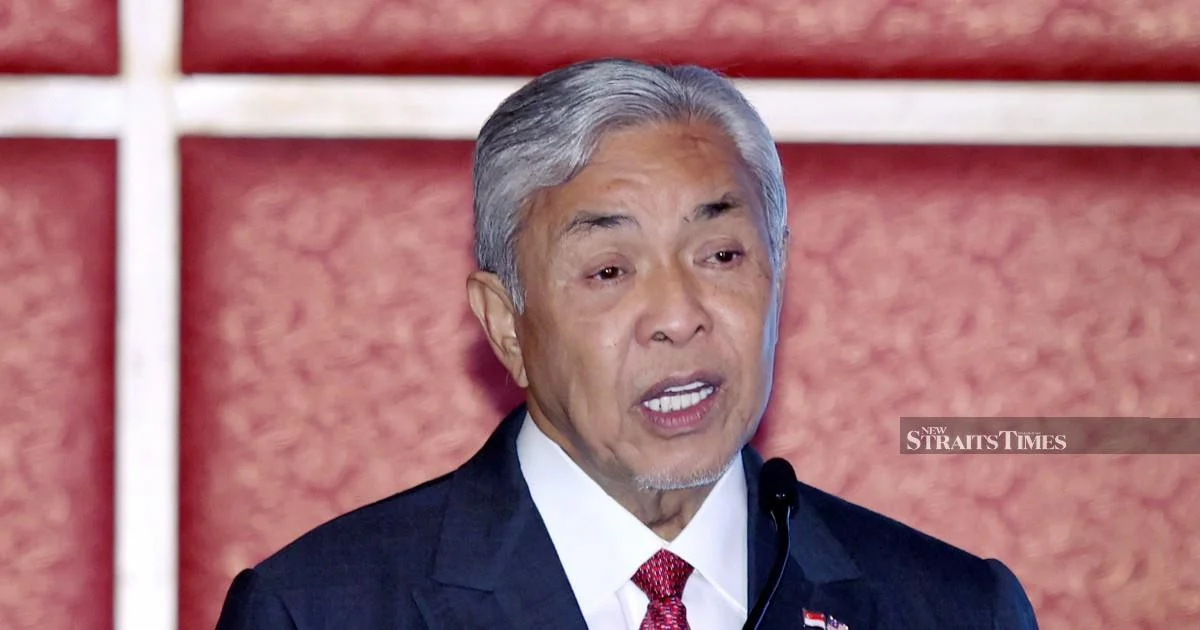
Umno president Datuk Seri Dr Ahmad Zahid Hamidi has moved to quash speculation about a potential seat-sharing arrangement with Pas for the Negri Sembilan state election, firmly stating that no such agreement has been concluded between the two parties. The dismissal comes amid ongoing discussions within Barisan Nasional and its coalition partners about electoral strategies ahead of forthcoming state-level contests across Malaysia.
Zahid's categorical denial addresses what has become an increasingly sensitive topic in Malaysian political circles, where whispers of inter-party negotiations often trigger intense scrutiny from supporters and analysts alike. The Umno leader's statement represents a clear effort to manage expectations and counter narratives that might suggest his party is willing to compromise on contested constituencies in order to secure broader coalition unity.
The timing of Zahid's clarification is significant, arriving at a moment when several state governments are approaching electoral cycles that could reshape the political landscape in key regions. Negri Sembilan, a state that has historically tilted between different political coalitions, represents a battleground where seat allocation becomes particularly consequential for both Umno and Pas, as each seeks to maximise its parliamentary representation and consolidate local power bases.
Pas, as a partner within the broader Perikatan Nasional coalition structure, operates under a distinct political calculus from Umno. While both parties claim Islamic credentials and compete for Malay-Muslim voter support, their organisational strategies and territorial strengths vary considerably across different regions. This fundamental difference in electoral geography often necessitates negotiations around seat distributions, but such discussions typically remain discreet until formal announcements are made through official channels.
The denial also reflects broader tensions within Malaysia's coalition politics, where the relationship between Umno-led Barisan Nasional and Pas-affiliated Perikatan Nasional remains fluid and contextual. In some states and at the federal level, these entities cooperate under the Madani government framework, while in others they maintain competitive positioning. This complexity means that seat negotiations cannot be treated as straightforward transactions but rather as intricate political choreography requiring careful handling.
Umno's position as Malaysia's dominant Malay-based political party traditionally gives it first claim on the most coveted constituencies, particularly in heartland areas with strong Malay and Muslim demographics. Zahid's statement may therefore be intended to reassure the party faithful that Umno will not cede crucial seats to partners, even in the interest of wider coalition cohesion. Such reassurance becomes particularly important during periods when Umno's support base might feel vulnerable to defection toward competing Malay-majority parties.
The Negri Sembilan context carries additional weight because the state has become a proving ground for different political strategies and coalition configurations. Recent state-level elections across Malaysia have demonstrated how seat allocations can either strengthen or fracture coalition partnerships, making each constituency a potential flashpoint for inter-party disputes. By publicly rejecting claims of any agreement, Zahid may be preempting criticism from party members who fear disadvantageous arrangements.
Political observers in Malaysia have grown accustomed to such cyclical denials followed by eventual announcements of deals, often with slightly different framings or conditions attached. The gap between denial and eventual agreement frequently reveals deeper negotiations about power-sharing, ministry allocations, and other sweeteners that parties extend to one another beyond simple seat exchanges. Understanding this pattern helps explain why Zahid's statement, while categorical, may not represent the final word on the matter.
For voters in Negri Sembilan and across Malaysia more broadly, the swirling reports about seat negotiations underscore the complex institutional arrangements that now characterise the country's political system. Rather than two-sided competition, Malaysian elections increasingly involve multi-party coalitions with competing internal interests, making campaign messaging and seat allocations matters of considerable political delicacy. Zahid's intervention into this discourse signals that Umno intends to maintain its voice in determining electoral outcomes.
The broader implications extend to how federal coalition politics will evolve as additional state elections approach in the coming months and years. If Umno and Pas can establish clearer frameworks for seat distributions at state level, it might reduce the cycle of claims and denials that currently characterises their relationship. Conversely, continued public disputes over seat arrangements risk undermining coalition unity precisely when joint electoral efforts might prove most valuable against alternative political groupings.
Zahid's statement also carries significance for internal Umno management, signalling to his party leadership team that he remains attentive to grassroots concerns about seat concessions and coalition compromises. By publicly rejecting the notion of an agreement with Pas, he reinforces his authority to speak for the party and positions himself as a defender of Umno's interests in wider political negotiations. This performative dimension of Malaysian political discourse remains as important as the substantive negotiations that occur behind closed doors.
Moving forward, the actual electoral arrangement for Negri Sembilan will ultimately reveal the true nature and extent of any understandings between Umno and Pas. Whether seats are distributed through formal agreements, tactical understandings, or simple reciprocal acknowledgement of respective spheres of influence, Malaysian voters will judge the outcomes based on campaign conduct and election results. Until then, claims and counter-claims about seat negotiations will likely continue shaping political commentary across the region.

