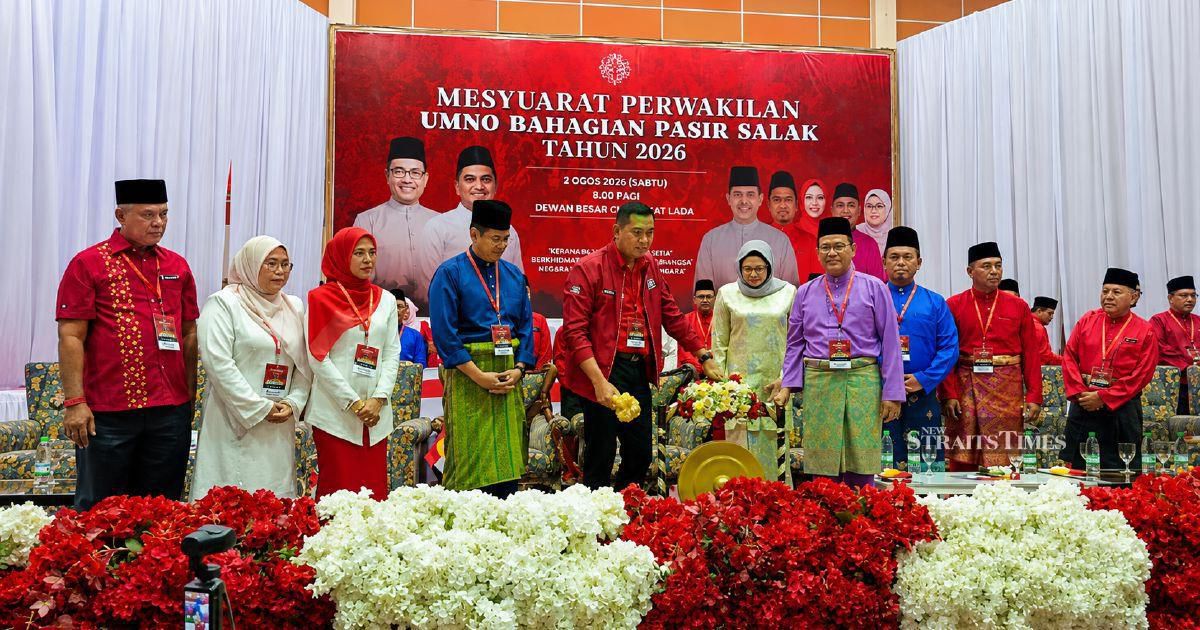
Umno Youth chief Datuk Dr Muhamad Akmal Saleh has stressed the importance of heeding division-level leaders when the party navigates seat distribution arrangements under its emerging political framework with Perikatan Nasional, highlighting how grassroots structures must factor into the equation.
Speaking in Pasir Salak, Akmal underscored that those managing constituencies at the ground level deserve representation in discussions shaping the electoral landscape. The remarks come as Barisan Nasional, which retains majority control in Parliament, works through the mechanics of its evolving alliance with Perikatan Nasional—a coalition shift with potentially significant implications for both national politics and state-level contests across Malaysia.
The political understanding between BN and PN represents a recalibration of the nation's coalition structure. Where Perikatan Nasional previously positioned itself as an opposition force championing a distinct political narrative, the pact signals a narrowing of the competitive space and a consolidation of power among established political blocs. For Umno, the party's largest component within Barisan Nasional, this arrangement creates both opportunities and complications when it comes to distributing parliamentary and state assembly seats among its own ranks and those of its allies.
Division-level leaders carry particular weight because they command detailed knowledge of local political terrain, incumbency strengths, and candidate viability within their territories. These leaders understand voter sentiment on the ground, the standing of sitting representatives, and demographic shifts that might affect electoral outcomes. Their institutional memory and networks prove invaluable when translating national-level agreements into practical constituency-by-constituency allocations that can actually win elections.
Akmal's statement tacitly acknowledges tension between top-down decision-making and bottom-up grassroots perspectives. Senior party leadership negotiating seat deals with allies at the national level may prioritize strategic coalition-building and broader party interests, potentially sidelining local considerations. Yet when divisions feel sidelined, grievances can fester and translate into reduced campaign enthusiasm, fractured internal unity, and potentially lower turnout among party machinery when elections arrive.
For Malaysian observers, this dynamic illuminates how coalition politics in the country operates beyond the media spotlight. Barisan Nasional itself is a coalition of multiple parties—Umno, Malay-based satellite parties, and component parties representing other communities—and within Umno sit dozens of divisions competing for influence and resources. Adding Perikatan Nasional to the mix introduces another layer of complexity, as PN brings its own power brokers and territorial claims.
The timing of Akmal's comments suggests ongoing negotiations over seat distribution. In multiethnic, federal Malaysia, seat allocation carries symbolic and substantive weight. Electoral cartography determines not just which party governs but which communities feel represented in the legislative process. Umno divisions, particularly those in heartland Malay areas, jealously guard their constituencies and have historically resisted what they perceive as unfair dilution of their representation.
Peaikatan Nasional comprises parties such as Bersatu, which has rapidly accumulated support among some Malay voters by positioning itself as a reform-oriented alternative to established parties, and other smaller components. The political understanding likely involves PN accepting a modest number of seats in exchange for formal coalition status, government resources, and ministerial representation—but the specifics remain negotiated territory.
From a Southeast Asian perspective, Malaysia's coalition politics reflect broader regional patterns where established parties seek to consolidate power by absorbing or formalizing arrangements with rivals. This can stabilize governance but risks reducing electoral competition and voter choice, particularly when multiple alliances merge into a few super-coalitions. Thailand, Indonesia, and the Philippines have all experienced similar consolidations, with varied consequences.
For ordinary Malaysians, especially those in constituencies represented by Umno and potential PN allocations, the ground-level input that division leaders represent translates into tangible effects. These include which candidates run under which party banner, the intensity of campaign presence, the credibility of nominated representatives, and ultimately whether governance reflects local priorities or merely implements directives from the capital.
Akmal's emphasis on respecting division leaders' positions also carries implicit warnings for party leadership about implementation. Umno's historical strength rests substantially on the loyalty and mobilization capacity of its divisional structures. Ignoring or overriding their voices risks weakening this crucial machinery at a time when BN seeks to consolidate its dominance and successfully defend its parliamentary majority in future elections.
The resolution of seat allocation questions between BN and PN will shape Malaysian electoral dynamics for at least the next electoral cycle and potentially longer. How Umno integrates its own divisions' perspectives into negotiations with coalition partners will indicate whether consensus-building remains possible within the party, or whether internal fractures might emerge that competitors could exploit.

