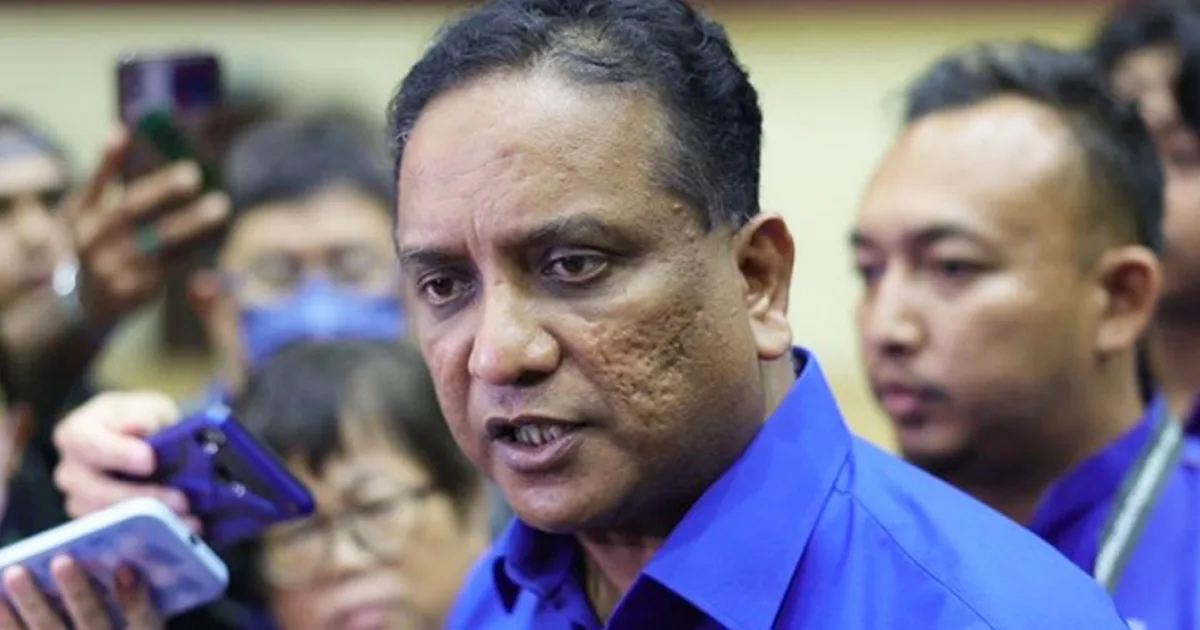
A senior figure within Umno has sought to distance the party and its Barisan Nasional coalition from culpability in the escalating Tabung Haji scandal, arguing that the Royal Commission of Inquiry's report should not serve as ammunition for politically motivated allegations. The intervention comes as Malaysian society grapples with the implications of systematic mismanagement at the pilgrim fund, an institution entrusted with the life savings of millions of Muslim Malaysians preparing for the hajj.
The Umno Supreme Council member's position reflects growing defensiveness within the party as accountability questions intensify. Rather than engaging substantively with the RCI's documented findings, the response pivots toward process and intent, essentially cautioning observers against interpreting the inquiry's conclusions as proof of partisan wrongdoing. This rhetorical manoeuvre seeks to reframe the crisis as a matter of bureaucratic failure rather than political responsibility, a distinction that carries significant weight in Malaysia's fractious political environment where rival coalitions routinely invoke institutional inquiries to buttress their narratives.
The Tabung Haji controversy represents one of the most significant institutional failures affecting ordinary Malaysians in recent years. The fund manages contributions from millions of Muslims and their families—often representing decades of accumulated savings for what is considered a spiritual and personal obligation. Allegations that these assets were misappropriated or mismanaged strike at the heart of public trust in state-administered institutions. The RCI was constituted precisely because the scale and severity of concerns demanded independent investigation beyond normal political and bureaucratic oversight.
Umno's defensive posturing underscores a fundamental tension in Malaysian governance. The party governed continuously for over six decades and held the Finance Ministry portfolio during critical periods when Tabung Haji's troubles allegedly accumulated. The institutional entrenchment of Umno-aligned figures within the fund's leadership during these years is a matter of public record. Yet the party's response suggests a determination to compartmentalise accountability, treating the RCI report as a technical document rather than a potential indictment of governance failures that occurred on its watch.
The distinction between criticising individuals and indicting entire organisations reflects a sophisticated political strategy. By insisting that the RCI's work should not be generalised into accusations against Umno or Barisan Nasional as entities, the party attempts to preserve institutional credibility while potentially conceding that specific actors behaved improperly. This parsing allows for acknowledgment of wrongdoing without accepting systemic responsibility—a formulation that appeals to party loyalists but offers little reassurance to the millions of Malaysians whose hajj savings may have been compromised.
Context matters here for Malaysian readers: the hajj represents not merely a financial transaction but a profound personal and spiritual commitment. The notion that professional mismanagement or worse might have depleted funds intended for this purpose generates emotions that transcend ordinary fiscal policy debates. The RCI's mandate was to establish whether such concerns reflected reality and, if so, how systematically the problems occurred and who bore responsibility at various levels.
The accusation of corruption carries specific legal and moral weight in Malaysian public discourse. Umno's warning against weaponising the RCI findings appears designed to forestall either criminal referrals or political weaponisation by opposition parties. Yet this framing inadvertently acknowledges the potential severity of the inquiry's conclusions. If the RCI had found merely technical lapses and innocent administrative errors, the defensive response would be unnecessary. The guardedness suggests anticipation that the findings may indeed implicate systemic problems and individual failures that demand explanation.
The regional dimension adds further complexity. Malaysia's standing as a major Muslim-majority nation hosting millions of hajj pilgrims annually carries international ramifications. Credible governance of pilgrim funds matters not only domestically but also signals to other Muslim nations and diaspora communities globally how seriously Malaysia protects religious obligations entrusted to state care. A perception that these funds were mishandled or inadequately safeguarded could damage Malaysia's reputation in this crucial domain.
For opposition parties and civil society organisations, Umno's preemptive strike against the RCI findings represents both a challenge and an opportunity. The challenge lies in substantiating claims about partisan responsibility rather than individual malfeasance. The opportunity exists because the party's defensive posture itself invites scrutiny about why it feels compelled to contest the RCI's authority or applicability to broader institutional questions.
Moving forward, the credibility of Malaysia's political institutions depends partly on how all stakeholders engage with the RCI's report. Whether treated as a technical investigation into administrative failures or as evidence of deeper systemic problems will shape public confidence in institutions and government. Umno's effort to constrain the interpretive scope of the inquiry's findings, while strategically comprehensible, may ultimately prove counterproductive if the RCI's documentation presents sufficiently damaging evidence that public understanding transcends political messaging.
The hajj fund crisis, whatever its origins and however responsibility ultimately gets apportioned, has already inflicted damage on institutional trust. How Malaysia's political leadership—across all parties—responds to the RCI's findings will signal whether accountability mechanisms function independently and whether public interest genuinely supersedes partisan protection. The millions of Malaysians whose hajj savings are at stake deserve nothing less.

