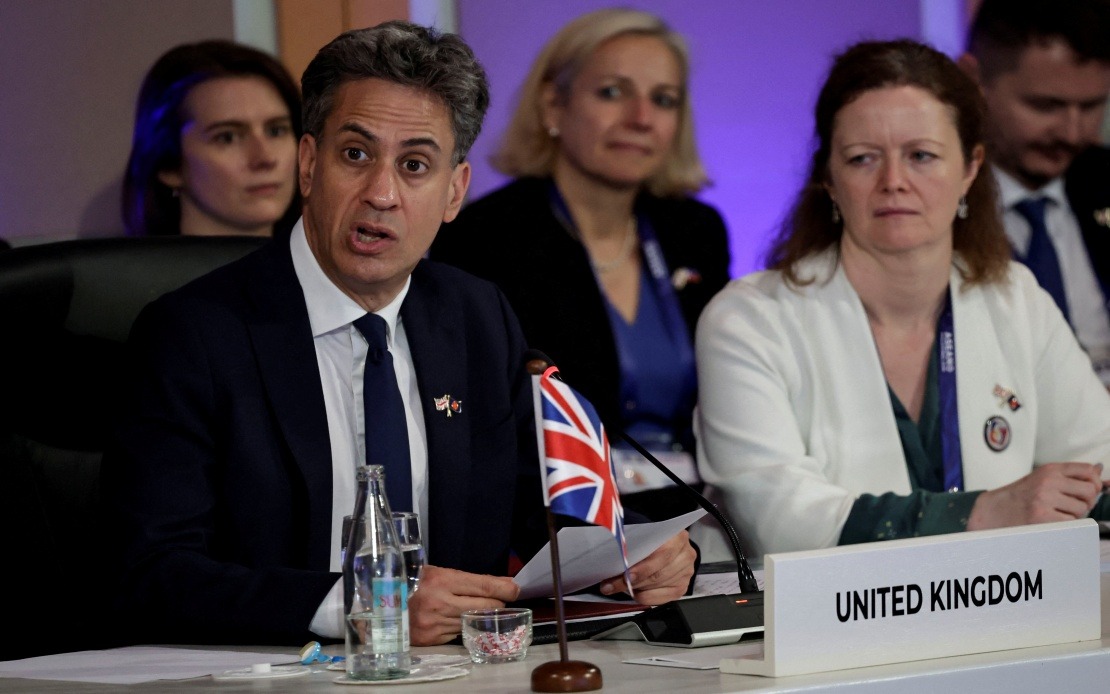
Ed Miliband, the newly appointed Foreign Secretary of the United Kingdom, is embarking on his maiden tour of continental Europe this week, signalling a strategic pivot toward reengaging with key EU member states after years of post-Brexit tension. The visits to France and Spain represent a deliberate effort to reset diplomatic relations and position Britain as a committed partner in addressing shared continental challenges, ranging from military security to environmental catastrophe.
The timing of Miliband's journey carries particular significance given the immediate humanitarian crisis unfolding across southern Europe. France and Spain are simultaneously grappling with unprecedented wildfire emergencies that have displaced approximately 330,000 residents from their homes, creating scenes of destruction that underscore the urgency of coordinated international response. By visiting during this crisis rather than deferring his trip, Miliband signals Britain's readiness to offer practical solidarity and demonstrate that London views continental stability as integral to its own interests.
In Paris, Miliband will meet French Foreign Minister Jean-Noel Barrot to discuss a spectrum of geopolitical concerns where British and French interests overlap significantly. The agenda encompasses the strengthening of European security architecture—a conversation that has intensified following Russia's invasion of Ukraine and the broader reassessment of NATO's eastern flank. Both nations will assess how Britain can contribute to deterrence measures and bolster collective defence postures without full EU membership, a delicate balance that requires diplomatic finesse.
Ukraine will feature prominently in these discussions, reflecting the shared commitment both Britain and France have demonstrated to supporting Kyiv's resistance. The meeting offers an opportunity to coordinate messaging on continued military and financial assistance, ensuring that Western support remains cohesive and sustainable over the medium term. Given that Britain pledged substantial aid packages to Ukraine independently of EU structures, these conversations will help align British strategy with broader European efforts.
The French leg of the visit will also address Middle Eastern stability, with both capitals concerned about escalating tensions in West Asia. As longstanding diplomatic powers with historical involvement across the region, Britain and France maintain overlapping interests in preventing further regional destabilisation. Miliband's willingness to discuss this topic signals that the UK views European perspectives on Middle Eastern challenges as valuable and seeks collaborative approaches rather than unilateral ones.
Migration presents another critical discussion point during the Paris meeting. Both Britain and France face significant irregular migration pressures, particularly across the English Channel, making this a politically sensitive domestic issue alongside being a transnational problem. The meeting may explore enhanced information-sharing mechanisms and coordinated approaches to smuggling networks, though the fundamental tensions between EU and British asylum policies will likely persist.
Miliband's subsequent engagement with Spanish Foreign Minister José Manuel Albares in Madrid takes the diplomatic initiative into another key relationship. Spain, as a major EU economy and a Mediterranean power, offers distinct perspectives on European security, migration flows, and regional challenges. The conversation will address the historical Gibraltar question through the lens of the UK-EU treaty framework established since Brexit, demonstrating how Britain and its former partners can manage sensitive territorial and sovereignty questions through negotiated settlements.
Security cooperation between Britain and Spain extends beyond Europe's borders, encompassing counterterrorism, maritime safety, and intelligence-sharing arrangements. Madrid's strategic location and its influence within EU corridors make Spanish partnership valuable as Britain seeks to maintain substantive security relationships without formal EU membership structures. The Gibraltar treaty negotiations represent a model case study in how Britain and the EU navigated a genuinely contentious issue through pragmatic diplomacy rather than confrontation.
Climate change emerges as a unifying theme across both French and Spanish discussions, connecting the immediate humanitarian crisis to longer-term environmental imperatives. The devastating wildfires consuming vast tracts of Mediterranean Europe provide a tangible demonstration of climate vulnerability, creating a powerful rhetorical opportunity for Miliband to articulate why this moment demands unprecedented collective action. Britain's climate credentials and its hosting of previous COP presidencies position it as a credible voice on this agenda, though questions remain about the authenticity of commitment given domestic energy policy contradictions.
These visits occur within a broader context of recalibrating British foreign policy after six years of post-referendum isolation. The new Labour government signals a departure from the confrontational Brexit positioning that characterised previous years, seeking instead to establish pragmatic working relationships despite Britain's fundamental separation from EU institutional structures. This reframing offers continental partners an opportunity to move beyond residual Brexit grievances toward functional cooperation on mutual challenges.
For Malaysia and Southeast Asia, Miliband's European engagement carries indirect but meaningful implications. A more stable, cooperative Europe with Britain actively participating in security discussions strengthens global governance architectures and reinforces multilateral approaches to common threats. Additionally, as Britain recalibrates its international positioning, it may increase focus on Indo-Pacific partnerships and AUKUS arrangements, potentially affecting regional dynamics and the balance between European and Indo-Pacific strategic competition for British diplomatic attention.
The success of these inaugural visits will be measured not merely by cordial statements but by whether they translate into actionable commitments on Ukraine, migration management, and climate response. Miliband's reception in Paris and Madrid will signal whether Britain can credibly position itself as an engaged European actor despite institutional separation from the EU, and whether the political goodwill exists among continental powers to move beyond Brexit's divisive legacy toward constructive partnership.

